Bachelor of Science (Building Science) (Honours)(Co-op) Pathway for Construction and Civil Engineering
This four-year Bachelor of Science (Building Science) (Honours) degree prepares you to develop the skills and knowledge necessary to analyze and problem solve in optimizing the performance of buildings by bridging all facets of building design, construction, human comfort and sustainability.
- Only program of its kind in Canada - responding to a critical need for professionals with an understanding of building physics and how to optimize buildings working as a system
- The Algonquin Centre for Construction Excellence (ACCE) offers access to an integrated learning and applied research environment and an industry hub to train, inspire and collaborate
- More hands-on work than traditional theory based degree programs (25% hands-on projects, 25% computer modelling applications/practice)
Program Availability and Schedule
Schedule
Coming soon - a schedule that will show when each Level of the program will be delivered. See the Courses tab for further details on the Levels within this program.
Program Summary
Credential
Program Delivery
Program Code
Area of Interest
School
Campus
Eligible for Post-Graduation
Work Permit?
Eligible graduates of the Construction Engineering Technician Ontario College Diploma program or the Civil Engineering Technology Ontario College Advanced Diploma program can apply to this pathway program and receive credit for 22 courses in the degree, reducing the time to degree completion to three years.
Opportunities for applied and hands-on experiences with building materials, components and systems are woven throughout the program of study. The program integrates theoretical and applied learning environments to provide opportunities for you to experience current and emerging technologies that support both the construction and operation of buildings....(read more)
Overview
This four-year Bachelor of Science (Building Science) (Honours) degree prepares you to develop the skills and knowledge necessary to analyze and problem solve in optimizing the performance of buildings by bridging all facets of building design, construction, human comfort and sustainability.
Eligible graduates of the Construction Engineering Technician Ontario College Diploma program or the Civil Engineering Technology Ontario College Advanced Diploma program can apply to this pathway program and receive credit for 22 courses in the degree, reducing the time to degree completion to three years.
Opportunities for applied and hands-on experiences with building materials, components and systems are woven throughout the program of study. The program integrates theoretical and applied learning environments to provide opportunities for you to experience current and emerging technologies that support both the construction and operation of buildings.
This program responds to a critical need to prepare professionals with a better understanding of building physics, which is the core of the program. Throughout the program, you will develop the scientific mindset required to engage in scientific inquiry, reason in a scientific context and provide evidence-based approaches and solutions. You will also hone the skills and abilities needed to optimize buildings working as a system and address the fact that buildings are becoming ever-increasingly more complex. This is driven by the continuously growing demand for increased energy efficiency, comfort, structural durability and healthy environments.
You will develop abilities to recognize, forecast and document both successful and poor building performance as well as analytical skills to evaluate the impact of each component in the system and identify potential problems before they become hazards, or potential opportunities for improved performance.
Given that the complexity of working in a multidisciplinary industry requires group success, you will collaboratively conceive, develop and implement solutions as a team using holistic approaches. You will emerge as generalists able to handle these complexities through integrated construction practices. Algonquin Centre for Construction Excellence (ACCE) offers access to an integrated learning and applied research environment. ACCE provides an industry hub to train, inspire and collaborate with construction industry partners.
Interactive and dynamic courses encourage the development of personal and interpersonal skills that position you for success in your future employment. Students also gain real-world experience through a paid co-operative education (co-op) work term(s) (see Additional Information for more details). Please note that places in the co-op work term(s) are subject to availability and academic eligibility. Please note admission to a co-op program does not guarantee a co-op placement.
Industry trends and market analyses are indicative of employment opportunities for graduates. With the knowledge learned in this program, you may be able to find work as building scientists, architectural or construction project managers, energy consultants or building inspectors. You may also find employment as a researcher, junior analyst, entrepreneur or as technical staff with engineering firms or government agencies.
Courses
Programs at Algonquin College are delivered using a variety of instruction modes. Courses may be offered in the classroom or lab, entirely online, or in a hybrid mode which combines classroom sessions with virtual learning activities. Upon registration, each full-time student is provided an Algonquin email account which is used to communicate important information about program or course events.
Code:
BSC1400
Course Name:
Building Science II
Course Description:
Environmental elements greatly influence the operational aspects of any building. Students apply principles of physic to develop strategies ... + Read More
Hours:
42.0
Code:
ENG1100
Course Name:
Thermodynamics
Course Description:
Engineering-related disciplines, such as building science, draw heavily on a variety of sciences in order to identify, describe and solve pr... + Read More
Hours:
42.0
Code:
GEP1001
Course Name:
Cooperative Education and Job Readiness
Course Description:
Students are guided through a series of activities that prepare them to conduct a professional job search and succeed in the workplace. Thro... + Read More
Hours:
21.0
Code:
MAT6443
Course Name:
Calculus I
Course Description:
Differential calculus is the study of the definition, properties and applications of the derivative of a function. Students study limits and... + Read More
Hours:
56.0
Code:
ENL2025
Course Name:
Interpersonal Communication
Course Description:
Effectively communicating with others, both professionally and personally, is an art that requires conscious development. Students address t... + Read More
Hours:
42.0
Code:
FLS3101
Course Name:
French as a Second Language-Beginner 1
Course Description:
The French language is an asset when communicating in the workplace. Students with no prior knowledge of French acquire basic forms and stru... + Read More
Hours:
42.0
Code:
FLS3102
Course Name:
French as a Second Language-Beginner 2
Course Description:
The workplace benefits from having professionals with knowledge of the French language. Students with basic knowledge of French gain more co... + Read More
Hours:
42.0
Code:
GED2300
Course Name:
Indigenous Self-Representation in Contemporary Canadian Culture
Course Description:
Historically, Indigenous peoples and their cultures have been dramatically misrepresented and stereotyped in Canadian literature, music, vis... + Read More
Hours:
42.0
Code:
GEO2300
Course Name:
Principles of Urban Planning
Course Description:
Increasingly cities and communities are feeling the pressure of expansion, and people from all walks of life feel disconnected from the proc... + Read More
Hours:
56.0
Code:
LAN3101
Course Name:
Spanish-Beginner 1
Course Description:
The Spanish language is an asset when communicating in the workplace. Students with no prior knowledge of Spanish acquire basic forms and st... + Read More
Hours:
42.0
Code:
LAN3102
Course Name:
Spanish-Beginner 2
Course Description:
The workplace benefits from having professionals with knowledge of the Spanish language. Students with basic knowledge of Spanish gain more ... + Read More
Hours:
42.0
Code:
LAW2014
Course Name:
Law
Course Description:
The reach of the rule of law extends into our lives on a daily basis. As much as it is present in our lives, very few people are aware of th... + Read More
Hours:
42.0
Code:
PHI2002
Course Name:
Ethical Decision Making
Course Description:
To avoid potential prosecution, companies and their employees are well-advised to engage in ethical decision-making practices in all busines... + Read More
Hours:
42.0
Code:
PSI2000
Course Name:
Navigating Canada's Political Landscape
Course Description:
A developed knowledge of government and politics is key to an effective participation in public life. Drawing on current events, students e... + Read More
Hours:
56.0
Code:
PSY2100
Course Name:
Introductory Psychology
Course Description:
With its applications to behaviour and personality, psychology extends its reach into many aspects of our personal lives. The broad applicat... + Read More
Hours:
42.0
Code:
SCI2000
Course Name:
Environmental Science
Course Description:
Environmental science is an interdisciplinary study of how the earth works, human interaction with the earth and how to address the existing... + Read More
Hours:
42.0
Code:
SOC2000
Course Name:
Introduction to Sociology
Course Description:
When working with individuals and groups it is important to understand both the background and influences present. Students develop a famili... + Read More
Hours:
56.0
Code:
SOC2001
Course Name:
Anti-Racism: Theory and Practice
Course Description:
Anti-racism is the practice of identifying, challenging, and changing the values, structures, and behaviours that perpetuate systemic racism... + Read More
Hours:
42.0
Code:
BSC1200
Course Name:
Professional Practice
Course Description:
Maintaining relevancy and currency within one's field is essential to a successful career. Students explore job opportunities in the field o... + Read More
Hours:
14.0
Code:
CAD2500
Course Name:
Building Modelling 2
Course Description:
Being able to leverage technology to clearly represent detailed building models is necessary in clearly communicating project details. Throu... + Read More
Hours:
42.0
Code:
ELE1200
Course Name:
Electricity and Power Generation Fundamentals
Course Description:
Students acquire some fundamental knowledge of the way in which electricity is generated. Discussions and exercises focus on addressing ques... + Read More
Hours:
42.0
Code:
ENL8810
Course Name:
Technical Communications
Course Description:
Students develop an appreciation of both the applications and the implications of technical communication. Through a combination of written ... + Read More
Hours:
42.0
Code:
GEP2001
Course Name:
Co-Op Job Search 1
Course Description:
Students are guided through a self-directed co-op job search using Algonquin's web-based resource centre, HireAC, as well as independent res... + Read More
Hours:
10.0
Code:
MAT8202
Course Name:
Calculus II
Course Description:
Integral calculus is the study of the definitions, properties and applications of two related concepts, the indefinite integral and the defi... + Read More
Hours:
56.0
Code:
PHI2000
Course Name:
Introduction to Research
Course Description:
Academic research requires students to possess a fundamental knowledge of accepted methodologies and practices. An overview of the research ... + Read More
Hours:
42.0
Code:
WKT2500
Course Name:
Work Term I
Course Description:
Immediately following semester four, the first co-op placement provides students with experiential opportunities within the construction ind... + Read More
Hours:
0.0
Code:
BSC2210
Course Name:
Building Systems 1
Course Description:
Buildings have complex systems that interact with external and internal environments, aimed at offering occupants' shelter, safety and funct... + Read More
Hours:
28.0
Code:
MAT8203
Course Name:
Linear Algebra
Course Description:
Students are provided an introduction to the basic concepts and techniques of linear algebra including systems of linear equations, matrix o... + Read More
Hours:
42.0
Code:
MAT8205
Course Name:
Statistics and Probability
Course Description:
Students review basic statistics operations including probability, random sampling, variability, and the binomial, normal and Poisson's dist... + Read More
Hours:
42.0
Code:
SCI2300
Course Name:
Materials Science II
Course Description:
Selection of building material greatly influences building performance. Students continue their study of the materials used to construct and... + Read More
Hours:
28.0
Code:
CUL4000
Course Name:
Global Citizenship
Course Description:
Informed citizens in today's world appreciate the meaning of civic life at the local, national and global level. Students reflect on and dev... + Read More
Hours:
42.0
Code:
ENL4016
Course Name:
World Literature
Course Description:
Exposure to broad sources of literature promotes an open-minded perspective on today's global society and encourages an appreciation of dive... + Read More
Hours:
42.0
Code:
ENL4100
Course Name:
Creative Writing
Course Description:
Whether for personal or public consumption, many people enjoy writing short fiction to express their creative energy while improving upon th... + Read More
Hours:
42.0
Code:
ENL4200
Course Name:
New Worlds and Alternative Realities: Speculative Fiction
Course Description:
Speculative fiction gathers together all those works of fiction in which new worlds or alternative realities are envisioned. Within this ca... + Read More
Hours:
42.0
Code:
ENL4300
Course Name:
The Brave New Worlds of Dystopian Fiction
Course Description:
Over the last century, dystopian fiction has become a remarkably popular genre in literature and film, particularly among young adults. Dyst... + Read More
Hours:
45.0
Code:
PHI4000
Course Name:
Philosophy and Popular Culture
Course Description:
Many facets of today's popular culture engage, directly or indirectly, with the concerns of a variety of philosophical traditions. Drawing o... + Read More
Hours:
42.0
Code:
PHI4002
Course Name:
The Philosophy of Drugs
Course Description:
Drugs are everywhere: professionals prescribe them to us to make us "better"; we take them recreationally; we give them to our children, pet... + Read More
Hours:
42.0
Code:
PHI4003
Course Name:
The Philosophy of Love and Sex
Course Description:
Love and sex are central to the human condition, and have been topics of academic inquiry and controversy throughout history. Various practi... + Read More
Hours:
42.0
Code:
PHI4004
Course Name:
Technology, Society and the Environment
Course Description:
Environmental issues have come to occupy a central place in the marketplace, politics, policy, and society at large. Owing largely to the ma... + Read More
Hours:
42.0
Code:
PHI4100
Course Name:
Survival in the Information Age: Risk and the Media
Course Description:
On an almost daily basis, the media, through its various outlets - television, radio, web sites, RSS, and podcasts - reports on issues that ... + Read More
Hours:
42.0
Code:
PHY4000
Course Name:
Black Holes, Big Bangs and the Cosmos
Course Description:
The dynamic and exciting field of Cosmology outlines our current understanding of the Universe from its start, at the so-called Big Bang, th... + Read More
Hours:
42.0
Code:
SOC4000
Course Name:
Criminology
Course Description:
The interdisciplinary study of social science examining the individual and social aspects of crime is known as criminology. Students work th... + Read More
Hours:
42.0
Code:
SOC4001
Course Name:
Global Perspectives
Course Description:
Sociology, through its exploration of the organization of society and the connections between people and their surroundings, provides new wa... + Read More
Hours:
42.0
Code:
BSC3420
Course Name:
Building Systems 2
Course Description:
Students further their knowledge by examining the critical building systems and prioritizing system design and equipment selection for fire ... + Read More
Hours:
42.0
Code:
BSC4000
Course Name:
Building Envelope II
Course Description:
Proper design and detailing of roof systems is crucial for the adequate performance of the building envelope. Through case studies and examp... + Read More
Hours:
42.0
Code:
DSN2211
Course Name:
Sustainable Design
Course Description:
Sustainable design is the conception and insight of an environmentally responsive expression as a part of the evolving matrix of nature. The... + Read More
Hours:
28.0
Code:
ENG3100
Course Name:
Heat Transfer
Course Description:
Students further develop their problem-solving abilities through a continued exploration of the theoretical and practical applications of mo... + Read More
Hours:
42.0
Code:
GEP2002
Course Name:
Co-Op Job Search 2
Course Description:
Students are guided through a second self-directed co-op job search using Algonquin's web-based resource centre, HireAC, as well as independ... + Read More
Hours:
10.0
Code:
MAT8204
Course Name:
Differential Equations
Course Description:
Physical situations such as beam deflection, harmonic motion, circuit theory or Newton's laws require solving first or second-order ordinary... + Read More
Hours:
42.0
Code:
WKT3500
Course Name:
Work Term II
Course Description:
Immediately following academic term six, the second co-op placement provides students with experiential opportunities within the constructio... + Read More
Hours:
0.0
Code:
BSC2300
Course Name:
Applied Numerical Methods
Course Description:
Students reviews a variety of building science applications and problems using analytical techniques, mathematical knowledge and physics pri... + Read More
Hours:
42.0
Code:
BSC3100
Course Name:
Renewable Energy
Course Description:
The energy demands of new and existing buildings are an expense that many building owners and managers have accepted as a requirement, but e... + Read More
Hours:
42.0
Code:
BSC3300
Course Name:
Energy Conservation and Auditing
Course Description:
In buildings of all sizes for all types of applications, essential components in the establishment and preservation of environmental comfort... + Read More
Hours:
42.0
Code:
BSC4300
Course Name:
Building Science Research Project I
Course Description:
Working individually or in small teams, students engage in a research project that contributes to the body of knowledge in applied building ... + Read More
Hours:
56.0
Code:
CAD4100
Course Name:
Energy Modelling and Simulation
Course Description:
Students explore a number of advanced software tools that use powerful analytical mechanisms to model the whole building during the design o... + Read More
Hours:
42.0
Code:
BSC3200
Course Name:
Alternative Energy
Course Description:
Students extend their knowledge of energy sources through a consideration of non-fossil fuel options that are currently available or being r... + Read More
Hours:
42.0
Code:
BSC4350
Course Name:
Building Science Research Project II
Course Description:
Students complete the research project that was started in the previous semester. The research project is presented to peers and faculty in ... + Read More
Hours:
56.0
Code:
ENL4005
Course Name:
Report Writing
Course Description:
Technical report writing remains a crucial skill for professionals within technical disciplines. In this course, students define and describ... + Read More
Hours:
14.0
Code:
BSC4100
Course Name:
Applied Energy Management
Course Description:
Using existing and emerging research available from a variety of related disciplines, students examine new and accredited hardware, and soft... + Read More
Hours:
42.0
Code:
BSC4500
Course Name:
Building Enclosure Commissioning
Course Description:
A critical aspect of building science is quality assurance measured against desired goals, criteria and objectives, and this is best achieve... + Read More
Hours:
42.0
Code:
CUL4000
Course Name:
Global Citizenship
Course Description:
Informed citizens in today's world appreciate the meaning of civic life at the local, national and global level. Students reflect on and dev... + Read More
Hours:
42.0
Code:
ENL4016
Course Name:
World Literature
Course Description:
Exposure to broad sources of literature promotes an open-minded perspective on today's global society and encourages an appreciation of dive... + Read More
Hours:
42.0
Code:
ENL4100
Course Name:
Creative Writing
Course Description:
Whether for personal or public consumption, many people enjoy writing short fiction to express their creative energy while improving upon th... + Read More
Hours:
42.0
Code:
ENL4200
Course Name:
New Worlds and Alternative Realities: Speculative Fiction
Course Description:
Speculative fiction gathers together all those works of fiction in which new worlds or alternative realities are envisioned. Within this ca... + Read More
Hours:
42.0
Code:
ENL4300
Course Name:
The Brave New Worlds of Dystopian Fiction
Course Description:
Over the last century, dystopian fiction has become a remarkably popular genre in literature and film, particularly among young adults. Dyst... + Read More
Hours:
45.0
Code:
PHI4000
Course Name:
Philosophy and Popular Culture
Course Description:
Many facets of today's popular culture engage, directly or indirectly, with the concerns of a variety of philosophical traditions. Drawing o... + Read More
Hours:
42.0
Code:
PHI4002
Course Name:
The Philosophy of Drugs
Course Description:
Drugs are everywhere: professionals prescribe them to us to make us "better"; we take them recreationally; we give them to our children, pet... + Read More
Hours:
42.0
Code:
PHI4003
Course Name:
The Philosophy of Love and Sex
Course Description:
Love and sex are central to the human condition, and have been topics of academic inquiry and controversy throughout history. Various practi... + Read More
Hours:
42.0
Code:
PHI4004
Course Name:
Technology, Society and the Environment
Course Description:
Environmental issues have come to occupy a central place in the marketplace, politics, policy, and society at large. Owing largely to the ma... + Read More
Hours:
42.0
Code:
PHI4100
Course Name:
Survival in the Information Age: Risk and the Media
Course Description:
On an almost daily basis, the media, through its various outlets - television, radio, web sites, RSS, and podcasts - reports on issues that ... + Read More
Hours:
42.0
Code:
PHY4000
Course Name:
Black Holes, Big Bangs and the Cosmos
Course Description:
The dynamic and exciting field of Cosmology outlines our current understanding of the Universe from its start, at the so-called Big Bang, th... + Read More
Hours:
42.0
Code:
SOC4000
Course Name:
Criminology
Course Description:
The interdisciplinary study of social science examining the individual and social aspects of crime is known as criminology. Students work th... + Read More
Hours:
42.0
Code:
SOC4001
Course Name:
Global Perspectives
Course Description:
Sociology, through its exploration of the organization of society and the connections between people and their surroundings, provides new wa... + Read More
Hours:
42.0
Careers & Pathways
Careers
Graduates may work in architect offices, engineering firms, contracting companies and government agencies and departments as researchers, junior analysts, project officers, building specialists, technical staff, architectural and construction project team leaders and consultants.
Pathways
Please use our Pathways tool to search for pathway options.
Learning Outcomes
The graduate has reliably demonstrated the ability to:
- Integrate sustainable building practices and alternative energy solutions and present options that balance client specifications, site conditions, and human factors.
- Use sound, acceptable scientific and engineering principles for the solution and documentation of situations encountered during the construction or rehabilitation of buildings.
- Communicate effectively with all project stakeholders.
- Read, interpret, and, with direction, modify documents related to building plans, including working drawings that involve structural, electrical, and mechanical features.
- Formulate strategies for the efficient and effective commissioning and operation of buildings and building systems.
- Evaluate the practical applications of primary and secondary theoretical research related to existing and emerging construction methods, equipment, and materials.
- Analyze, test, and comment on the functionality of alternative structural, mechanical, and electrical solutions proposed for integration in both new projects and renovations.
- Contribute to the on-going economic viability of construction and engineering projects through the application of principles of estimating, accounting, and cost controls.
- Facilitate partnerships and productive interactions within project teams that involve knowledge-workers and skilled trade workers.
- Ensure work, activities, and practice are in compliance with established ethical and professional standards, as well as local, provincial, and national legislation.
- Adapt to changes in employment requirements through the development, implementation, and updating of professional and personal development plans.
- Identify and apply discipline-specific practices that contribute to the local and global community through social responsibility, economic commitment and environmental stewardship.
Tuition & Fees
Get an idea of how much each semester will cost with our Tuition and Fee Estimator.
Textbook and course material costs are available on the Algonquin College bookstore website.
2026/2027 Academic Year
Tuition and related ancillary fees for this program can be viewed by using the Tuition and Fees Estimator tool at www.algonquincollege.com/fee-estimator
Further information on fees can be found by visiting the Registrar's Office website at www.algonquincollege.com/ro
Fees are subject to change.
Additional program related expenses include:
Books and supplies cost approximately $1200 per academic term and can be purchased from the campus store. For more information visit www.algonquincollege.com/coursematerials
Students are expected to purchase CSA-approved safety footwear and safety glasses, which are required at the start of the term.
Admissions Requirements
All applicants must satisfy both College Eligibility and Program Eligibility requirements.
Program Eligibility
Graduates from the Construction Engineering Technician Ontario College Diploma or the Civil Engineering Technology Advanced Diploma with Grade Point Averages of 2.7 are eligible to enter this degree program.
Application Information
BACHELOR OF SCIENCE (BUILDING SCIENCE)(HONOURS)
Program Code 1512E03FWO
Applications to full-time day programs must be submitted with official transcripts showing completion of the academic admission requirements through:
ontariocolleges.ca
60 Corporate Court
Guelph, Ontario N1G 5J3
1-888-892-2228
Applications are available online at www.ontariocolleges.ca
Applications received by February 1 will be given equal consideration. Applications received after February 1 will be processed on a first-come, first-served basis as long as places are available.
International applicants please visit this link for application process information: https://algonquincollege.my.site.com/myac360/s/
For further information on the admissions process, please visit:
Admissions - Registrar's Office https://algonquincollege.com/ro/admissions/
Additional Information
Program Resources
Algonquin College has been granted consent by the Minister of Colleges, Universities, Research Excellence and Security to offer this applied degree for a seven-year term starting February 5, 2021. The College shall ensure that all students admitted to the above-named program during the period of consent have the opportunity to complete the program within a reasonable timeframe.
CO-OP INFORMATION
Co-operative education (Co-op) provides students with the opportunity to integrate classroom learning with real-world experience through paid, program-related work terms. Two academic terms before their first co-op work term, students must actively participate in and complete a self-directed co-op preparation course, including required readiness activities and workshops.
Students are responsible for conducting a guided, self-directed job search and securing approved, paid co-op employment related to their program of study. Co-op students compete for positions alongside students from Algonquin College and other Canadian and international colleges and universities. While Algonquin College's Co-op & Career Centre supports students by developing co-op opportunities and providing guidance throughout the process, employment is not guaranteed. Co-op work opportunities may require students to relocate. All costs associated with participation-including travel, accommodation, work permits, visa applications, and other related expenses-are the responsibility of the student.
Co-op work terms are typically 14 weeks in duration and are completed during academic terms when students are not enrolled in classes. For details about the number and timing of co-op work terms in your program, please refer to the Courses tab on your program's webpage.
Successful completion of all required co-op work terms listed on the program page is mandatory for graduation. Students are expected to remain on schedule and participate in co-op work terms as planned. Failure to complete a co-op work term as scheduled may result in an unscheduled break in studies, which can delay graduation and may have implications for immigration status for international students.
International students who experience an unscheduled break in studies due to academic progression issues beyond their control may be eligible for an authorized leave. In such cases, consultation with the International Education Centre is required before the scheduled start of the co-op work term to review potential academic and immigration implications.
International students are responsible for ensuring they meet all co-op work permit requirements before participating in a co-op work term. Additional information is available at: www.algonquincollege.com/international/student-handouts
For more information about co-op programs, expectations, and general and program-specific co-op eligibility criteria, visit: www.algonquincollege.com/coop-career-centre
TRANSFER CREDIT RECOGNITION
Applicants with degrees or degree level courses from Canadian institutions empowered to award degrees and from other degree granting institutions recognized by the Ontario Ministry of Colleges and Universities (MCU) are assessed on a case-by-case basis. To receive a course credit, a minimum grade of C (65%) is required. Official transcripts and course descriptions/outlines must be presented with the application for credit recognition. Applicants with degrees or degree level courses from countries other than Canada or from postsecondary institutions not recognized by the MCU must have their degrees evaluated by a recognized Canadian public or private institution that specializes in the evaluation of international degree programs. MCU must have their degrees evaluated by a recognized Canadian public or private institution that specializes in the evaluation of international degree programs.
ADVANCED STANDING
Graduates of related Ontario College Diploma or Ontario College Advanced Diploma programs may be eligible for advanced standing into the degree program. Please visit the degree program listing or speak to the Program Coordinator for more information and to confirm eligibility.
DEGREE ELECTIVE INFORMATION
Students may choose from a variety of breadth courses. Courses from a range of disciplines are offered within the humanities, social sciences, sciences, global cultures and mathematics. Elective offerings vary from semester to semester.
Contact
Stephen Vardy
Program Coordinator
Room CA519
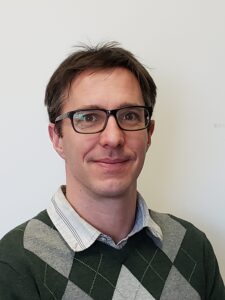
Stephen is a Professor and Coordinator for the Bachelor of Science (Building Science) program at Algonquin College. He has been teaching at the College since 2011 (Part-Time until 2016, and Full-Time since). In addition, Stephen has taught previously at Queen’s University, St. Lawrence College and in the Architecture and Civil/Construction Engineering programs at Algonquin College.
Prior to joining Algonquin College full time, Stephen acquired 6 years of industry experience in the consulting industry as a Structural Engineer and Sustainability Consultant, working on a variety of large projects in the Ottawa area, including the Algonquin Centre for Construction Excellence. Stephen has also been involved more recently with the Centre Block Rehabilitation project, working with the Joint Venture (CENTRUS) in a part-time structural engineering role. Stephen holds a Bachelor of Science in Engineering (Civil Engineering) from Queen’s University, and a Ph.D. in Civil Engineering also from Queen’s University. His Ph.D. research focused on the structural performance of natural building materials.