Kim Hiscott – Alumna of the Year 2026
Alumni of Distinction Awards > 2026 > Kim Hiscott
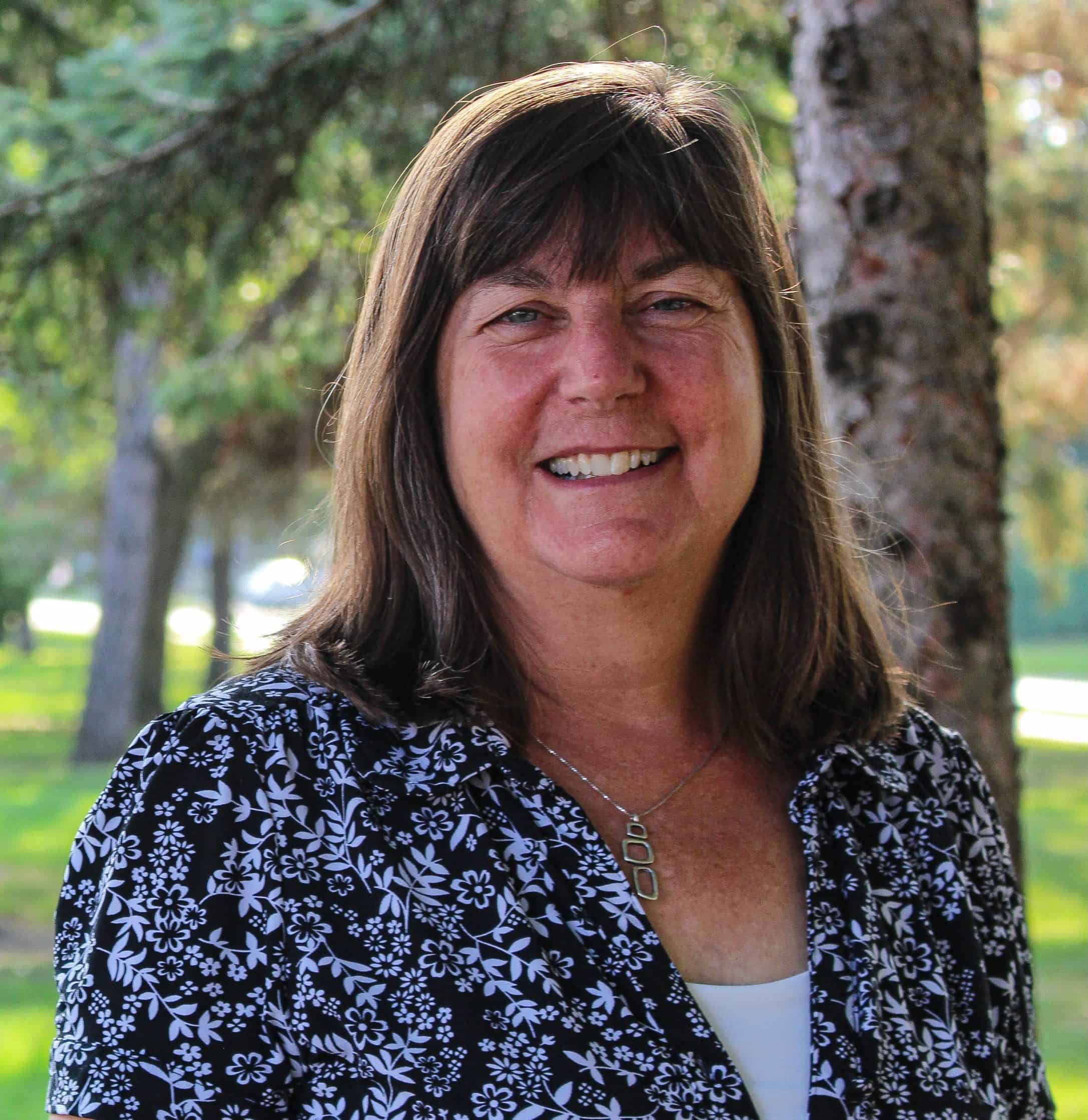
CEO
Andrew Fleck Children’s Services
Early Childhood Education, 1984
Since 2008, Kim Hiscott has been the Chief Executive Officer (CEO) of Andrew Fleck Children’s Services (AFCS), a multi-site agency offering early learning, child care, and family support services in Ottawa. Her 18-year tenure has been marked by the agency’s unprecedented growth. When she was appointed CEO, there were four licensed programs. Now, AFCS operates 30 licensed early learning and child care programs, plus licensed home child care, the Ottawa Forest and Nature School, Children’s Inclusion Support Services and EarlyON for central south Ottawa, extending the reach of its services to more families in the National Capital Region than ever before.
“As the early childhood education sector has evolved, so has AFCS, growing and maturing its strategic vision,” Hiscott said. “Our leadership team and AFCS colleagues are very strong, and they have ensured we are anchored in our purpose: to build a future where all children can thrive. We provide quality services to children and families while also valuing the people that enable us to deliver these services.”
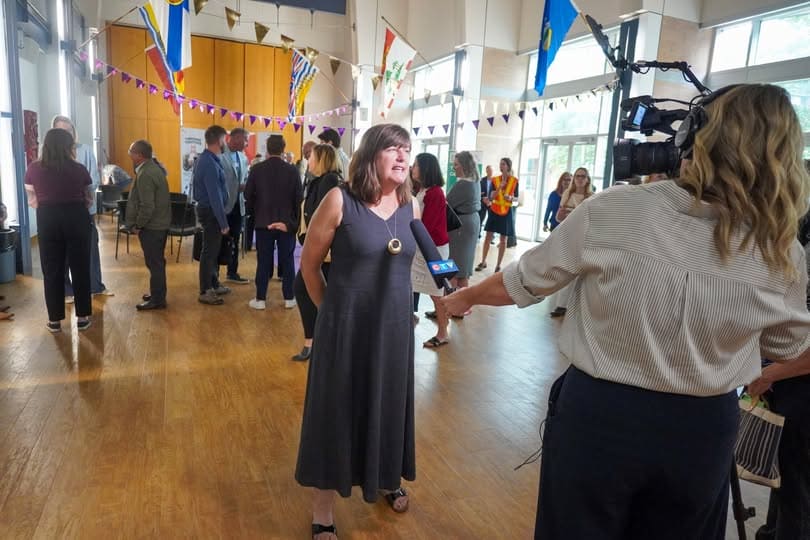
Hiscott speaks to CTV News at the official opening of the Andrew Fleck Children’s Services Intergenerational Early Learning Centre at Perley Health in September 2026. Source: Andrew Fleck Children’s Services (Facebook).
Hiscott’s successes at the helm of AFCS are the culmination of a long and distinguished career that began more than 40 years ago. She discovered her passion for teaching children while still in her teens, when she worked as a nanny. In 1982, right after finishing high school, she applied to Algonquin College’s Early Childhood Education (ECE) program and got in.
One of the things Hiscott enjoyed the most about her student years was the mentorship of her professors. “They were accessible, encouraging, and had real-world experience,” she said. “If we were talking about a theory topic in class, they would bring in a story from their experience in the field as an example. I admired them so much.”
To graduate from the ECE program, Hiscott had to complete a series of work placements, which are meant to help students gain hands-on experience and build a professional network. Her first two placements were in typical early learning settings, ideal to help her check off ECE’s core competency requirements.
Her final placement was more atypical. She was tasked with providing in-home support to a young child who was experiencing developmental delays. The child’s parents met while attending a residential school for children who were deaf. They were kind and loving people who could nevertheless benefit from personalized parenting guidance.
Hiscott went over to that family’s home twice a week to work with the child. Equally as important, she went there to advise the parents and connect them to community services. This process went well, and the child quickly caught up to their developmental milestones.
“My final placement was really special,” Hiscott said. “The opportunity not only elevated my understanding of child development, but they also taught me an important lesson: the child is part of a family, and the family is part of a community. You can work with the child, but you need to work with the whole family. You need to work with the community and the services available there.”
Hiscott graduated from Algonquin College in 1984 and obtained her Early Childhood Education diploma. Within four years of graduation, she was directing a nursery school program she co-founded at Pinecrest-Queensway Community Health Centre. Meanwhile, she became actively involved in committees in the community to advocate for better child care conditions.
Also in 1988, Hiscott joined Algonquin College as a part-time faculty member, a role she would hold for over a decade. Her responsibilities included supervising students and teaching occasional courses. This helped her keep up with the latest developments in the field, including what other early learning centres were doing in Ottawa.
As her children grew older, Hiscott adapted her career to balance home and work responsibilities. She stopped working directly with children in licensed care and transitioned to management roles in early learning organizations. In 1992, she was hired by Canadian Mothercraft of Ottawa-Carleton (now simply Mothercraft Ottawa) to lead a pre-apprenticeship child care course. During her time there, she also ran a program that paired young single parents with volunteers from the community.
By the late 1990s, she was ready to return to full-time employment. She was recruited by the Kanata Research Park to help solve a growing concern in the area. Commercial development in the area was booming, as more and more companies made Kanata North their home, but child care options for the people who worked in these companies remained very limited.
Hiscott accepted the challenge. With the help of colleagues and advisers, many of whom were connected to Algonquin College’s ECE program, she led the renovation of an existing building at the research park to ensure that it met the requirements of a modern early learning facility. Over the course of the next several months, the building was transformed into the Kanata Research Park Family Centre, a state-of-the-art facility with learning spaces, play areas, and all necessary amenities for employees.
As Hiscott staffed her team, she knew the KRP Family Centre was shaping up to become something special. She could do more with it. She reached out to the Ottawa-Carleton District School Board and obtained their approval and support to establish a licensed Kindergarten program on site as well.
With everything in place, the KRP Family Centre opened its doors to the community in March of 2000. It was a resounding success from day one, and it remains a staple of the Kanata North community.
“We initially thought we would have about 60 children in our first year of operation,” Hiscott said. “But by the time September came, we had 106 children, split between a toddler program, a couple of pre-school rooms, and a couple of Kindergarten rooms. We had a beautiful facility and we were well staffed, so it worked out really well.”
Hiscott directed the KRP Family Centre for eight strong years. One of the key lessons she learned during this time was how to leverage her budget to support the work her team did. She knew that when educators felt encouraged and supported, this would translate directly into the quality of service children and families received.
In 2008, Hiscott joined Andrew Fleck Children’s Services as CEO. As previously mentioned, AFCS has grown tremendously under her leadership. However, she is keen to emphasize that this growth didn’t happen in a vacuum. Rather, it is a product of accelerating partnerships with other community organizations in Ottawa.
“We’ve done amazing things by collaborating with partners in the region,” Hiscott said. “For example, we set up the Canadian Centre for Outdoor Play (CCOP) in collaboration with Outdoor Play Canada, the Healthy Active Living and Obesity research group at the CHEO Research Institute, and Algonquin College. In 2024, CCOP launched a licensed child care program called Forest Explorers to promote the importance of outdoor play for young children. I’m proud to say that Claude Brulé, President and CEO of Algonquin College, was there when we had the grand opening for Forest Explorers.”
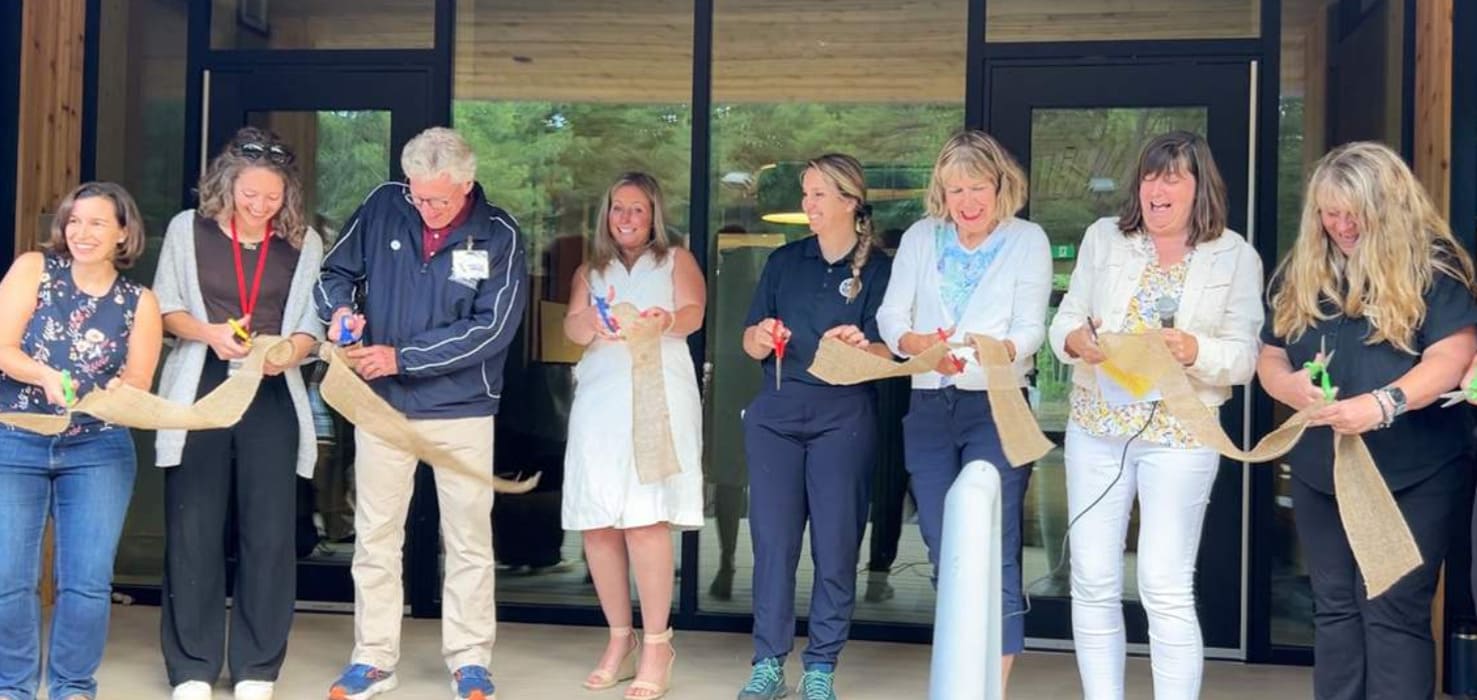
Hiscott (second from the right) joins colleagues in cutting a ceremonial ribbon to mark the opening of CCOP. Source: Outdoor Play Canada.
Some of the other factors fuelling the strategic growth of AFCS include greater participation in applied research and a high employee engagement rate, which Hiscott says is one of the agency’s top priorities.
Hiscott’s many career accomplishments have helped her become an influential voice in the early childhood education community in Ottawa and beyond. Her influence has helped her form relationships with policy makers and elected officials and advocate for better child care at all levels of government.
“We have a variety of approaches to our advocacy,” Hiscott said. “I have personally done presentations at the House of Commons. AFCS also reaches out to politicians and sends them stories from Ottawa families that we feel are going to resonate with them. I remember one time seeing an MP from out west standing up and quoting from one of our documents during a proceeding. I was surprised and gratified to see that our efforts were yielding results.”
Hiscott has also shared her expertise as a board member of many community organizations. Currently, she is on the board of Building Blocks for Child Care, which helps child care centres plan and execute expansions, and was on the Home Child Care Association of Ontario (HCCAO), which promotes quality home-based child care throughout the province.
Looking back at her career, Hiscott’s foremost feeling is gratitude. “The thing that inspires me the most are the amazing people I get to work with. Both my colleagues and the community as a whole. There’s just a sense of connectedness — and Algonquin College is right in the middle of it. It’s a privilege to have Algonquin College’s ECE program in our city, knowing that most of our colleagues got their training at the College, and that we can rely on the College and its faculty for support.”