Medical Radiation Technology
Develop your expertise in Medical Radiation Technology through a combination of theoretical learning and clinical practice.
- Learn from faculty and lab instructors who remain active in clinical practice and bring current knowledge and skills into the classroom and lab
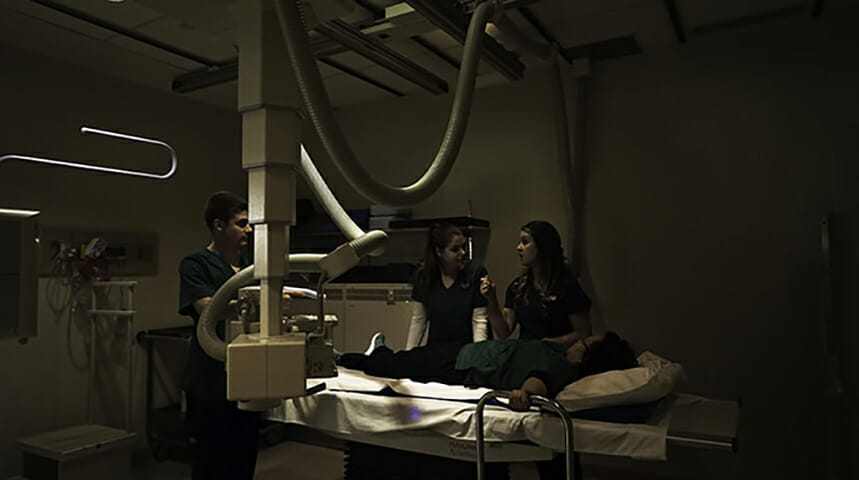
- Gain hands-on experience in off-site hospital labs using a range of clinical imaging equipment
- Develop extensive CT knowledge and practical skills, including IV insertion
Program Availability and Schedule
Availability
Open
Closed
Waitlisted
Start Term
Availability
International
Availability
Competitive?
Fall 2026
Yes
Winter 2027
Yes
Fall 2027
Yes
Schedule
Program Summary
Credential
Program Delivery
Program Code
Area of Interest
School
Campus
Work Integrated Learning
Eligible for Post-Graduation
Work Permit?
CIP Code(s): 51.0911
This three-year Ontario College Advanced Diploma program provides you with the essential knowledge and technical skills required to produce radiographic images and perform diagnostic and therapeutic imaging procedures.
Medical Radiation Technology is a diverse and dynamic field. Medical Radiation Technologists (MRTs) are healthcare professionals who play a vital role in patient diagnosis by producing high-quality radiographic examinations. They must be able to work effectively in stressful situations, think critically and communicate clearly....(read more)
Overview
Develop your expertise in Medical Radiation Technology through a combination of theoretical learning and clinical practice.
This three-year Ontario College Advanced Diploma program provides you with the essential knowledge and technical skills required to produce radiographic images and perform diagnostic and therapeutic imaging procedures.
Medical Radiation Technology is a diverse and dynamic field. Medical Radiation Technologists (MRTs) are healthcare professionals who play a vital role in patient diagnosis by producing high-quality radiographic examinations. They must be able to work effectively in stressful situations, think critically and communicate clearly.
Working independently and collaboratively with other healthcare professionals, MRTs produce and analyze a variety of complex diagnostic images to assist physicians in diagnosing and managing disorders affecting multiple body systems.
During three semesters of theory, simulation and practical laboratory practice, you learn how to produce high-quality radiographic images. You apply health, safety, and quality-assurance principles while performing venipuncture, interacting with simulated patients, and working with ionizing radiation in laboratory and clinical settings.
During three semesters of clinical practicum, you strengthen your technical, professional and collaborative skills, preparing you to contribute as a valued member of the healthcare team.
This program provides you with the skills and experience needed for professional success to work as a Medical Radiation Technologist. Algonquin College's Medical Radiation Technology program is accredited by Accreditation Canada EQual. Graduates of this accredited program are eligible to write the Canadian Association of Medical Radiation Technologists' National Entry-to-Practice Certification Exam.
Upon successful completion of the national certification exam, you will earn the designation of Registered Technologist, Radiological Technology (RTR). To practice in Ontario, graduates must register with the College of Medical Radiation and Imaging Technologists of Ontario (CMRITO). Once registered, you may use the specialty title Medical Radiation Technologist - Radiography, or MRT(R).
You may find employment in:
- community and teaching hospitals
- medical clinics
- education and research settings
- private industry
Courses
Programs at Algonquin College are delivered using a variety of instruction modes. Courses may be offered in the classroom or lab, entirely online, or in a hybrid mode which combines classroom sessions with virtual learning activities. Upon registration, each full-time student is provided an Algonquin email account which is used to communicate important information about program or course events.
Code:
BIO0002
Course Name:
Applied Anatomy and Physiology 1
Course Description:
The study of the human body as outlined by anatomy and physiology concepts is the basic knowledge for positional techniques of patients. All... + Read More
Hours:
42.0
Code:
ENL1004
Course Name:
Professional Communication Essentials
Course Description:
Communication remains a fundamental skill regardless of discipline or field of study. Using an applied approach, students focus on writing, ... + Read More
Hours:
42.0
Code:
IMG0102
Course Name:
Radiological Protocols 1
Course Description:
Radiological protocols incorporate positioning skills, imaging principles and best practice standards for patient care. Students examine the... + Read More
Hours:
84.0
Code:
IMG0103
Course Name:
Radiological Protocols Laboratory 1
Course Description:
Imaging protocols of the appendicular skeleton and the respiratory system are simulated using evidence-based decision making. Students apply... + Read More
Hours:
42.0
Code:
IMG0140
Course Name:
Professional Practice Foundations for Imaging Technologist
Course Description:
Professional values and behaviors establish an essential foundation for MRT practice. Concepts of wellness and healthy lifestyle are explore... + Read More
Hours:
28.0
Code:
IMG0150
Course Name:
Radiological Science and Imaging Principles
Course Description:
Students must have thorough knowledge of the physical properties of the x-ray beam and the technical components of the x-ray tube as they re... + Read More
Hours:
42.0
Code:
IMG0151
Course Name:
Radiation Safety and Protection
Course Description:
Students must have a thorough understanding of the effects of radiation on the human body and strategies to minimize exposure to self, patie... + Read More
Hours:
14.0
Code:
IMG0152
Course Name:
Standards of Practice for the Mrt
Course Description:
Medical Radiation Technologists must practice according to the legislation and regulations that govern the profession of radiological techno... + Read More
Hours:
14.0
Code:
BIO0003
Course Name:
Applied Anatomy and Physiology 2
Course Description:
Understanding of anatomical and physiological variances in diverse patient populations is essential to enable the medical radiation technolo... + Read More
Hours:
42.0
Code:
IMG0110
Course Name:
Radiological Protocols Laboratory 2
Course Description:
Imaging protocols of the axial skeleton and the abdomen are practised and performed in a simulated environment. Students learn to adapt rout... + Read More
Hours:
42.0
Code:
IMG0122
Course Name:
Pathology 1
Course Description:
Medical imaging is directly correlated to pathological changes of the human body. Using accurate medical terminology students describe patho... + Read More
Hours:
28.0
Code:
IMG0133
Course Name:
Applied Radiological Protocols
Course Description:
Principles of patient positioning and technical requirements are applied to each radiological protocol. Students apply the concepts of anato... + Read More
Hours:
70.0
Code:
IMG0134
Course Name:
Computed Tomography-Physical Principles
Course Description:
The knowledge of the physical components of CT technology allows the MRT to produce static and dynamic diagnostic images. Concepts of data a... + Read More
Hours:
28.0
Code:
IMG0139
Course Name:
Imaging and Quality Control Laboratory
Course Description:
Imaging principles application and quality control guidelines are replicated and evaluated. In a simulated environment, students apply the t... + Read More
Hours:
28.0
Code:
IMG0153
Course Name:
Image Acquisition and Processing
Course Description:
Factors influencing the acquisition, digital processing, and storage of image data are critical components of medical imaging. Students exam... + Read More
Hours:
28.0
Code:
IMG1054
Course Name:
Patient Management for MRTs
Course Description:
The ability to recognize, adapt, and respond to diverse patient care is a critical skill required in the role of Medical Radiation Technolog... + Read More
Hours:
28.0
Code:
IMG1055
Course Name:
Patient Management Skills Lab for MRTs
Course Description:
Providing safe, respectful, and patient-centered care is an essential daily component of the Medical Radiation Technology profession. Studen... + Read More
Hours:
14.0
Code:
IMG1056
Course Name:
Radiographic Quality Control
Course Description:
Medical Radiation Technologists play a vital role within the imaging department's quality assurance program to ensure the quality of diagnos... + Read More
Hours:
14.0
Code:
BIO0004
Course Name:
Applied Anatomy and Physiology 3
Course Description:
The understanding of multi-sectional relationship in the human anatomy is an essential skill used to adapt imaging protocols. Students study... + Read More
Hours:
42.0
Code:
IMG0117
Course Name:
Pathology 2
Course Description:
Pathological principles are the link to various radiological appearances on medical images. Students examine pathological principles and rel... + Read More
Hours:
28.0
Code:
IMG0132
Course Name:
Contrast Media Agents and Intravenous Injection Skills
Course Description:
Contrast media agents are commonly used for diagnostic and interventional examinations. The properties of contrast media and related drugs a... + Read More
Hours:
14.0
Code:
IMG0142
Course Name:
Computed Tomography-Imaging Procedures and Protocols
Course Description:
Computed tomography is a dedicated imaging modality used to identify disease or injury within different regions of the body. Analyzing case ... + Read More
Hours:
56.0
Code:
IMG0143
Course Name:
Transition to Clinical Practice
Course Description:
Professional practice standards in the clinical setting is an essential part of the technologist's integrity. Students explore professional ... + Read More
Hours:
28.0
Code:
IMG0145
Course Name:
Advanced Radiological Procedures and Protocols
Course Description:
Specialized imaging protocols require specific equipment and technical requirements. Students apply anatomy and physiology theory and imagin... + Read More
Hours:
28.0
Code:
IMG0148
Course Name:
Introduction to Health Research in Medical Imaging
Course Description:
Evidence-based practice involves critical appraisal of information used to answer a clinical question. Students explore research ethics, met... + Read More
Hours:
28.0
Code:
IMG1060
Course Name:
Radiological Protocols Laboratory 3
Course Description:
Critical thinking and adaptability are essential when performing trauma and non-routine projections. Students perform imaging protocols of t... + Read More
Hours:
28.0
Code:
IMG1061
Course Name:
Adaptive Imaging Protocols
Course Description:
Medical Radiation Technologists need to identify and adapt to varying clinical conditions, procedural requirements, and diverse patient demo... + Read More
Hours:
28.0
Code:
GED1615
Course Name:
General Education Elective
Course Description:
Students choose one course, from a group of general education electives, which meets one of the following five theme requirements: Arts in S... + Read More
Hours:
42.0
Code:
IMG1070
Course Name:
Clinical Practicum 1
Course Description:
Application of theory allows students to progress from observation to performing procedures while applying best practice principles and safe... + Read More
Hours:
525.0
Code:
GED1615
Course Name:
General Education Elective
Course Description:
Students choose one course, from a group of general education electives, which meets one of the following five theme requirements: Arts in S... + Read More
Hours:
42.0
Code:
IMG1071
Course Name:
Clinical Practicum 2
Course Description:
Application of critical thinking and problem solving supports students as they progress to performing common radiological procedures under r... + Read More
Hours:
525.0
Code:
GED1615
Course Name:
General Education Elective
Course Description:
Students choose one course, from a group of general education electives, which meets one of the following five theme requirements: Arts in S... + Read More
Hours:
42.0
Code:
IMG1072
Course Name:
Clinical Practicum 3
Course Description:
Preparation for entry to professional practice requires students to demonstrate knowledge, skills, and judgement to ensure safe and consiste... + Read More
Hours:
487.5
Code:
IMG1073
Course Name:
Certification Exam Preparation
Course Description:
Preparation for the national certification exam is essential for entry into professional practice. Students complete a comprehensive review ... + Read More
Hours:
14.0
Careers & Pathways
Careers
Graduates may find employment in community and teaching hospitals, medical clinics, education and research settings and in private industry. Upon successful completion of the Canadian Association of Medical Radiation Technologists (CAMRT) national certification exam, graduates must register with the College of Medical and Imaging Technologists of Ontario (CMRITO) to be eligible for employment in Ontario.
Pathways
Please note: There may be more pathways available for this program than are listed here. Please use our Pathways search tool to see every option.
Learning Outcomes
The graduate has reliably demonstrated the ability to:
- Produce and assess a variety of high-quality diagnostic images employing current technologies for image acquisition and processing.
- Interpret requests and adapt procedures relative to patient and diagnostic image requirements in routine and complex clinical cases.
- Comply with relevant legislation, regulations and ethical standards for the best practice in diagnostic imaging.
- Employ accepted radiation, health and safety practices with self, patients, their families, and healthcare team members in a variety of clinical settings.
- Provide quality care to diverse patients in assessment, diagnostic imaging, and therapeutic intervention, while incorporating patient advocacy and education to patients, their family, healthcare team members and the public.
- Monitor patients' status at all times and respond to emergency situations where indicated.
- Operate, calibrate, set up, troubleshoot and evaluate a variety of complex equipment safely.
- Analyze a broad range of diagnostic imaging procedures to assist physicians in the diagnosis and management of multiple system disorders.
- Interact with patients, their families, the healthcare team members and the public using effective communication and interpersonal skills.
- Exhibit behaviour consistent with the professional role of a medical radiation technologist, including teamwork, provision of health education and establishment of strategies for lifelong learning.
- Identify and apply discipline-specific practices that contribute to the local and global community through social responsibility, economic commitment and environmental stewardship.
Tuition & Fees
Get an idea of how much each semester will cost with our Tuition and Fee Estimator.
Textbook and course material costs are available on the Algonquin College bookstore website.
2026/2027 Academic Year
Tuition and related ancillary fees for this program can be viewed by using the Tuition and Fees Estimator tool at www.algonquincollege.com/fee-estimator
Further information on fees can be found by visiting the Registrar's Office website at www.algonquincollege.com/ro
Fees are subject to change.
Additional program related expenses include:
- Books: Required textbooks for the program are estimated at approximately $2,500.
- Clinical Lab Attire: Dress code requirements include uniform, name tag and radiographic markers which cost approximately $300.
- Travel and parking: Students are responsible for all travel and parking costs related to attending partner clinical sites throughout the program.
- Clinical experience expenses: Students must cover all costs related to clinical placements, including relocation, travel, and any required housing accommodations.
- Estimated costs for clinical prerequisites:
- CompKeepr (student clinical evaluation tool) - approximately $200
- N95 mask fit testing - approximately $40
- Crisis Management and De-escalation Techniques Training - approximately $230
- CPR-C/First Aid - cost varies by agency
- Police Records Check for Service with Vulnerable Sector (PRCSVS - cost varies by municipality)
- Physician's fee for immunization - cost varies by provider (free if completed through Health Services at Algonquin College)
- Placement Pass (ParaMed): All medical and non-medical documentation must be uploaded to Placement Pass by ParaMed. The initial upload fee is approximately $65, with subsequent uploads costing approximately $35 each.
- Certification exam: The Canadian Association of Medical Radiation Technologists (CAMRT) national certification exam fee is $980 with a remote proctoring fee of approximately $100, or an in-person test center fee of approximately $200. All fees are based on 2027 costs and are subject to change.
- Professional registration: To be eligible for employment in Ontario, students must register with the College of Medical and Imaging Technologists of Ontario (CMRITO), with a preregistration fee of approximately $150 (subject to change).
Note: All fees are subject to change.
Admissions Requirements
All applicants must satisfy both College Eligibility and Program Eligibility requirements.
College Eligibility
- Ontario Secondary School Diploma (OSSD) or equivalent;
- Mature Student status (19 years of age or older and without a high school diploma at the start of the program). Eligibility may be determined by academic achievement testing, for which a fee will be charged.
Program Eligibility
- English, Grade 12 (ENG4C or equivalent) with a grade of 65% or higher.
- Mathematics, Grade 12 (MAP4C or equivalent) with a grade of 65% or higher.
- Physics, Grade 11 or 12 with a grade of 65% or higher. AND
- Biology, Grade 11 or 12 with a grade of 65% or higher. OR
- Chemistry, Grade 11 or 12 with a grade of 65% or higher.
- All applicants must complete an assessment of their knowledge and skills through the Test Centre, and pay an exam fee. Results from the Algonquin College Health Program Admissions Test (AC-HPAT) will be utilized to establish minimum eligibility and applicant ranking. The AC-HPAT can only be written once per academic cycle. For further information on the HPAT and how to book your assessment, please visit Algonquin's Test Centre.
Applicants with international transcripts must provide proof of the subject specific requirements noted above and may be required to provide proof of language proficiency. Domestic applicants with international transcripts must be evaluated through the International Credential Assessment Service of Canada (ICAS) or World Education Services (WES).
IELTS-International English Language Testing Service (Academic) Overall band of 6.5 with a minimum of 6.0 in each band; OR TOEFL Internet-based (iBT) tests taken prior to January 21, 2026 overall 88, with a minimum in each component: Reading 22; Listening 22; Speaking 22; Writing 22; OR TOEFL Internet-based (iBT) tests taken after January 21, 2026 overall 4.5, with a minimum in each component: Reading 4.5; Listening 4.5; Speaking 4.5; Writing 4.5; OR Duolingo English Test (DET) Overall 120, minimum of 120 in Literacy and no score below 105.
International Applicants:
International applicants who meet the program eligibility requirements are required to complete preparatory courses (4-months in duration): Introduction to Canadian Health Studies (ICHS). Students who successfully complete the introduction will then proceed to their original health program of choice. The ICHS requires applicants to submit an academic IELTS score.
Please click this link for more information: https://www.algonquincollege.com/healthandcommunity/ICHS/.
Application Information
MEDICAL RADIATION TECHNOLOGY
Program Code 1615X01FWO
Applications to full-time day programs must be submitted with official transcripts showing completion of the academic admission requirements through:
ontariocolleges.ca
60 Corporate Court
Guelph, Ontario N1G 5J3
1-888-892-2228
Students currently enrolled in an Ontario secondary school should notify their Guidance Office prior to their online application at www.ontariocolleges.ca.
Applications for Fall Term and Winter Term admission received by February 1 will be given equal consideration. Applications received after February 1 will be processed on a first-come, first-served basis as long as places are available.
International applicants please visit this link for application
process information: https://algonquincollege.my.site.com/myac360/s/
For further information on the admissions process, please visit:
Admissions - Registrar's Office https://algonquincollege.com/ro/admissions/
Additional Information
Program Resources
ACCEPTED APPLICANTS MUST
Lab and Clinical Placement Eligibility:
All eligibility requirements must be submitted through Placement Pass by ParaMed, a third-party service that verifies compliance. Students are responsible for all associated fees, which are outlined in the Tuition Fees section.
Lab Requirements:
Program labs are held off-site at local hospitals in the evening. Students must meet the following mandatory requirements to attend labs.
- Proof of a clear Police Records Check for Service with Vulnerable Sector (PRCSVS) is required annually.
- Proof of full COVID-19 vaccination, following the standards outlined in the Canadian Immunization Guide.
- Completion of required e-Learning modules; additional information will be provided.
Clinical Placement Requirements:
To be eligible to participate in clinical placement activities, students must complete and submit all requirements.
- Proof of a clear PRCSVS is required annually.
- Evidence of current Cardio-Pulmonary Resuscitation Training, CPR Basic Rescuer C Level certification, and Standard First Aid certification.
- Evidence of mask fit testing for N95-equivalent masks.
- Completion of the Pre-Placement Health Form.
- De-escalation training, provided through Algonquin College; additional information will be provided.
OTHER INFORMATION
Licensing Requirements
- The medical radiation technology profession is regulated by the College of Medical Radiation and Imaging Technologists of Ontario (CMRITO). There are a number of registration requirements. To find out if you would be eligible to practice in Ontario, please visit the website: www.cmrito.org/applicants/registration-requirements
- Written and verbal fluency in English or French is essential in this field and is a requirement for registration with CMRITO.
Physical Demands
The role of a Medical Radiation Technologist is physically demanding. Students entering this program must possess the ability to safely lift and transfer patients from wheelchairs and stretchers to examination tables, as well as the capacity to move quickly to ensure patient safety. Entering the program without these essential skills may result in unsuccessful clinical placements and, consequently, an inability to meet the requirements for graduation.
Intensiveness of the Program
The MRT program is intensive with a heavy course load and lab requirements. The training and practice requirements of the program are both physically and emotionally demanding and require students to be able to manage their personal responses to stress to be successful.
Scheduling
- Students can expect an average of 23 hours per week of scheduled theory and lab classes in Terms 1, 2, and 3, and 37.5 hours per week of clinical placement in Terms 4, 5, and 6.
- The program timetable includes daytime and evening classes/labs, with occasional weekend scheduling.
- Students admitted in the Fall and Winter intakes will merge into a single, larger cohort in Level 3 and will complete their clinical practicum during the same period.
Lab Requirements
- Students are required to participate in protocol lab simulations both as a patient and a student technologist.
- Labs provide students with opportunities to simulate positioning, patient management, and quality control.
- Venipuncture labs require students to participate both as student technologists and as patients.Students will practice inserting IV needles and will also receive IV needle insertions from a classmate under direct supervision.
- Students must attend all labs and complete all pre and post lab requirements to progress.
Clinical Practicums
- Clinical practicum (CP) placements are completed in level 4, 5, and 6.
- Due to the limited number of placements in the Ottawa region, there is a high likelihood that students will be required to relocate outside of the Ottawa region for clinical practicum. Clinical sites are vetted by the program to ensure that the same learning outcomes can be achieved by all students.
- All related clinical practicum expenses such as moving, lodging, travel, parking, food are the responsibility of the student.
- During clinical practicum, students who commit significant professional or safety infractions may be removed from the clinical site and pending the results of an investigation may receive an F grade for the clinical placement course.
- If there is an interruption to the clinical practicum of one term or longer, the student must enroll in and successfully complete a mandatory skills-enhancement course before returning to the clinical environment. The student is responsible for the cost of this course. Returning status will be granted based on the availability of clinical sites.
- Clinical practicum placements mimic a regular work week. Students will follow a schedule provided by the placement site.
- Clinical sites are assigned following a fair and transparent lottery process.
Contact
Shannon Gidge, BA, MRT(R), CTIC
Program Coordinator
Room P112b
Shannon Gidge, BA, MRT(R), CTIC
Program Coordinator
613-727-4723, ext. 2169
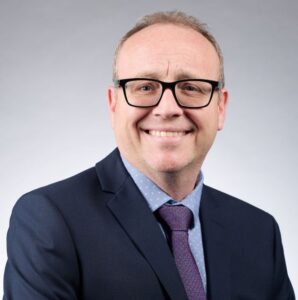
Shannon Gidge holds an undergraduate degree from Carleton University and a Computed Tomography Imaging Certificate (CTIC). He is also a proud graduate of Algonquin College’s Medical Radiation Technology (MRT) program.
Shannon began teaching at Algonquin College in 2013. An enthusiastic educator, he creates an engaging and supportive learning environment by combining practical instruction with a fun and approachable teaching style. He also volunteers with the Canadian Association of Medical Radiation Technologists (CAMRT), contributing to the national entry-to-practice certification examination.
Before becoming Program Coordinator, Shannon worked as a CT technologist at one of Canada’s leading tertiary care teaching hospitals. He draws on his extensive clinical experience to connect classroom learning with professional practice and prepare students for successful careers in medical radiation technology.
Lisa Woodtke, BSc, MRT(R), CBI
Clinical Coordinator
Room P112e
Lisa Woodtke, BSc, MRT(R), CBI
Clinical Coordinator
613-727-4723, ext. 2133
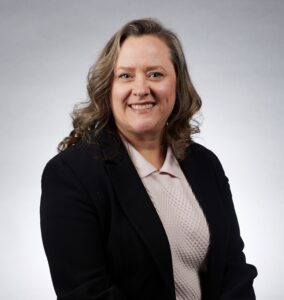
Lisa Woodtke holds an undergraduate degree in science from Western University and is a graduate of Mohawk College’s Medical Radiation Technology (MRT) program. She has been an integral member of Algonquin College’s Medical Radiation Technology (MRT) program since its inception in 2010.
Her passion for education and the medical radiation profession led her to a full-time faculty role, where she draws on her clinical experience to help students develop the knowledge, professional judgement, and patient-care skills required for success.
Lisa continues to practice in breast imaging as a Certified Breast Imager (CBI), bringing current industry knowledge into her teaching. As Clinical Coordinator and Professor, she finds it especially rewarding to watch students graduate and later welcome them into the profession as colleagues.
Laura Young, BHSc, MRT(R)
Lab Coordinator
Room P112

Laura is a proud graduate of Algonquin College’s Medical Radiation Technology (MRT) program and holds a degree in Health Sciences from Thompson Rivers University. Since 2010, she has taught across multiple programs, earning a strong reputation for her engaging, supportive, and inspiring approach to education.
A dedicated and passionate educator, Laura places particular emphasis on mental health, inclusivity, cultural competence, and creating a welcoming learning environment for all students. She also continues to practice at a leading pediatric hospital in the region, bringing current clinical experience into her teaching.
Laura remains actively involved with the Canadian Association of Medical Radiation Technologists (CAMRT) through professional development initiatives. As a parent of a young family, she is especially motivated to help build a stronger, more compassionate healthcare system for future generations.