Diagnostic Medical Sonography
Further your career in diagnostic medical sonography, exploring theory and clinical practice.
- Out in the workforce in a year and a half with specialized skills and education
- Unique simulation experiences using technology to prepare graduates for real life scenarios
- Small class sizes which provides more one on one time with professors and the opportunity to build connections with peers
Program Availability and Schedule
Availability
Open
Closed
Waitlisted
Start Term
Availability
International
Availability
Competitive?
Fall 2026
Yes
Fall 2027
Yes
Schedule
Program Summary
Credential
Program Delivery
Program Code
Area of Interest
School
Campus
Work Integrated Learning
Eligible for Post-Graduation
Work Permit?
CIP Code(s): 51.0910
This 16 month Diagnostic Medical Sonography Ontario College Graduate Certificate program provides you with the crucial knowledge and technical skills to produce sonographic images and carry out diagnostic procedures.
Diagnostic medical sonography is a diverse and dynamic field of work. Sonographers are health care professionals that play a vital role in patient diagnostic outcomes by producing quality sonographic exams. They must be able to work well in stressful situations, think critically and possess strong communication skills....(read more)
Overview
Further your career in diagnostic medical sonography, exploring theory and clinical practice.
This 16 month Diagnostic Medical Sonography Ontario College Graduate Certificate program provides you with the crucial knowledge and technical skills to produce sonographic images and carry out diagnostic procedures.
Diagnostic medical sonography is a diverse and dynamic field of work. Sonographers are health care professionals that play a vital role in patient diagnostic outcomes by producing quality sonographic exams. They must be able to work well in stressful situations, think critically and possess strong communication skills.
Through theory, simulation, lab practice and extensive clinical experiences, you learn to produce quality sonographic images. You consider health and safety in your work and apply quality assurance for the safe and proper use of ultrasound.
You have two 600-hour field placements where you enhance your technical, professional, interpersonal and patient management skills. These acquired skills help you to function as a member of a healthcare team.
This program offers you the hands-on skills you need for success. Algonquin College's Diagnostic Medical Sonography program is accredited by the Accreditation Canada EQual, and graduates from accredited programs are eligible to write the national certification through Sonography Canada.
Upon successful completion of the national certification exam, you are credentialed as a Canadian Registered Generalist Sonographer (CRGS) through Sonography Canada. To be licensed to work in the province of Ontario, graduates must register with the College of Medical Radiation and Imaging Technologists of Ontario (CMRITO).
You may find employment in settings such as:
- community and tertiary care hospitals
- medical clinics
- education and research settings
- private industry
Courses
Programs at Algonquin College are delivered using a variety of instruction modes. Courses may be offered in the classroom or lab, entirely online, or in a hybrid mode which combines classroom sessions with virtual learning activities. Upon registration, each full-time student is provided an Algonquin email account which is used to communicate important information about program or course events.
Code:
IMG0007
Course Name:
Introduction to Obstetrical and Gynecological Sonography
Course Description:
Sonographers require comprehensive knowledge of the female reproductive system and the developing fetus. Students explore anatomical structu... + Read More
Hours:
42.0
Code:
IMG1001
Course Name:
Cross-Sectional Imaging for Sonography
Course Description:
Sonographers must have thorough knowledge of the cross-sectional anatomy of multi-body systems to perform a comprehensive sonographic exam. ... + Read More
Hours:
28.0
Code:
IMG1002
Course Name:
Sonography Physics and Instrumentation 1
Course Description:
A thorough understanding of the foundational scientific theory of ultrasound is required for successful application of sonographic technolog... + Read More
Hours:
42.0
Code:
IMG1016
Course Name:
Sonography of Superficial Structures
Course Description:
Scanning superficial structures is a skill that a Sonographer needs to be considered competent at differentiating normal from abnormal anato... + Read More
Hours:
28.0
Code:
IMG1017
Course Name:
Practical Sonography Laboratory 1
Course Description:
Performing sonographic exams requires a high level of skill and experience to achieve optimal diagnostic assessments. Under direct supervisi... + Read More
Hours:
126.0
Code:
IMG1034
Course Name:
Abdominal Sonography
Course Description:
A thorough understanding of sonographic anatomy is required for optimal scanning of the abdomen. Students review complete abdominal and limi... + Read More
Hours:
42.0
Code:
IMG1052
Course Name:
Professional Responsibilities and Standards for Diagnostic Sonography
Course Description:
Having a foundational knowledge of sonography, staying current with technological advancement and maintaining industry best practices can su... + Read More
Hours:
28.0
Code:
IMG0200
Course Name:
Sonographic Pathology of the Abdomen
Course Description:
Sonographers must possess advanced skills in identification and analysis of sonographic pathology and normal variants. Students explore clin... + Read More
Hours:
70.0
Code:
IMG0201
Course Name:
Sonographic Anomalies in Obstetrics & Gynecology
Course Description:
Identifying and analyzing abnormalities in fetal development and the female reproductive system are imperative skills for sonographers. Stud... + Read More
Hours:
42.0
Code:
IMG0202
Course Name:
Vascular Sonography
Course Description:
A comprehensive knowledge of the body's vascular system and its functions is essential for vascular sonography. Students explore the hemodyn... + Read More
Hours:
42.0
Code:
IMG0203
Course Name:
Patient Management for Diagnostic Medical Sonography
Course Description:
Maintaining optimal patient care is essential throughout the sonographic procedure. Understanding the best practices for patient interactio... + Read More
Hours:
14.0
Code:
IMG0204
Course Name:
Applied Patient Management Skills for Diagnostic Medical Sonography
Course Description:
The support, care and understanding of patient needs is an important role of the Diagnostic Medical Sonographer. Using case scenarios, stude... + Read More
Hours:
14.0
Code:
IMG1007
Course Name:
Sonography Physics and Instrumentation 2
Course Description:
Ultrasound equipment is highly technical and requires intricate knowledge of physics and instrumentation to operate safely and effectively. ... + Read More
Hours:
42.0
Code:
IMG1018
Course Name:
Practical Sonography Laboratory 2
Course Description:
Operating sonographic equipment requires a high level of skill and experience to obtain optimal imaging results. Under direct and indirect s... + Read More
Hours:
126.0
Code:
IMG1047
Course Name:
Practical Sonography Laboratory 3
Course Description:
Scanning the gastrointestinal and vascular systems require advanced scanning techniques to acquire quality images. Students operate sonograp... + Read More
Hours:
14.0
Code:
IMG1048
Course Name:
Sonography Critical Case Review
Course Description:
Diagnostic Medical Sonographers must analyze complex cases and communicate findings appropriately and accurately to the interpreting physici... + Read More
Hours:
14.0
Code:
IMG1053
Course Name:
Clinical Practice Standards for Diagnostic Sonography
Course Description:
Investigating the national standards allows students to enhance their knowledge of the Sonographer's role in healthcare. Students examine So... + Read More
Hours:
28.0
Code:
IMG1013
Course Name:
Clinical Practicum 1
Course Description:
Application of theory allows students to progress from observation to performing sonographic procedures while applying best practice princip... + Read More
Hours:
600.0
Code:
IMG1014
Course Name:
Clinical Practicum 2
Course Description:
Preparation for entry to professional practice requires students to demonstrate knowledge, skills, and judgement to ensure safe and consiste... + Read More
Hours:
600.0
Careers & Pathways
Careers
Graduates may find employment as diagnostic medical sonographers, clinical educators, medical technical salespeople, application specialists and medical researchers.
Pathways
Please use our Pathways tool to search for pathway options.
Learning Outcomes
The graduate has reliably demonstrated the ability to:
- Produce and analyze sonographic findings to provide technical impressions for physician interpretation and reporting.
- Identify multi-system abnormalities within sonographic images to support diagnosis and guide patient care.
- Perform duties in accordance with regulatory standards of practice to mitigate personal liability and maintain safe patient care.
- Interpret requisitions and adapt sonographic procedures to support optimal examination results.
- Communicate with patients and involved parties in a professional manner to support the delivery of individualized patient care.
- Monitor, assess and respond to patient status throughout sonographic examinations to mitigate safety concerns.
- Calibrate, operate and maintain sonographic equipment to support optimal imaging and patient safety in accordance with industry standards.
- Collaborate with interdisciplinary healthcare teams to support comprehensive patient centered care.
- Engage in professional development activities to maintain competency and support quality patient care.
- Identify and apply discipline-specific practices that contribute to the local and global community through social responsibility, economic commitment and environmental stewardship.
Tuition & Fees
Get an idea of how much each semester will cost with our Tuition and Fee Estimator.
Textbook and course material costs are available on the Algonquin College bookstore website.
2026/2027 Academic Year
Tuition and related ancillary fees for this program can be viewed by using the Tuition and Fees Estimator tool at www.algonquincollege.com/fee-estimator
Further information on fees can be found by visiting the Registrar's Office website at www.algonquincollege.com/ro
Fees are subject to change.
Additional program related expenses include:
- Pre-placement requirements: Clinical practicums require Health and Safety, WHMIS, and OWHSA training. Students should anticipate associated training costs that are not covered by tuition.
- Travel and parking: Students are responsible for all travel and parking costs related to attending partner clinical sites throughout the program.
- Clinical experience expenses: Students must cover all costs related to clinical placements, including travel and any required housing accommodations.
- Estimated costs for clinical prerequisites:
- N95 mask fit testing - approximately $35
- Crisis Management and De-escalation Techniques Training - approximately $230
- CPR/First Aid - cost varies by agency
- Vulnerable Sector Police Records Check - cost varies by municipality
- Physician's fee for immunization - cost varies by provider (free if completed through Health Services at Algonquin College)
- Placement Pass (ParaMed): All medical and non-medical documentation must be uploaded to Placement Pass. The initial upload fee is approximately $65, with subsequent uploads costing about $35 each.
- Books: Required textbooks for the program are estimated at approximately $2,800.
- Clinical Lab Attire: Dress code requirements include uniform, cable brace and name tag which cost approximately $250.
- Professional registration: To be eligible for employment in Ontario, students must register with the College of Medical and Imaging Technologists of Ontario (CMRITO), with a preregistration fee.
- Certification exam: There is a fee for the Sonography Canada certification exam upon graduation.
Note: All fees are subject to change.
Admissions Requirements
Program Eligibility
- Diploma, Advanced Diploma, Graduate Certificate or Degree in Medical or Health related field with a minimum of 2 courses (or equivalent) in Human/Gross Anatomy and Human Physiology, plus 1 course in Human Pathology and 3 additional human health related courses. All courses must have a minimum grade of 70% (B-) or higher.
- Examples of degrees included but not limited to: BSc Kinesiology, BA Kinesiology, BSc Nursing, Bachelor of Medical Radiation Sciences, Bachelor of Applied Health Sciences, MSc OT, MSc PT.
- Examples of Diplomas and Advanced Diplomas include, but not limited to: Medical Radiation Technology, Respiratory Therapy, Registered Practical Nursing, Cardiovascular Technology, Registered Massage Therapy, Occupational Therapy Assistant, Physiotherapy Assistant.
- All applicants must complete an assessment of their knowledge and skills through the Test Centre, and pay an exam fee. Results from the Algonquin College Health Program Admissions Test (AC-HPAT) will be utilized to establish minimum eligibility and applicant ranking. The AC-HPAT can only be written once per academic cycle. For further information on the HPAT and how to book your assessment, please visit Algonquin's Test Centre.
- Applicants with international transcripts must provide proof of the subject specific requirements noted above and may be required to provide proof of language proficiency. Domestic applicants with international transcripts must be evaluated through the International Credential Assessment Service of Canada (ICAS) or World Education Services (WES).
- IELTS-International English Language Testing Service (Academic) Overall band of 6.5 with a minimum of 6.0 in each band; OR TOEFL Internet-based (iBT) tests taken prior to January 21, 2026 overall 88, with a minimum in each component: Reading 22; Listening 22; Speaking 22; Writing 22; OR TOEFL Internet-based (iBT) tests taken after January 21, 2026 overall 4.5, with a minimum in each component: Reading 4.5; Listening 4.5; Speaking 4.5; Writing 4.5; OR Duolingo English Test (DET) Overall 120, minimum of 120 in Literacy and no score below 105.
ACCEPTED APPLICANTS MUST:
Police Records Check Documentation:
Applicants must note important information listed below regarding Police Record Check program requirements.
It is your responsibility to obtain the Police Records Check For Service With Vulnerable Sector (PRCSVS) from your local Police Department prior to the deadline identified by your program and to pay any associated costs. It may take a long time to obtain this documentation; please submit your application as early as possible. Should you require further information, contact the Program Chair.
Lab and Clinical Placement Eligibility:
Lab Requirements: Proof of a clear (PRCSVS)- annual requirement. You may be required to disclose the contents of the PRCSVS, including all notations, to the placement agencies.
Clinical Placement Requirements: Successful completion of clinical placement is a requirement for graduation from the Diagnostic Medical Sonography program. To be eligible to participate in clinical placement activities, you must complete ParaMed requirements and submit:
- Proof of a clear (PRCSVS)- annual requirement. You may be required to disclose the contents of the PRCSVS, including all notations, to the placement agencies.
- Evidence of a current Cardio-Pulmonary Resuscitation Training C.P.R. Basic Rescuer 'C' Level certification and Standard First Aid certification.
- Evidence of mask fit-tested for N-95 equivalent masks required for infection-control measures as required by the Ministry of Health and Long-Term Care Guidelines.
- A Health Assessment Form and provide an Immunization Certificate. Applicants must have complete immunization including Hepatitis B, and annual T.B. test (a Chest X-ray is required if the T.B. test is positive) and are required to have annual immunization for influenza by some clinical affiliates.
- All ParaMed Clinical/Field Pre-Placement Health requirements one (1) month prior to starting clinical placements. Applicants must have complete immunization including Hepatitis B, and annual T.B. test (a Chest X-ray is required if the T.B. test is positive) and are required to have annual immunization for influenza by some clinical affiliates. Additional details regarding the requirements including immunizations, may be found in the form mentioned above under the Accepted Applicant tab-Placement Forms.
- Evidence of Workplace Hazardous Materials Information System (WHMIS) and Ontario Health and Safety Awareness (OHSA) Training certification. These courses meet program requirements are free to registered students and can be accessed through the Algonquin College website: https://www.algonquincollege.com/safety-security-services/home/occupational- health-and-safety/health-safety-training-resources/.
- Proof of de-escalation training.
Application Information
DIAGNOSTIC MEDICAL SONOGRAPHY
Program Code 1618X01FWO
Applications to full-time day programs must be submitted with official transcripts showing completion of the academic admission requirements through:
ontariocolleges.ca
60 Corporate Court
Guelph, Ontario N1G 5J3
1-888-892-2228
Applications are available online at www.ontariocolleges.ca.
Applications received by February 1 will be given equal consideration. Applications received after February 1 will be processed on a first-come, first-served basis as long as places are available.
International applicants please visit this link for application
process information: https://algonquincollege.my.site.com/myac360/s/
For further information on the admissions process, please visit:
Admissions - Registrar's Office https://algonquincollege.com/ro/admissions/
Additional Information
Program Resources
1. Licensing Requirements
- The sonography profession is regulated by the College of Medical Radiation and Imaging Technologists of Ontario (CMRITO). There are a number of registration requirements. To find out if you would be eligible to practise in Ontario, please access the website: www.cmrito.org/applicants/registration-requirements.
- Written and verbal fluency in English or French is essential in this field and is a requirement for registration with CMRITO.
2. Physical & Psychological Demands
- The role of a Diagnostic Medical Sonographer is physically demanding and can result in repetitive strain injury and other musculoskeletal disorders. Following ergonomic best practices can reduce the risk of these injuries.
- A sonographer must be able to work effectively under stressful circumstances and attention to detail is critical. Entering this program without these essential skills may result in unsuccessful clinical placements and an inability to meet the graduation requirements.
3. Intensiveness of the program
- The DMS program is intensive with a heavy course load and lab requirements. The training and practice requirements of the program are both physically and emotionally demanding and require students to be able to manage their personal responses to stress to be successful.
- Courses and labs can be held during the day and evenings.
- A strong background in anatomy is essential to be successful throughout the program of study.
4. Lab Requirements
- Students are required to participate in lab simulations both as patient and sonographer roles.
- Labs provide students with opportunities to practice scanning. Students are expected to scan each other in a controlled simulated lab environment. Simulation tools are utilized for sensitive invasive procedures.
- Some scanning activities require students to fast or have a full bladder prior to the lab.
- Students must attend all labs and complete all pre and post lab requirements to progress.
5. Clinical Placements
- Clinical practicum (CP) placements are completed in level 3 and 4
- CP1 runs from May to August and CP2 runs from September to December
- Due to the restricted number of placements in the Ottawa region, there is a high likelihood that students may be required to relocate outside of the Ottawa region for one or both of their clinical placements.
- All related clinical placement expenses such as moving, lodging, travel, parking, food are the responsibility of the student.
- During clinical practicum, if there are significant professional/safety infractions, students may be removed from the clinical site. If this results in a break in clinical placement of one term or more, the student will be required to enroll and pass a mandatory skills enhancement course to ensure a safe return to the clinical environment, at the cost of the students.
- Clinical practicum placements mimic a regular work week. Students will follow a schedule provided by the placement site.
Please note: Clinical sites are vetted by the program to ensure that the same learning outcomes can be achieved by all students.
Clinical sites are assigned following a fair and transparent lottery process.
Contact
Shannon Gidge
Program Coordinator
Room P112b
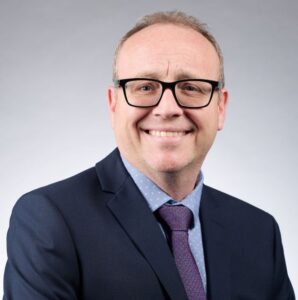
Shannon Gidge holds an undergraduate degree from Carleton University and a Computed Tomography Imaging Certificate (CTIC). He is also a proud graduate of Algonquin College’s Medical Radiation Technology (MRT) program.
Shannon began teaching at Algonquin College in 2013. An enthusiastic educator, he creates an engaging and supportive learning environment by combining practical instruction with a fun and approachable teaching style. He also volunteers with the Canadian Association of Medical Radiation Technologists (CAMRT), contributing to the national entry-to-practice certification examination.
Before becoming Program Coordinator, Shannon worked as a CT technologist at one of Canada’s leading tertiary care teaching hospitals. He draws on his extensive clinical experience to connect classroom learning with professional practice and prepare students for successful careers in medical radiation technology.
Jane St. Germain
Professor
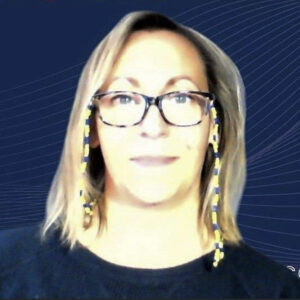
Jane has been with Algonquin since 2010. She was seconded from the Ottawa Hospital to help develop the DMS program, she is the past Program Coordinator, and current Clinical Coordinator who also teaches in the Diagnostic Medical and Cardiac Sonography Graduate Certificate programs. She graduated from the Bilingual MRT program in 1989 and expanded her studies to become a credentialed Canadian Generalist Sonographer in 1993. She also holds the credential Canadian Registered Vascular Sonographer since 1996. In addition, Jane also holds a Certificate in Adult Education and Masters Degree in Medical Ultrasound. Her experiences include those of the tertiary care hospital, private clinic, and community hospitals in Eastern Ontario. Further to this, Jane has volunteered on Sonography Canada’s Board of Directors and continues her commitment as Chair of the Professional Practice Committee, and member of various other committees including the National Education Advisory Committee, Continuing Education Committee, and the Exam Translation Committee.