Veterinary Technician
Transform learning into making a difference on a veterinary health care team.
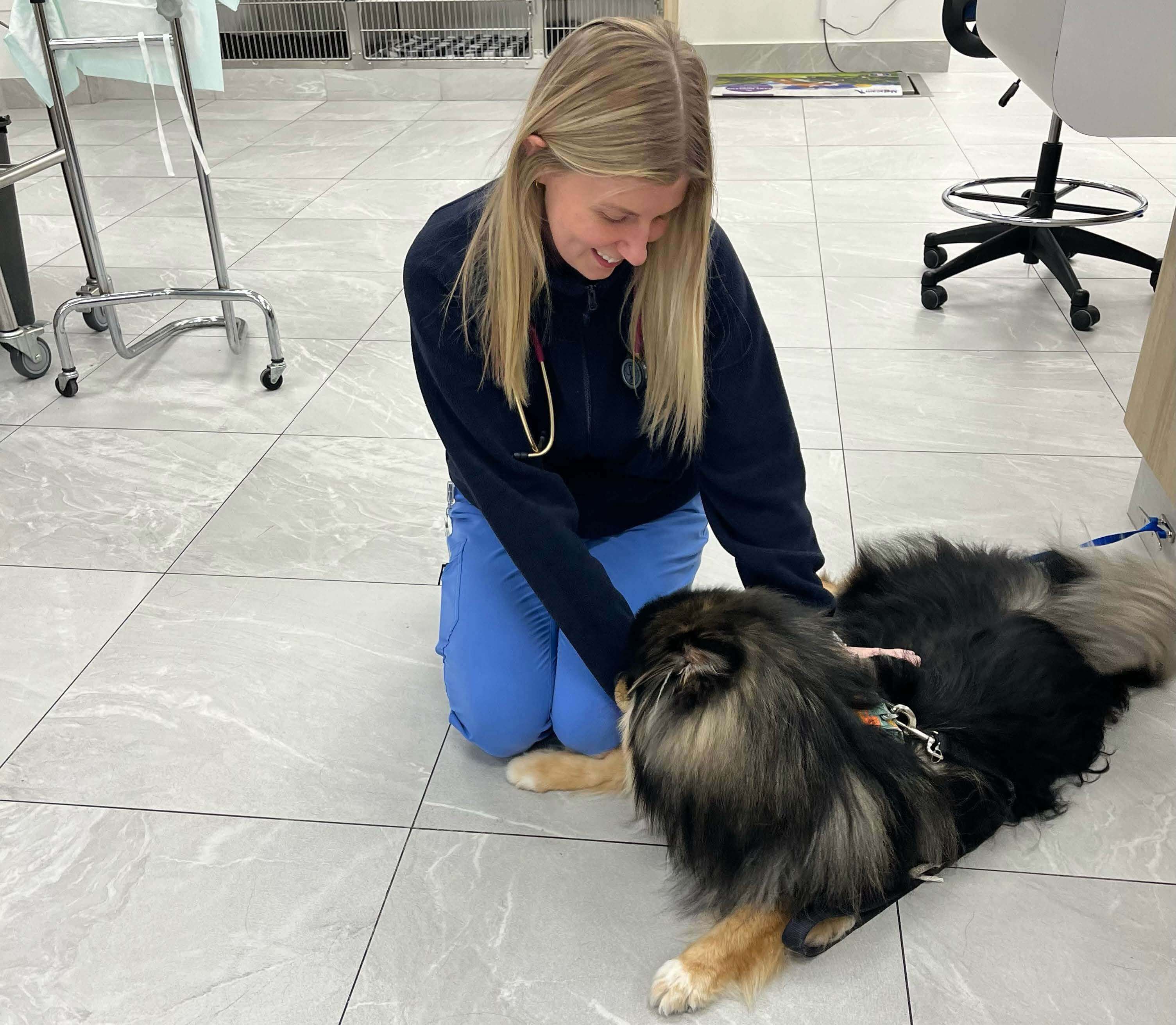
- Students provide medical care to shelter animals with guidance from experienced RVTs and Veterinarians, helping to prepare these animals for adoption
- Students gain real-world, hands-on experience during off-campus rotations at our partnering animal care facilities and clinics in the community, and also benefit from a 6-week final practicum
- Graduates are eligible to be considered for registration with the Ontario Association of Veterinary Technicians and the Canadian Association for Laboratory Animal Science
Program Availability and Schedule
Availability
Open
Closed
Waitlisted
Start Term
Availability
International
Availability
Competitive?
Fall 2026
Yes
Fall 2027
Yes
Schedule
Program Summary
Credential
Program Delivery
Program Code
Area of Interest
School
Campus
Work Integrated Learning
Eligible for Post-Graduation
Work Permit?
CIP Code(s): 01.8301
The two-year Veterinary Technician Ontario College Diploma program prepares you to enter the Veterinary profession by offering an authentic learning experience working alongside highly credentialed professionals in our on-campus veterinary medical facility and in our partnering facilities in the local community.
You benefit from learning in the 10,100 square-foot Veterinary Learning Centre and Clinic. This facility includes a reception area, exam rooms, husbandry area, surgical suite, dental suite, radiography room and more. The Veterinary Learning Center and Clinic is similar to a real-life small animal clinic, enabling you to have an on-campus learning experience using the equipment you would also use in the field....(read more)
Overview
Transform learning into making a difference on a veterinary health care team.
The two-year Veterinary Technician Ontario College Diploma program prepares you to enter the Veterinary profession by offering an authentic learning experience working alongside highly credentialed professionals in our on-campus veterinary medical facility and in our partnering facilities in the local community.
You benefit from learning in the 10,100 square-foot Veterinary Learning Centre and Clinic. This facility includes a reception area, exam rooms, husbandry area, surgical suite, dental suite, radiography room and more. The Veterinary Learning Center and Clinic is similar to a real-life small animal clinic, enabling you to have an on-campus learning experience using the equipment you would also use in the field.
As a student, you have the unique opportunity to provide medical care to shelter animals and help prepare them for adoption. While in the program, you become a vital member of the veterinary health care team, developing and acquiring valuable knowledge and skills that can then be applied to a variety of areas within the Veterinary Learning Centre and Clinic. This includes:
- physical exams and patient care
- preparing and administering medications
- specimen collection and sample analysis
- surgical assisting and anesthesia
- producing diagnostic radiographs
- providing nutritional support
Additional benefits of this program are its numerous accreditations. The Veterinary Technician program is accredited by the College of Veterinarians of Ontario, the Canadian Veterinary Medical Association, the Ontario Association of Veterinary Technicians; certified by the Canadian Council on Animal Care; and registered with the Ontario Ministry of Agriculture, Food and Agribusiness. Graduates are eligible for consideration for registration by the Ontario Association of Veterinary Technicians and by the Canadian Association for Laboratory Animal Science.
This challenging yet rewarding program offers quality academics and practical experiences, which provide a solid foundation for graduates who are entering various career paths within the exciting veterinary technician profession. Graduates of this program may find employment in a variety of professional settings, which include:
- small, large, or mixed animal veterinary practices
- animal shelters
- veterinary pharmaceutical companies
- medical equipment and nutritional sales
- zoological parks and wildlife facilities
- research facilities
- provincial and federal government agencies
- postsecondary institutions and regulatory bodies
Courses
Programs at Algonquin College are delivered using a variety of instruction modes. Courses may be offered in the classroom or lab, entirely online, or in a hybrid mode which combines classroom sessions with virtual learning activities. Upon registration, each full-time student is provided an Algonquin email account which is used to communicate important information about program or course events.
Code:
ENL1004
Course Name:
Professional Communication Essentials
Course Description:
Communication remains a fundamental skill regardless of discipline or field of study. Using an applied approach, students focus on writing, ... + Read More
Hours:
42.0
Code:
VET1101
Course Name:
Animal Care and Etymology
Course Description:
Registered Veterinary Technicians play a vital role in the animal health care industry with their knowledge of and adherence to expected pro... + Read More
Hours:
42.0
Code:
VET1104
Course Name:
Ethology
Course Description:
Thorough understanding of animal behaviour and communication is required to work safely, knowledgeably, and effectively with patients and cl... + Read More
Hours:
28.0
Code:
VET1125
Course Name:
Essentials of Veterinary Mathematics
Course Description:
Veterinary technicians require a solid foundation in basic math concepts for accuracy in patient medical care and treatment. Students use fr... + Read More
Hours:
14.0
Code:
VET1127
Course Name:
Clinical Practices 1
Course Description:
Hands-on practice with models provides a foundation for safe handling of live animals. Dose calculations and medical record keeping are perf... + Read More
Hours:
14.0
Code:
VET1128
Course Name:
Ethics and Animal Welfare
Course Description:
There are many complex ethical, legal and animal welfare concerns in society and veterinary practice. Students examine ethics and ethical de... + Read More
Hours:
28.0
Code:
VET1130
Course Name:
Comparative Anatomy
Course Description:
Foundational knowledge of anatomy is essential to support decision making and the performance of clinical skills as a veterinary technician.... + Read More
Hours:
56.0
Code:
VET1204
Course Name:
Clinical Mathematics
Course Description:
Veterinary technicians perform mathematical calculations to support safe and effective patient care. Students examine statistics, graphing t... + Read More
Hours:
14.0
Code:
VET1205
Course Name:
Veterinary Pharmacology
Course Description:
Foundational knowledge of pharmacokinetics, pharmacodynamics, and principles of administration are necessary to ensure the safe use of pharm... + Read More
Hours:
42.0
Code:
VET1206
Course Name:
Veterinary Radiography
Course Description:
Producing diagnostic radiographs is critical for assisting veterinarians with accurate patient diagnoses. Students examine the properties an... + Read More
Hours:
14.0
Code:
VET1210
Course Name:
Clinical Practices 2
Course Description:
Hands-on practice of essential skills provides a foundation for safe handling and care of animal patients. Students perform patient health a... + Read More
Hours:
70.0
Code:
VET1227
Course Name:
Surgical and Anesthetic Principles
Course Description:
The role Registered Veterinary Technicians play in the surgical environment is multifaceted and requires extensive knowledge of asepsis, sur... + Read More
Hours:
28.0
Code:
VET1228
Course Name:
Principles of Veterinary Physiology
Course Description:
Veterinary technicians require a clear understanding of how physiological systems maintain health and how disruptions lead to disease, to su... + Read More
Hours:
28.0
Code:
VET1229
Course Name:
Laboratory Procedures
Course Description:
Veterinary Technicians play an integral role in promoting animal and public health, which begins with accurate detection and prevention of p... + Read More
Hours:
70.0
Code:
GED6320
Course Name:
General Education Elective
Course Description:
Students choose one course, from a group of general education electives, which meets one of the following five theme requirements: Arts in S... + Read More
Hours:
42.0
Code:
VET1309
Course Name:
Veterinary Dentistry
Course Description:
Dental health has a significant impact on the patient's overall well-being and Registered Veterinary Technicians can make remarkable improve... + Read More
Hours:
14.0
Code:
VET1310
Course Name:
Clinical Chemistry
Course Description:
Biological sample analysis is an important aspect of diagnosing disease. Students investigate the collection, handling and analysis of biolo... + Read More
Hours:
14.0
Code:
VET1311
Course Name:
Surgical and Anesthetic Principles 2
Course Description:
Veterinary technicians are required to tailor their clinical approach depending on the varied and complex needs of veterinary patients. Stud... + Read More
Hours:
42.0
Code:
VET1315
Course Name:
Animal Nutrition
Course Description:
A patient's nutritional profile is an important consideration when assessing their overall health and quality of life. Students identify and... + Read More
Hours:
28.0
Code:
VET1316
Course Name:
Clinical Practices 3
Course Description:
Veterinary technicians perform a variety of practical skills to support medically required procedures for their animal patients. Students pr... + Read More
Hours:
112.0
Code:
VET1317
Course Name:
Clinical Pathology
Course Description:
Registered Veterinary Technicians collect and analyze blood, urine and cytological specimens to differentiate between healthy and disease st... + Read More
Hours:
56.0
Code:
GED6320
Course Name:
General Education Elective
Course Description:
Students choose one course, from a group of general education electives, which meets one of the following five theme requirements: Arts in S... + Read More
Hours:
42.0
Code:
VET1401
Course Name:
Laboratory & Exotic Animal Care
Course Description:
The veterinary technician has a vital role in the care of laboratory and exotic animals. Students examine specialized care and handling, and... + Read More
Hours:
42.0
Code:
VET1412
Course Name:
Diagnostic Imaging
Course Description:
Specialized diagnostic imaging technologies are used in veterinary medicine to provide comprehensive patient diagnostics. Students explore i... + Read More
Hours:
28.0
Code:
VET1414
Course Name:
Large Animal Medicine
Course Description:
Veterinary technicians play a vital role in large animal medicine and preventive care. Students explore common medical conditions of horses,... + Read More
Hours:
28.0
Code:
VET1419
Course Name:
Emergency Medicine and Critical Care
Course Description:
Veterinary technicians perform emergency assessment and treatment of animals, provide compassionate communication with owners, and deliver o... + Read More
Hours:
42.0
Code:
VET1421
Course Name:
Clinical Practices 4
Course Description:
Veterinary technicians perform a variety of clinical skills to support medically required procedures in a wide range of animal species. Stu... + Read More
Hours:
112.0
Code:
VET1423
Course Name:
Veterinary Practicum
Course Description:
The veterinary practicum allows students to consolidate their knowledge and perform skills in a work-place setting. Students reflect on thei... + Read More
Hours:
244.0
Code:
VET1424
Course Name:
Veterinary Practice Management
Course Description:
Team and business management principles and practices are fundamental to successful veterinary practice management. Through professional net... + Read More
Hours:
28.0
Code:
GED6320
Course Name:
General Education Elective
Course Description:
Students choose one course, from a group of general education electives, which meets one of the following five theme requirements: Arts in S... + Read More
Hours:
42.0
Careers & Pathways
Careers
Graduates may find employment as Veterinary Technicians in various branches of the veterinary industry including, but not limited to general practices, specialty referral veterinary facilities, large animal/mixed animal practices, wildlife, research and government agencies, animal shelters, humane societies, rescue organizations, corporate veterinary groups, mobile veterinary services, industry support and sales, or telemedicine and remote veterinary support.
Pathways
Please note: There may be more pathways available for this program than are listed here. Please use our Pathways search tool to see every option.
Learning Outcomes
The graduate has reliably demonstrated the ability to:
- Perform daily office, hospital, or facility tasks in compliance with established protocols and animal care standards.
- Communicate and collaborate with clients and intraprofessional veterinary team members in routine and complex situations to promote collaborative patient-centered care.
- Perform husbandry and therapeutic techniques to promote animal well-being and ensure care options that are in the interest of both the animal and the owner.
- Perform patient assessments to obtain accurate and reliable medical information.
- Prepare and dispense pharmaceutical products with accuracy and administer them to patients using accepted protocols.
- Collect, handle, and analyze specimens to provide essential medical data used for diagnostic and therapeutic purposes.
- Produce diagnostic quality imaging, in compliance with health and safety standards, to achieve accurate results.
- Evaluate and implement patient care strategies to assist the veterinarian during surgical procedures.
- Develop self-management strategies and apply evidence-based practices to support professional growth and improve the quality of care.
- Assist the veterinarian with oral health assessments and treatments of animals to prevent disease and maintain the patient's state of health.
- Deliver and manage patient anesthesia and analgesia, under the direction and supervision of the veterinarian, to ensure safe patient recovery.
- Identify and apply discipline-specific practices that contribute to the local and global community through social responsibility, economic commitment and environmental stewardship.
Tuition & Fees
Get an idea of how much each semester will cost with our Tuition and Fee Estimator.
Textbook and course material costs are available on the Algonquin College bookstore website.
2026/2027 Academic Year
Tuition and related ancillary fees for this program can be viewed by using the Tuition and Fees Estimator tool at www.algonquincollege.com/fee-estimator
Further information on fees can be found by visiting the Registrar's Office website at www.algonquincollege.com/ro
Fees are subject to change.
Additional program related expenses include:
- Books, scrubs, lab coat and other supplies are estimated to cost approximately $1500 for the first year and approximately $1000 for the second year.
- Pre-exposure Rabies Vaccination: Students are encouraged to take advantage of acquiring the protective rabies vaccinations during Level 01 at AC Health Services, where cost is covered by program/ancillary fees.
- Police Criminal Records Check (required in the final term) cost estimate at $70, subject to change.
- Paramed charges $65 initially in level 1, then $32.50 annually for medical document review and clearance, subject to change.
- Travel expenses to partnering facilities or after-hour assignments are the responsibility of the student.
- Students are required to finance Final Practicum related expenses, such as travel and housing accommodations (if applicable).
- Upon successful completion of the program, graduates may apply to write the Veterinary Technician National Exam (VTNE). To do so, a graduate must be a member of the Ontario Association of Veterinary Technicians (OAVT) at a cost of approximately $260 + tax (subject to change). To apply to write the VTNE, an applicant will pay approximately $375 (USD).
Admissions Requirements
All applicants must satisfy both College Eligibility and Program Eligibility requirements.
College Eligibility
- Ontario Secondary School Diploma (OSSD) or equivalent;
- Mature Student status (19 years of age or older and without a high school diploma at the start of the program). Eligibility may be determined by academic achievement testing, for which a fee will be charged.
Program Eligibility
- English, Grade 12 (ENG4C or equivalent) with a grade of 70% or higher.
- Mathematics, Grade 12 (MAP4C or equivalent) with a grade of 70% or higher.
- Biology, Grade 11 or 12 with a grade of 70% or higher.
- Chemistry, Grade 11 or 12 with a grade of 70% or higher.
- Applicants with international transcripts must provide proof of the subject specific requirements noted above and may be required to provide proof of language proficiency. Domestic applicants with international transcripts must be evaluated through the International Credential Assessment Service of Canada (ICAS) or World Education Services (WES).
- IELTS-International English Language Testing Service (Academic) Overall band of 6.5 with a minimum of 6.0 in each band; OR TOEFL Internet-based (iBT) tests taken prior to January 21, 2026 overall 88, with a minimum in each component: Reading 22; Listening 22; Speaking 22; Writing 22; OR TOEFL Internet-based (iBT) tests taken after January 21, 2026 overall 4.5, with a minimum in each component: Reading 4.5; Listening 4.5; Speaking 4.5; Writing 4.5; OR Duolingo English Test (DET) Overall 120, minimum of 120 in Literacy and no score below 105.
Application Information
VETERINARY TECHNICIAN
Program Code 6320X01FWO
Applications to full-time day programs must be submitted with official transcripts showing completion of the academic admission requirements through:
ontariocolleges.ca
60 Corporate Court
Guelph, Ontario N1G 5J3
1-888-892-2228
Students currently enrolled in an Ontario secondary school should notify their Guidance Office prior to their online application at www.ontariocolleges.ca.
Applications for Fall Term and Winter Term admission received by February 1 will be given equal consideration. Applications received after February 1 will be processed on a first-come, first-served basis as long as places are available.
International applicants please visit this link for application
process information: https://algonquincollege.my.site.com/myac360/s/
For further information on the admissions process, please visit:
Admissions - Registrar's Office https://algonquincollege.com/ro/admissions/
Additional Information
Program Resources
As an accredited college, our graduates are eligible and encouraged to pursue registration as a Registered Veterinary Technician (RVT).
Requirements include, but are not limited to, the following:
- Graduation from an OAVT and/or CVMA accredited college
- Successful completion of the Veterinary Technician National Examination (VTNE)
- Submission of a clear Police Criminal Records Check (required prior to graduation)
It is strongly also recommended that applicants have prior experience working with animals or take steps to familiarize themselves with the Veterinary Technician profession before applying.
Applicants should be aware that holiday, weekend, early-morning, and evening responsibilities are an integral part of the program. Students are responsible for the daily care of the animals and the cleaning of facilities seven days a week, both before and after regular class hours and attendance at all scheduled on-campus laboratory sessions is mandatory, as absences may adversely affect student success.
The program includes extensive team-based learning. Students must be comfortable working collaboratively in a group setting as well as independently.
Technology Requirements (BYOD):
All applicants are expected to own a laptop with a functioning camera and microphone, demonstrate computer proficiency, and have a working knowledge of Microsoft Office.
Program Schedule and Duration:
The two-year diploma program is delivered full-time over 4 terms (fall/winter). The program has a single fall intake each year. The final semester is extended and concludes mid-June to allow for the completion of a 6-week final practicum.
Health, Safety, and Immunization Requirements:
To be eligible to participate in laboratory, clinical, and placement activities, all Level 01 students will obtain pre-exposure rabies immunizations through Algonquin College Health Services and must have a tetanus vaccine within the last 10 years. Immunization records must be submitted to a third-party registration agency; applicable service fees will apply.
All Level 01 students are also required to complete online WHMIS and Ontario Health and Safety Awareness training provided at no cost by Algonquin College.
Additional Resources:
- The Ontario Association of Veterinary Technicians: www.oavt.org/home
- Canadian Veterinary Medical Association (CVMA): www.canadianveterinarians.net
- The Canadian Association for Laboratory Animal Science (CALAS/ACSAL): http://calas-acsal.org/Apps/Pages/CALAS-home
- The Ottawa Humane Society: www.ottawahumane.ca
- SPCA Outaouais: http://spca-outaouais.org/en/
- Registered Veterinary Technologists and Technicians of Canada: https://rvttcanada.ca/
- Alta Vista Specialty & Emergency Veterinary Centre: https://vcacanada.com/avse
- American Association of Veterinary State Boards: https://vcacanada.com/avse
Contact
Shannon Reid
Program Coordinator
Room V105

Shannon Reid is a Registered Veterinary Technician (RVT) who received her an advanced diploma in Veterinary Technology from St. Lawrence College. She then went on to obtain her Registered Veterinary Technician (RVT) designation as well as a Bachelor of Science degree from Queens University. Prior to coming to Algonquin, Shannon launched her career at the University of Guelph (Ontario Veterinary College) Health Sciences Center providing exceptional care and training to Veterinary students in the Large Animal Clinic, Small Animal Emergency and Intensive Care Unit and the Emergency Referral/Triage Department. Shannon joined the AC Veterinary Programs team in May 2013 and has fulfilled several roles within the program during her time there. She enjoys teaching a variety of courses including Clinical Skills Labs, Anatomy and Physiology and Emergency and Critical Care medicine. In addition to her role as a Professor, she also fulfills the role of the Veterinary Programs Curriculum Coordinator. Shannon considers herself a lifelong learner and enjoys completing continuing education activities to remain up to date in the exciting and evolving world of Veterinary medicine. In her spare time she can be found spending time outside, enjoying the company of her family and many pets on her horse farm west of Ottawa.
Myra Kordos
Clinical Coordinator, Professor
Jennifer King
Professor
Room V108

Jennifer has a Bachelor of Science degree from the University of Guelph and a Veterinary Technician diploma from Seneca College. She has also completed graduate degrees in both adult education and leadership. After earning the Registered Veterinary Technician designation, she began working in a small animal practice where she provided technical support to numerous departments including General Practice, Ophthalmology, Surgery, ICU, Internal Medicine and Emergency/Critical Care. Jennifer has been teaching in the Veterinary Technician program since its inception in 2003, and has taught a variety of topics including small and large animal parasitology, radiography, math, and clinical skills. Her cat Rupert is the newest addition to her family. He was adopted from the Algonquin College Veterinary Learning Centre & Clinic and shares his home with fellow feline Sebastian.
Dr. Amy Brown
Professor
Room V109

Dr. Amy Brown graduated from the Ontario Veterinary College at the University of Guelph in 2009. Since then, Dr. Amy has worked in a variety of small animal clinics across the country. She brings with her experience in feline-only practice, general practice and emergency medicine. Her passion for fear-free animal care, surgery and dentistry are evident in her teaching, as she shares it with her students. Dr. Amy joined the Algonquin College team in January 2020 and enjoys supporting her students and finding new ways to learn with them. She enjoys teaching as well as taking care of the critters that find their way into the Algonquin College Veterinary Learning Centre and Clinic. When she isn’t working, Dr. Amy enjoys spending time with family and her Alaskan Klee Kai, Monashee.
Hila Bredenkamp
Professor
Room V107
Sylvia Stanton
Professor
Room V107
Emma Slater
Technologist, Academic

Emma graduated in 1991 from the Animal Care Technologist Program, St. Lawrence College, Kingston. She has been an R.V.T. for over 20 years, starting her career in a private laboratory before joining the Alta Vista Animal Hospital in 1993. Here she worked as a R.V.T in the General practice and Emergency department and was a member of their Health and Safety Committee. Through hard work and dedication, before Emma joined the Algonquin College Team in 2006, she had become the Global Veterinary Technician manager for both the General practice and Referral services at the AVAH. Emma’s designation at the college is “support staff”, aptly named as she supports the faculty and students in their academic endeavors though facility and equipment maintenance, laboratory preparations, companion and laboratory animal husbandry as well as the Health and Safety of students, staff and animals. Emma is a member of the Algonquin College Animal Care Committee that oversees all and any activities involving animals on campus. Emma loves animals and is the facilitator of the Veterinary Technician & Assistant, Royal Canin Elite Shelter Adoption program. The faculty and students of the Veterinary Programs are dedicated to helping find forever homes for their “adoption ready” SPCA de l’ Outaouais cats and dogs. Emma shares her home with 3 beautiful rescue cats, Stella, Kramer and Dewey, and her porch with “Ginger the cat” who she hopes to win over and lure into her forever home before long.