
Lesson 2 – From Jet Pilots to the Classroom
Since the 1920s, the education system in North America has been designed for the “average” person (Rose, 2016). Today, educators are learning that it is better to design and deliver programs to be inclusive to all learners. Some people call this newer approach “teaching to the margins” and it is based on the principle of individual fit. This approach is more inclusive than only teaching to the middle (or the average student).
Remember, when the U.S. Air Force gathered data about their pilots, they recognized that individuals have a zigzag pattern to their physical measurements – no two individuals were exactly alike. Some had broad chests and short legs, others had long legs and shorter torsos. The variability in their physical measurements greatly impacted how well they fit into the environment of their planes. This became known as the jaggedness principle (Rose, 2016) and was a driving force for the acceptance of designing for individual fit.
The way students learn also adheres to the jaggedness principle. Students have varying strengths, abilities, life experiences, and motivation to learn. Students’ cognitive abilities and talents are as unevenly distributed as their physical traits. This variability results in differences in what students feel motivated to learn or do, how students take in and make sense of information, and how students demonstrate understanding. This impacts how they “fit” into their learning environments.
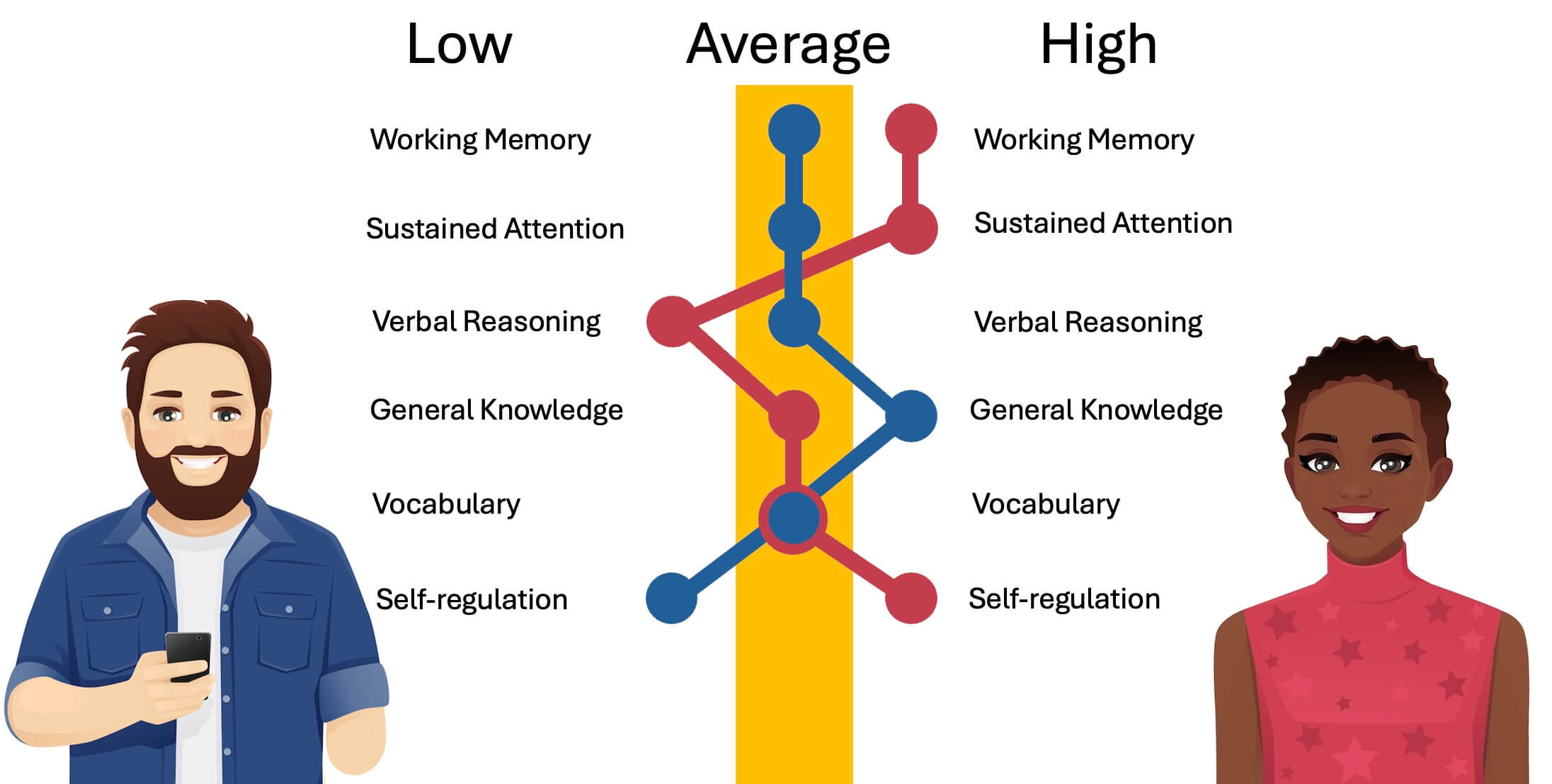
Since students are multidimensional, learning should be multi-dimensional. When those pilots entered their newly redesigned planes, they had options on how close or far they sat from their instruments. They made choices based on their individual needs. One of the best ways to honour student variability begins with how we design and deliver our courses. So let’s begin there and explore how to honour the diversity of our students’ interests, perspectives, motivations, and abilities by using an inclusive framework for teaching and learning.