
Lesson 1 – IDEA and Strength-Based Education
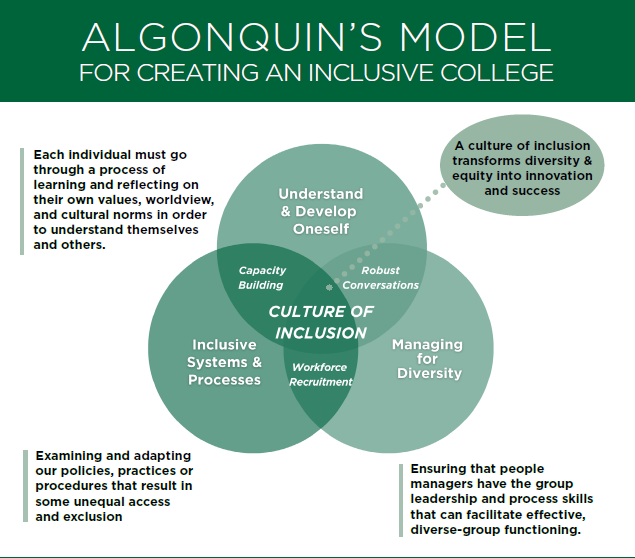
Inclusion, Diversity, Equity, and Accessibility (IDEA) are at the heart of how we approach teaching and learning at Algonquin College. These principles guide our decisions, shape our programs, and influence how we work together to create a campus where everyone feels welcome, respected, and able to succeed. We recognize that people bring unique identities, experiences, and perspectives to our community, and these differences strengthen our learning environment. Our model for an inclusive campus outlines the key dimensions that help bring these principles to life—providing a clear path toward removing barriers, fostering belonging, and ensuring that all members of our community can fully participate and thrive.
Algonquin College Blueprint on IDEA (Inclusion, Diversity, Equity and Accessibility) defines these terms in the context of the college as a workplace. As you explore these definitions, we invite you to think about how these concepts connect to your classrooms, and any specific ways in which you can support inclusion, diversity, equity, and accessibility when designing and facilitating learning experiences.
INCLUSION means intentionally creating a sense of belonging where all employees are recognized and valued for their uniqueness; and collectively promoting a working environment where individuals can be their authentic selves.
DIVERSITY means recognizing that we are all unique and bring with us varied experiences, perspectives and approaches to the work environment.
EQUITY means treating individuals and groups fairly, not necessarily equally or the same; recognizing that there are barriers to employment, participation, access and inclusion in the work environment. The principle of equity acknowledges that systemic barriers exist and action is needed to address historical imbalances.
ACCESSIBILITY means the intentional inclusive design of products, devices, services, and environments for people who experience disabilities. Algonquin College is committed to ensuring that all people are provided with a barrier-free environment that affords them independence and, where they are treated with dignity.” (Algonquin College Blueprint 2023/2026)
Reflective Questions
With the definitions above in mind, reflect on the following:
- How does an inclusive classroom look and feel to you? Consider the tone you set, the relationships you build, and how students are invited to participate and contribute.
- What would an equitable approach to teaching and learning look like in your discipline? Think about how you accommodate varying levels of access, background knowledge, and learning preferences within your course content and assignments.
- What specific strategies do you use to ensure your learning activities and assessments are accessible? Reflect on your use of instructions, multiple formats (for example, ensuring transcripts and close captioning are available for your videos). Also, think about your approach to deadlines: how flexible are you willing and able to be?
Summary
As they support the embedding of Inclusion, Diversity, Equity, and Accessibility (IDEA) principles into assessment design, the reflective questions provided above:
- emphasize an essential shift in perspective: from deficit to strength-based approaches to student learning, and
- challenge a common misconception that inclusive assessments lack rigour: we unpack the very notion of rigour.
The following sections unpack the shifts that this module is encouraging you to explore (or explore further) in your teaching practice.