
Lesson 1 – Multiple Means of Representation
Students have variability when it comes to how they learn. Your students take in and make sense of information in different ways. We can remove barriers to learning if we avoid presenting information in only one way (CAST, 2024). All students have opportunities to learn when we design many ways for students to perceive and process information, including opportunities to read, listen, reflect and discuss, and practice new skills during risk-free activities.
This is what we mean by Design Multiple Means of Representation.
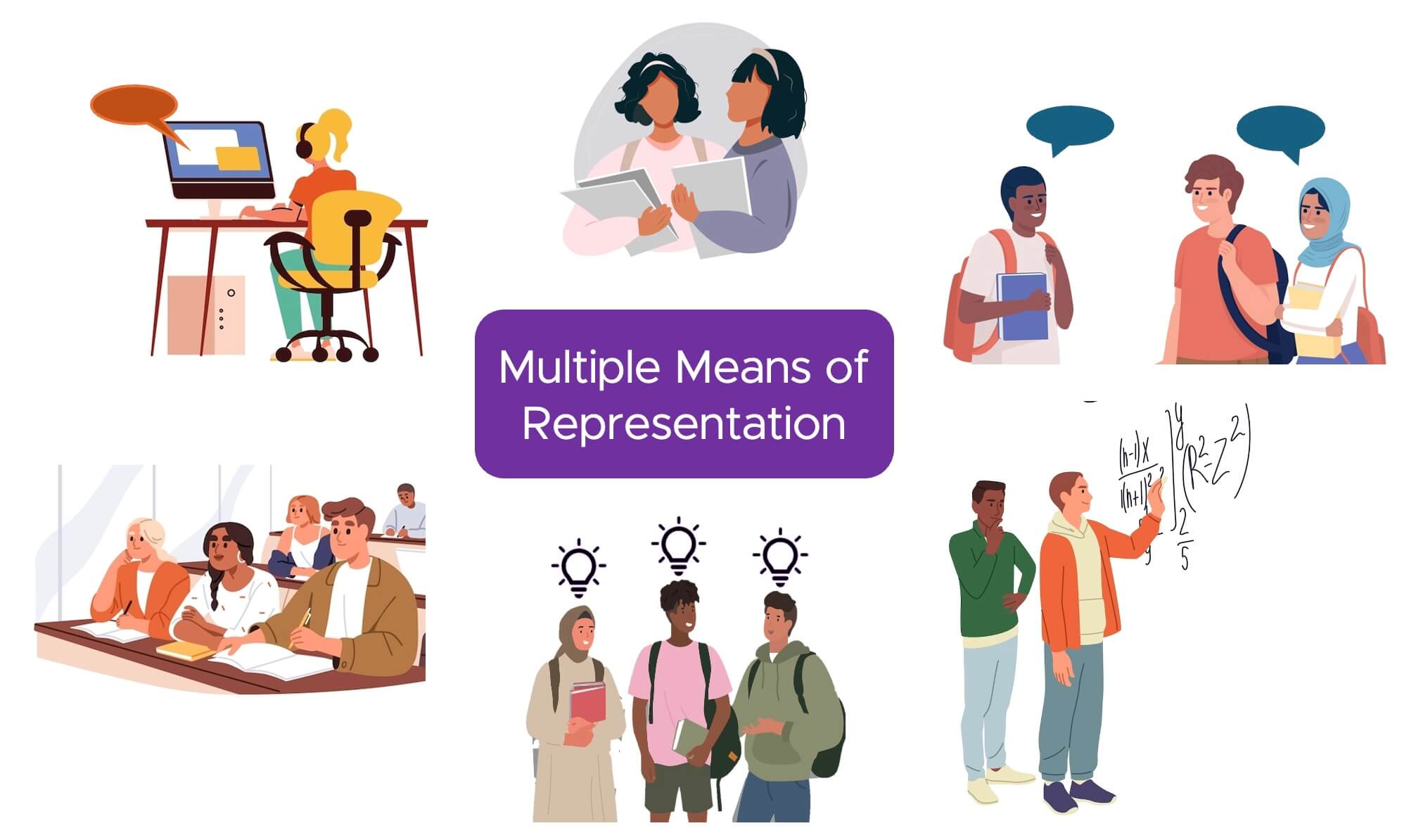
It is important to consider the many ways students perceive information and make meaning in your classes. The CAST team shares, “those with sensory disabilities (e.g., blindness or deafness), learning disabilities (e.g., dyslexia), and those representing diverse or non-dominant cultures and/or languages all approach content differently.
And these differing approaches must be honored and valued. Equally important is the consideration of how people, cultures, individual and collective identities, perspectives, and ways of knowing are represented within the content” (CAST, 2024).
How we teach our lessons, and who and what we include in our lessons, facilitates understanding.