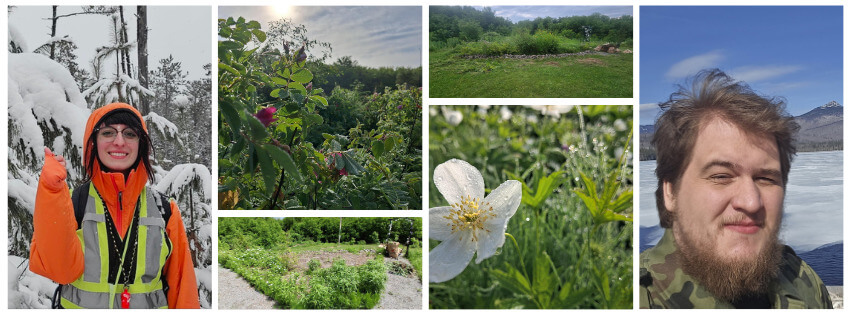
 Walk past the Medicine Wheel Garden at Algonquin College’s Pembroke Campus this summer, and you’ll likely find two students quietly tending the plants, pulling weeds, monitoring growth, and learning from the land itself.
At first glance, Mattea Price and Nicholas Glen might appear to have followed similar paths. Both are studying environmental disciplines. Both love the outdoors. Both are spending the summer caring for one of the campus’s most meaningful spaces.
But their journeys to the Medicine Wheel Garden couldn’t be more different.
That’s exactly what makes them such remarkable examples of the students who choose the Pembroke Campus.
For Mattea, the path began in an entirely different world.
Before enrolling in Algonquin College’s Forestry Technician program, she spent several years working in Montreal’s video game industry as a technical artist, lighting artist, and concept artist after studying 3D Art and Animation. Looking for a career that would reconnect her with nature, she traded computer screens for forests and found herself immersed in ecology, wildlife, forest health, soils, and Geographic Information Systems (GIS). Today, she maintains an impressive GPA, has earned a place on the Dean’s Honour List, volunteered with the Friends of the Petawawa Research Forest, and developed expertise in tree identification, forest health monitoring, invasive species, and sustainable forest management.
While science now shapes her studies, creativity continues to shape who she is. This August 16, 2026, Mattea will showcase another side of her talents during an art exhibition featuring her acrylic landscapes and wildlife paintings at the Upper Ottawa Valley Heritage Centre. Like forestry itself, her artwork reflects a deep appreciation for the beauty and complexity of the natural world.
Nicholas’s journey followed an entirely different trail.
Originally from Windsor, he spent more than a decade building an incredibly diverse résumé. He worked in commercial sanitation, maintained apartment grounds, served as a security professional at industrial sites and power generation facilities, managed logistics in agricultural operations, and even worked with newly arrived refugees beginning their lives in Canada. Along the way, he developed practical skills in landscaping, safety, operations, and customer service before deciding to pursue his passion for the environment through Algonquin College’s Environmental Technician program.
When Nicholas applied for the Medicine Wheel Garden position, he wasn’t simply looking for summer employment. He spoke about his experience maintaining gardens and landscapes, but also about his personal connection to the space. Already a leader in the campus’s student-led Birds, Bats and Bees initiative, he saw the opportunity as a way to enhance biodiversity around the Medicine Wheel while putting into practice what he was learning in courses such as Botany and Soils & Landforms.
Together, Mattea and Nicholas represent something much bigger than a summer student position.
The Medicine Wheel Garden itself was created as a place for learning, reflection, ceremony, and reconciliation. Caring for the garden requires more than watering plants or removing weeds. It requires patience, curiosity, respect, and a willingness to understand the relationship between people and the land.
Their work is also an example of what makes learning at the Pembroke Campus so distinctive. Classroom lessons don’t stay confined to classrooms. Students are given opportunities to apply their knowledge in meaningful ways that benefit both their own education and the broader campus community.
Whether identifying native species, monitoring plant health, improving biodiversity, or helping preserve an important Indigenous gathering space, Mattea and Nicholas are transforming theory into practice every day.
They also remind us that there is no single path to success.
One found forestry after a career in digital art. Another found environmental science after years working in security, maintenance, and operations. Different experiences. Different perspectives. A shared commitment to caring for the land and continuing to learn.
As another academic year approaches, these two students are a reminder of something we witness often at Algonquin College: extraordinary students don’t fit a single mould. They arrive with unique stories, discover new passions, and leave their mark in ways that strengthen our campus and our community.
Sometimes, that legacy begins with something as simple and as meaningful as tending a garden.
Written by: Jodi Bucholtz, Manager, Community & Student Affairs
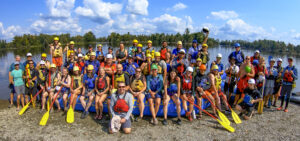
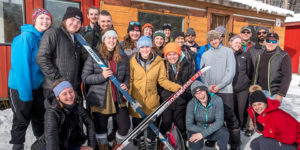 For Adrian Clementino, ODA provided the ideal balance of hands-on challenge and academic preparation. He completed ODA in 2021 and then went directly to TRU, graduating with a Bachelor of Tourism Management, majoring in Entrepreneurship. Since then, his career has been as adventurous and dynamic as the program itself, from managing a remote accommodations operation on the West Coast to now serving as Club Manager of the Ottawa Rowing Club, where he leads operations, budgeting, events, and staff while still maintaining a personal connection to guiding. Adrian says the combination of ODA and TRU has shaped not only his career opportunities, but also the life he is proud to live today.
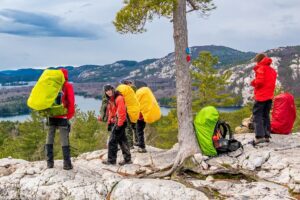 Together, these stories share something powerful. Students who once questioned whether higher education was “for them” now speak about thriving at university. Graduates who began in rafts, canoes, and climbing harnesses now speak confidently about advanced degrees, leadership roles, community impact, and professional purpose. ODA did not just prepare them to guide trips; it prepared them to build lives, grounded in capability, belief, and opportunity.
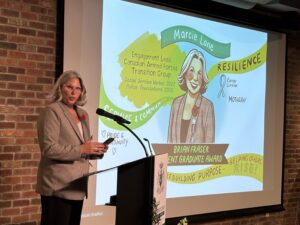
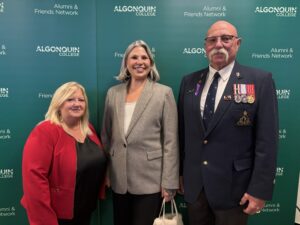 Marcie’s path began more than two decades ago when she enrolled in Police Foundations at Algonquin College. That experience led her into the Canadian Armed Forces, where she served as a military photojournalist, capturing stories of courage and sacrifice around the world. Her lens took her from training fields to deployment zones, where she chronicled the experiences of soldiers and their families.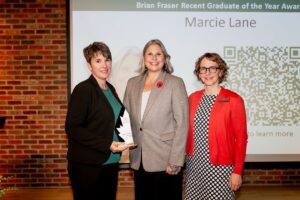
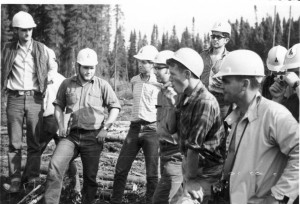
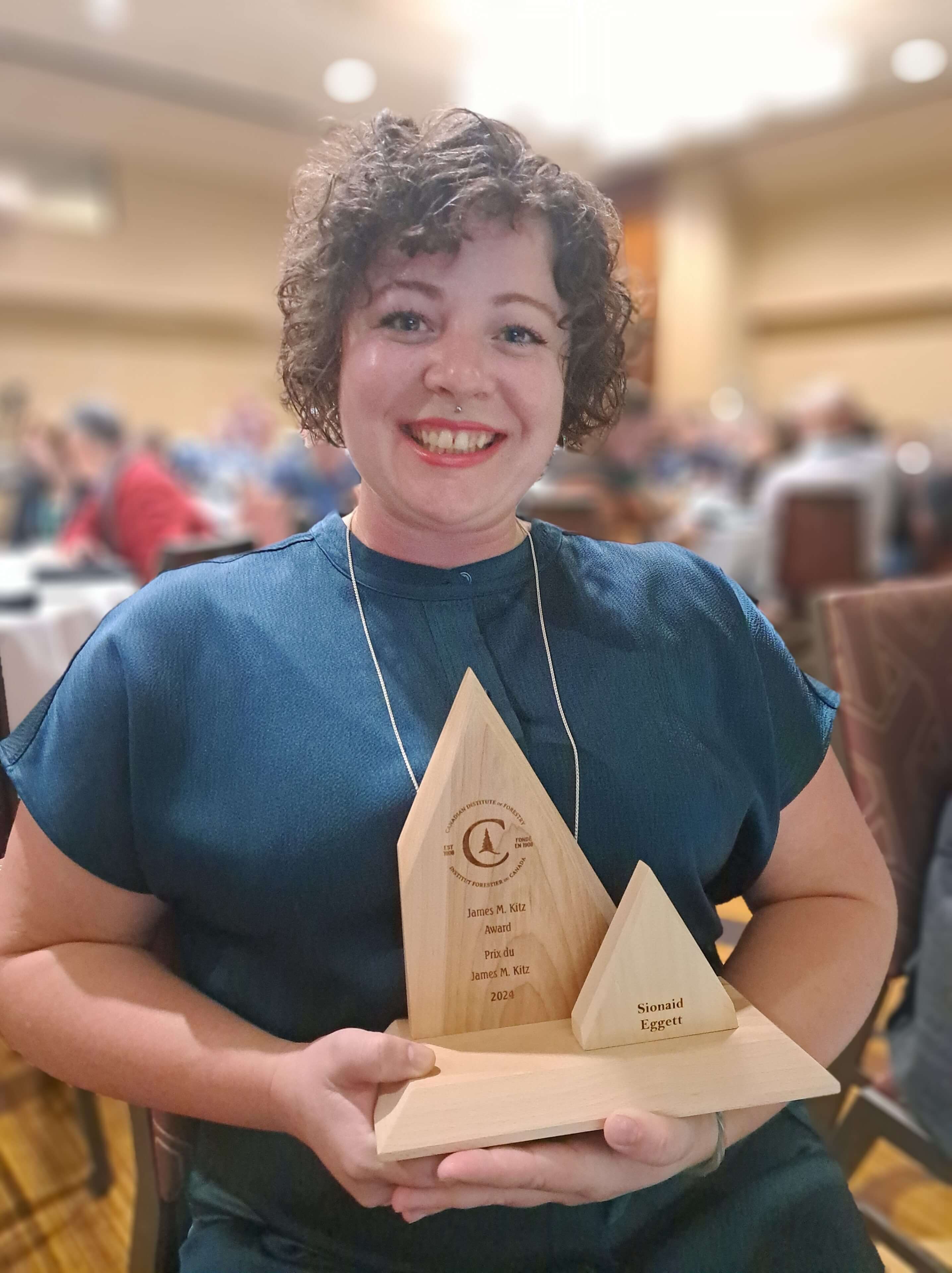
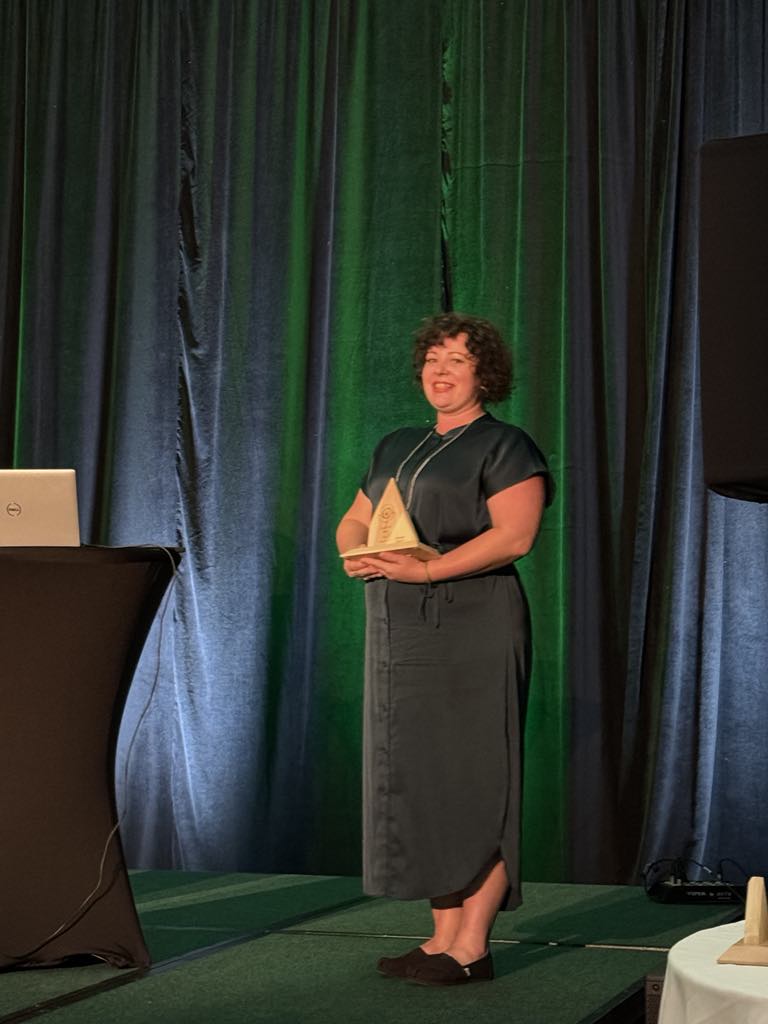
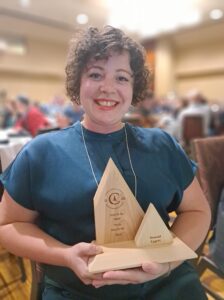 Alumna Sionaid Eggett, now working with the Ontario Woodlot Association, recalls the importance of this hands-on approach, “I was greatly attracted to the amount of hands-on in the field learning Algonquin had to offer … Never have I worked in an environment that is so uplifting, where everyone cares about your journey.” Her words echo what students experience today, an environment where mentorship, applied skills, and community spirit make all the difference.
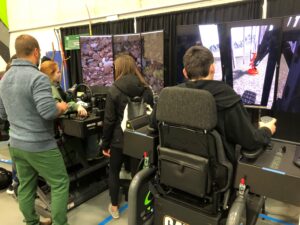 Industry, too, continues to see the value in forestry education. This year, two of our current students, Reed Griese and Ava Newcombe, were named recipients of the prestigious Schulich Builders Scholarship. Their recognition not only celebrates their personal achievements but also affirms the importance of investing in skilled forestry professionals who will carry the sector forward.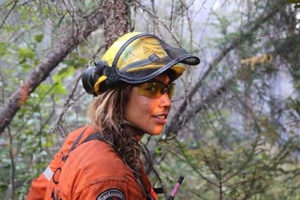
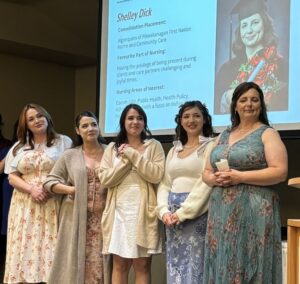
 For Rebecca Langille, the decision was deeply rooted in family values. She asked her mother, Helen, to pin her, crediting her as the single most influential person in her academic journey. Rebecca also honoured her late grandmother, a longtime RN, through the gesture, saying her mom’s belief that “education is never hard to carry around” helped propel her through difficult times. Kimberley Foster was pinned by her aunt and godmother, Julie St. Denis, a critical care nurse for 45 years. Julie’s lifelong commitment to nursing was part of what inspired Kimberley to pursue a career in the profession herself.