students

Waterfront Campus Enrolments Top 1,000 Students for First Time

On Friday, September 1 at 11:44 a.m. Algonquin College’s Pembroke Campus made history. When second-year Practical Nursing student, Laura Edmonds, walked into the admissions office to enroll for her fall classes, she became the 1,000th student to register for the fall intake of students.
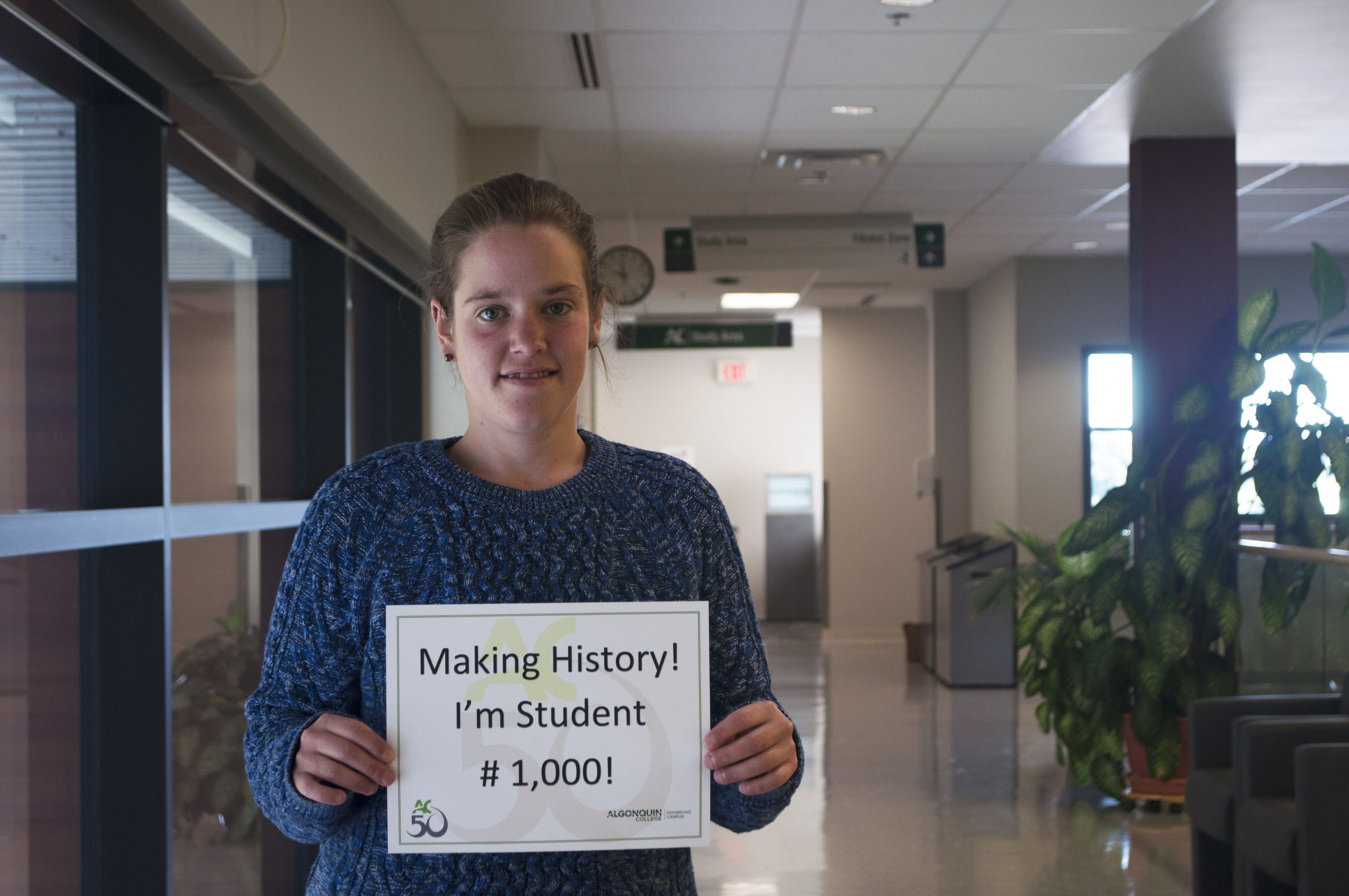
Student #1000It was the first time in the fifty year history of the campus that the enrolment in full-time programs exceeded four digits. Edmonds was greeted by clapping and congratulations by the admissions staff who were on the watch for student number 1,000, knowing the historical significance for a campus that started with 16-full-time students when it opened its doors in 1968.

The record enrolment is continuing a trend that started several years ago when the campus began introducing several unique programs that have helped it attract students from outside of Renfrew County. Programs like Outdoor Adventure, Urban Forestry-Arboriculture, Applied Nuclear Science and Radiation Safety continue to pull out of town students, and have been the primary reason why developers have built three privately owned and operated student residences to house visiting students.
PembrokeThere are now more than 170 students living in residence and many more who are renting or boarding in other apartments and homes in the Pembroke area. The out-of-town student population has grown to be about 50 percent of the students enrolled in the campus.

The campus now offers 21 full-time programs leading to certificates, diplomas, and degrees. As Algonquin College’s largest regional campus, it is blossoming as it celebrates its fifth year of operation at its Waterfront Campus which has become an anchor for Pembroke’s downtown, igniting a renaissance of the city’s inner core. The best example is the new residences, but the energy that has been created has resulted in new stores, façade and building improvements and increased investment in infrastructure such as roads, sidewalks and bridges.

Rome was not built in a day, and it has taken a lot of work by the dedicated administration, faculty and support staff at the campus to bring about record enrolments. The college employees who worked so hard at the old campus to create an exceptional learning environment for students, while making do with inadequate facilities, paved the way for creating a caring culture on campus.

The new campus has taken that commitment to student success, excellent teaching and customer service to a new level. With a beautiful facility built along the picturesque shores of the Ottawa River, it has become a destination campus for both local and out of town students like Laura Edmonds of Cobden.

Not many people have the opportunity to make history. Edmonds did, by being in the right place at the right time. She is student number 1,000 at a campus that looks forward to four-digit enrolments being the norm, not the exception, as its plans for the next fifty years.

Posted by Jamie Bramburger, Manager of Community and Student Affairs at Algonquin College’s Pembroke Waterfront Campus



Top 5 Reasons Why You Should Attend Your Program Awareness Camp Day

Orientation for new college students is several months away, or is it? At Algonquin College’s Waterfront Campus in Pembroke, the college is committed to helping students get off on the right foot as they begin their college journey. To do this, the campus organizes a Program Awareness Camp day each spring to start building a relationship with its incoming class, an initiative that really helps students get comfortable with their new surroundings.

Algonquin College Student Success Specialist


Based on student feedback, here are the top five reasons why students should attend.

  1. Career clarity. The Program Awareness Camp day is full of experiential learning opportunities for students to better understand the program they are planning to enroll in. It provides enough of a snapshot for students to determine if it is the right fit for them.
  2. Meet your faculty. Building an early relationship with your teachers can really help students feel connected to their program. The faculty will be leading the activities so it exposes students to their teaching style and takes away some of the apprehension students may have about the learning environment.
  3. First Contact Meetings. These one-on-one sessions with faculty allow both the student and the faculty advisor to get to know one another better. The faculty advisor will ask a series of questions that could identify potential issues that need to be resolved during the summer months to better prepare a student for their academic program.
  4. Connecting with other students. There will be many incoming students who attend the Program Awareness Camp Day. This provides an opportunity to get a head start on meeting new friends and starting relationships prior to the start of classes. This fosters a much easier transition to college.
  5. Get to know your campus. The Waterfront Campus is built on a picturesque property on the shores of the Ottawa River in downtown Pembroke. The campus offers many great features including a fitness centre, gymnasium, specialized labs, a library that overlooks the river and much more. Taking advantage of a campus tour can help students picture themselves in their college program, experiencing everything that college has to offer.
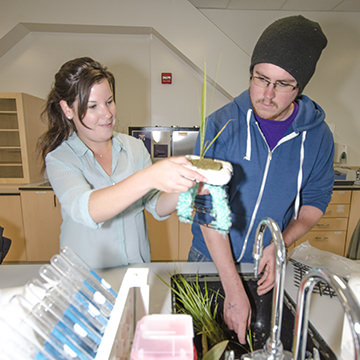
Environmental Technician students working in their science lab

Attending a Program Awareness Camp day is time well spent. Parents are also invited to attend as there is a parent’s program that can also help Moms and Dads feel better about the decision their son or daughter is making in choosing to study at the Waterfront Campus.

This year’s Program Awareness Camp day is scheduled for Saturday, May 13th. There’s still time to register. You won’t regret it!


Posted by Jamie Bramburger, Manager of Community and Student Affairs


Admissions Offer Day!

Ground HogWhile Punxsutawney Phil and Wiarton Willie prepare to celebrate the end of winter (we hope), the eve of Ground Hog Day is a time for celebration in the Ontario College system. It’s the day that colleges start sending out offers of admission to the thousands of prospective students who apply to college each year.

February 1st is known as the equal opportunity deadline, but it’s also the day colleges start letting applicants know if they have met the admission requirements for the programs they have applied to. Yes, there will be some disappointed applicants, but colleges are very good at making alternative offers that help applicants stay on their pathway to their chosen career.

At Algonquin College’s Waterfront Campus, applicants can expect a very personalized experience as they learn their admissions status. They will be able to check their application on the Ontario College Application Service website to see if the college has made them an offer of admission.

Open House - March 11, Algonquin College, Pembroke CampusLater in the day, they can expect a congratulatory email from the Waterfront Campus that will provide additional information on their next steps in the admissions process. The email will also include a congratulatory video message from their program coordinator and a personalized invitation to attend the campus March Break Open House on Saturday, March 11th.

By late afternoon or evening, college faculty and student services staff will be calling accepted applicants to congratulate them and answer any questions they might have about their program or the Waterfront Campus.

All of these touchpoints are part of the college’s effort to help applicants feel comfortable with the decision they are making to enroll in a post-secondary program. It’s also the first step in building a relationship with incoming students.

Over the course of the admissions cycle, there will be plenty of opportunities for new students to get to know the campus and the faculty who will be teaching them. There will be invitations to open houses, program preparation camps, jump-start academic programs and of course orientation activities. By the time, September rolls around, students will be very familiar with their new surroundings. Students and families can also get to know our campus by joining our online community through Facebook, Twitter, and Instagram.

It all starts on February 1st, when the Waterfront Campus says congratulations, you’ve been accepted into college!

Posted by: Jamie Bramburger, Manager of Community and Student Affairs

Co-Curricular Opportunities Help Students Connect to their Campus

Colleges are full of energy and helping students tap into activities that are outside of their daily routine of attending classes can go a long way in enriching a student’s college experience. Unfortunately, not all students take advantage of the many enhanced learning opportunities that are presented on college campuses.

At Algonquin College’s Waterfront Campus, there is a vibrant co-curricular program that gives students an opportunity to volunteer in a structured way that allows them to capture their extra curricular activities on a transcript.

tedx-talk-by-students-nov2016

A student’s co-curricular record can be very useful when they are pursuing their first job within their field as it demonstrates to potential employers their motivation, transferable skills and dedication to supporting special projects, all things that most employers are interested in when hiring a new employee. Essentially, it gives a new graduate an advantage when trying to get their resume to the top of the pile.

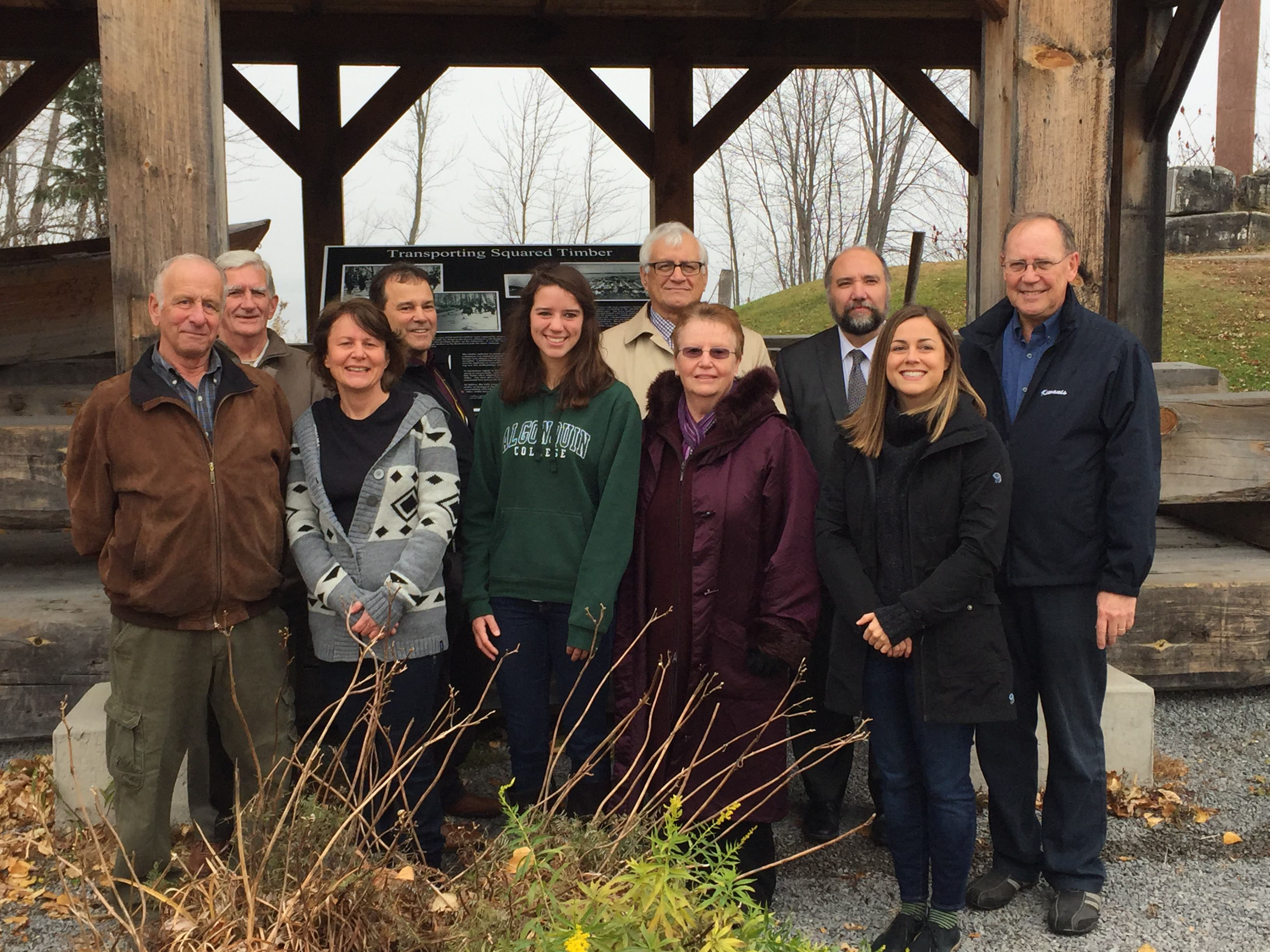
In recent weeks, there have been a number of great examples of co-curricular activities on campus. These have included students participating in Pembroke’s annual Santa Claus parade, students volunteering at a very successful TEDxPembroke event, and two Outdoor Adventure Naturalist students engaging in an applied research project to develop interpretive signage for the Kiwanis Walkway, that runs next door to the Waterfront Campus.

kiwanis-way-heritage-sign-project-nov2016

Students come to college to obtain a credential and ultimately a career in the field that most interests them, but by broadening their experience to include co-curricular activities, they can expand their network of contacts, feel good about contributing to college and community activities and be rewarded for their efforts.

In a competitive labour market, having an impressive co-curricular record can make the difference in getting your career off to a great start.

Posted by Jamie Bramburger, Manager of Community and Student Affairs.


TEDxPembroke at Algonquin College’s Waterfront Campus

Have you ever been captivated by a speaker who has you hanging on every word that comes out of their mouth? There are few public speakers who have that much charisma, but when it does happen, it’s magical.

Image result for ted talksAs a fan of TED Talks, I’ve had that experience. I’ve been mesmerized by thought provoking presentations by ordinary people who had a good idea to share. In a world where ideas are often discovered through digital platforms, there’s still something special about being in the same room as a speaker who has a good story to tell.

TED Talks has been inspiring millions of people around the world to share ideas, primarily in short but pointed talks intended to stimulate collaboration. These talks are delivered in front of a live audience and then shared with others through the internet.

As a non-profit organization, TED has evolved to include independently organized TEDx events that allow communities to make great ideas accessible and to spark conversation. For the first time, a TEDx event is coming to Pembroke through the efforts of Algonquin College’s entrepreneurship initiative.

TEDxPembroke SpeakersOn Saturday, November 12th the College will present TEDxPembroke with seven dynamic speakers taking the stage. They will include the Chief Paramedic and Director of Emergency Services for Renfrew County, Mike Nolan and the Chief Executive Officer of Canadian Nuclear Laboratories, Mark Lesinski.

Under the theme of “Dream Big,” Lesinski will explore the potential opportunities that could come from the development of small modular nuclear reactors. Nolan will focus his presentation on innovative leadership in preventative ambulatory care for older adults.

TEDxPembroke, Algonquin College, Pembroke Campus

Mitch Kurylowicz is the founder and driving force behind Project Jenga, a non-profit organization working to promote and fund-raise for gender equality in Kenya. He will talk about how luck influences our lives and how we need to make our own luck.

Craig Gauthier is a self-proclaimed “geek” who has tried many things from film-making to writing books. The Pembroke native will focus his talk on finding your keys to success.

Dr. Duncan Stewart is the Director General of Canada’s National Research Council. His talk will be on the importance of entrepreneurship and innovation, particularly in rural regions. Two students from Algonquin’s Environmental Technician program will also speak, Aarika Charlebois and Emily Krutzelmann, both sharing personal journeys to success.

Image result for tedxpembrokeDuring the event some popular TED Talks will also be shown. The event runs from 3 to 6 p.m. with a few tickets still remaining. The cost is approximately $35 and includes a complimentary non-alcoholic beverage and desserts. Get your tickets here >>.

Bringing a TEDx event to the college is an exciting initiative. It complements the college’s successful speaker series and also supports its efforts to inspire its students, faculty and the general public to embrace entrepreneurialism and innovative thinking. Through the sharing of great ideas and dreaming big, we can all help our region be more prosperous.

Posted by Jamie Bramburger, Manager of Community and Student Affairs

Open House at the Waterfront Campus

Fall Open House, Algonquin College Waterfront CampusAs the leaves change colour, it’s time for senior high school students to start thinking about their post-secondary plans. Algonquin College’s Waterfront Campus will be holding its annual Open House Career Fair on Thursday, October 6th, an opportunity for students to meet with faculty, admissions and financial aid officers to have their college questions answered.

The event is held in partnership with the College Information Program (CIP), meaning high school students can also speak with representatives from all 24 Ontario publicly funded colleges. This one-stop shopping opportunity can really help students make informed decisions on where the programs they are interested in are offered, what admission standards do they need to meet, and how much will their college education cost?

Algonquin College, Action Sports and Park DevelopmentAlgonquin College’s Open House is normally attended by more than 300 high school students from across Renfrew and Pontiac Counties, and some students also travel from other areas of the province to learn more about the unique programs that are offered at the Waterfront Campus. These programs include two brand new ones that are being offered for the first time in the Fall of 2017: Action Sports and Park Development; and Urban Forestry-Arboriculture.

In the past, the Open House has been a one day event, but this year it will also be offered on Wednesday, October 5th from 6:30 to 8 p.m. in the campus gymnasium. This will allow parents, younger high school students, and mature students to connect with faculty about their burning college questions. The gym will be full of interactive displays for each of the 21 full-time programs that are offered at the Waterfront Campus.

Algonquin College Student Success Specialist

Admission to both Open House events is free. Students who are attending the daytime Open House on October 6th will have access to bus transportation to get to the college. That event will run from 11:30 a.m. to 2:30 p.m.

Applications for the Fall 2017 intake will be available soon on the Ontario College Application Service. Now is the time to start exploring your future.

Posted by Jamie Bramburger, Manager of Community and Student Affairs


Orientation Starts Early at the Waterfront Campus

In the world of post-secondary education, there really isn’t any as exciting as orientation week. Each fall, the start of the school year brings together a new group of students who are full of energy and enthusiasm, and eager to meet new people as they start their college journey.

Group of Applied Research students and staff in group photo outdoorsAt many colleges, orientation is the first time that students are meeting their new classmates, but at Algonquin College’s Waterfront Campus, in many cases, it’s an opportunity to connect with familiar faces. The reason is the campus has increasingly created more opportunities for students to get to know each other through pre-orientation activities such as Program Awareness Camps held each spring and Jump Start pre-academic preparation programs offered in August.

With about 50 percent of the campus student population having to re-locate to Pembroke, these early interventions have become critically important in helping students succeed. It’s the first step to ensure they are comfortable in their new surroundings.

In fact, many students and families have connected with the campus on several occasions before orientation week arrives. They have attended an Open House, taken a campus tour, or participated in a program awareness camp where students experience what their program is going to be like through interactive learning exercises led by their faculty.

A group of Ottawa RedBlacks cheerleaders lift a student in the airThrough these early connections, students have been able to stay in contact with other incoming students throughout the summer months via social media, phone calls, texting or even face-to-face meetings. When they arrive for orientation, the nervousness has subsided because they are greeted by another student who they have already gotten to know quite well.

Orientation week is packed with activities. There are free lunches, whitewater rafting trips, a pub, movie nights, yoga sessions, bubble soccer in the gymnasium, board games and a move in day BBQ for students living in residence. The social activities will continue over the next few weeks as the school year starts, and students gradually settle into their academic programs.

downtown Pembroke

The value of a robust orientation program can never be questioned, but for many of our students it’s just an extension of the relationships they started building with other students several months ago. For younger students, in particular, this approach goes a long way in helping them get off to a good start at college.


Posted by Jamie Bramburger, Manager of Community and Student Affairs

Premier’s Workforce Panel Recommendations Good Fit for Colleges

It’s in the DNA of colleges to be partners with business. Since their inception in 1967, Ontario’s publicly funded colleges have had a primary focus to prepare students to fill the workforce needs of the province’s employers. They’ve done this by staying connected to industry to ensure the curriculum being taught to students is relevant and by building a huge network of partnerships with employers that allow students to gain on-the-job training while in school.

Former Ontario Cabinet Minister, Sean ConwayNow, a provincial panel looking into what Ontario needs to do to keep its workforce competitive has made several key recommendations. The Premier’s Highly Skilled Workforce Panel was chaired by former Renfrew-Nipissing-Pembroke MPP Sean Conway, who calls the panel’s work, “A matter of urgent and pressing priority driven by changing demographics and evidence that the future net growth of Ontario’s labour force will be provided through immigration.”

Here are the six key overarching recommendations made by the panel:

  • Building stronger partnerships between educators and employers by establishing a new Planning and Partnership Table, supported by a new Workforce Planning and Development Office within government. Employers, educators, labour, government and others would work through this table to drive solutions for skills and talent development, and for experiential learning. And Industry Tables would address mismatches between the skills that industries need and what the workplace offers
  • Increasing access to job market information by working with the federal government to help lead the creation of a national system to give employers and job-seekers better access to information such as where jobs exist and which skills employers will need in the future
  • Expanding opportunities for learning by experience by funding more placements so that every student completes at least one experiential learning opportunity before graduating from high school, and another before finishing college or university
  • Promoting both traditional and non-traditional career paths by increasing students’ exposure to options including the arts, science, engineering, technology, skilled trades and entrepreneurship
  • Investing in human capital by launching programs to support training in the workplace and encouraging large employers to share successful training programs with small and medium-sized enterprises
  • Closing gaps in skills and competencies by finding ways to teach and recognize the skills that students learn, such as teamwork, problem solving and entrepreneurial spirit, and by developing training programs for groups underrepresented in the workplace to allow them better access to employment opportunities.

While preparing its report, the panel visited several Ontario communities and spoke with dozens of stakeholders about the most pressing workforce needs. One of those visits was at Algonquin College’s Waterfront Campus in Pembroke where more than 25 local business and education leaders provided feedback from a rural Ontario perspective.

Sean ConwayThe benefits of building a strategy to integrate retiring military personnel into the civilian workforce was an idea that surfaced at the Pembroke session and found its way into the report. There was also a lot of discussion about the need for more support to guidance counsellors to help student transitions from high schools to post-secondary and the ongoing need to have timely data on labour market trends and opportunities. These ideas also garnered attention in the report.

During a news conference announcing the panel’s findings, Premier Kathleen Wynne stated, “The panel’s recommendations will not stay on a dusty shelf,” and Minister of Advanced Education and Skills Development, Deb Matthews, called the report “An aspirational document that provides a framework to build a truly integrated partnership that links the education system with businesses.”

There is no question that Colleges will continue to be an integral part of the government’s plans to address its workforce challenges, but the report clearly states that there is still work to do, such as the expansion of co-operative education placements for more college students.

In the final analysis, the recommendations are intended to help Ontario prosper and they place business-education partnerships at the centre of the plan. That’s good for colleges and even better for students and employers.

Read the full Building the Workforce of Tomorrow: A Shared Responsibility report >>

Read more reaction to the Panel’s Recommendations:

Posted by Jamie Bramburger, Manager of Community and Student Affairs

New Student Housing-An Economic Spinoff of the Waterfront Campus

When Algonquin College started seriously talking about building a new campus in Pembroke in 2006, the project vision became known as Renaissance Square. The project envisioned a new beginning for the College and for Pembroke’s historic downtown, which had struggled for many years as the retail sector pushed away from the city’s inner core.

Now, four years after the Waterfront Campus opened, Pembroke is really starting to experience a renaissance. The most obvious example is the opening of two privately owned and operated student residences, and the recent start of construction on a third purposefully built apartment building for students.

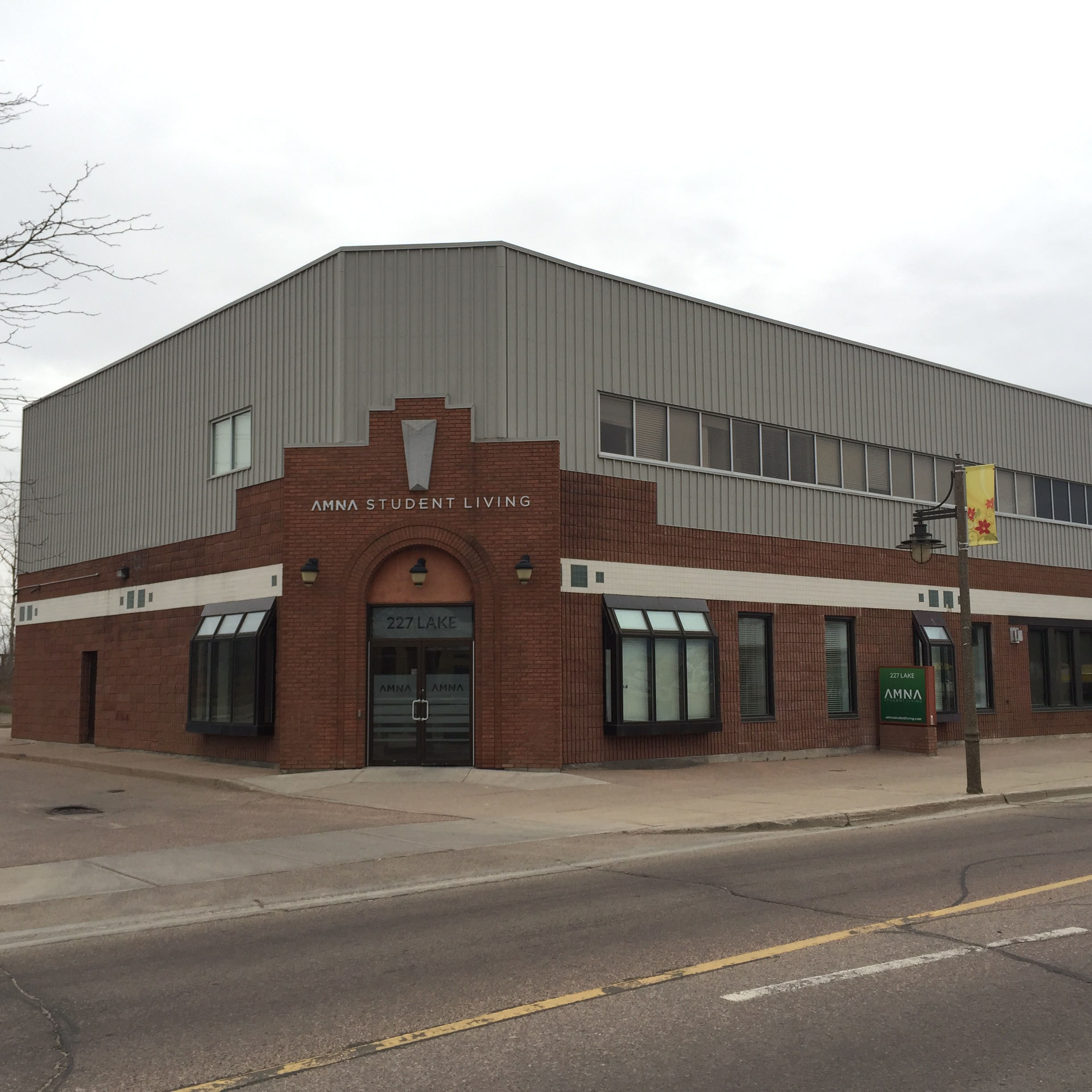
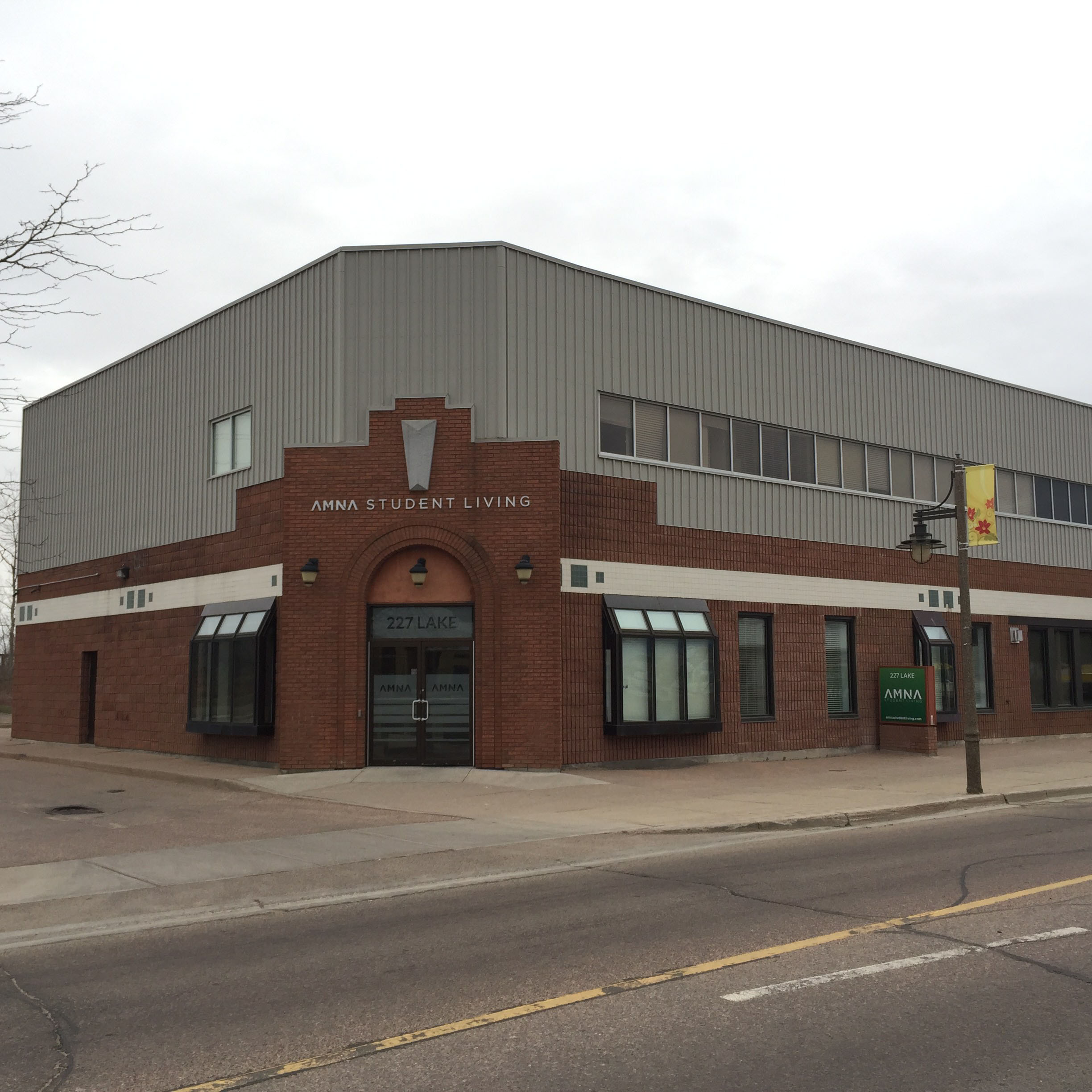
AMNA Residencestudent residence loungeAMNA Student Living was the first residence to open in the fall of 2014. The former Lakeside Medical Clinic had been vacant for a few years before it was purchased by a developer who took advantage of its close proximity to the new campus. The building was gutted and renovated to include spaces for 49 students. Most of the units are singles, and the residence includes a common kitchen and lounge area for students to socialize.

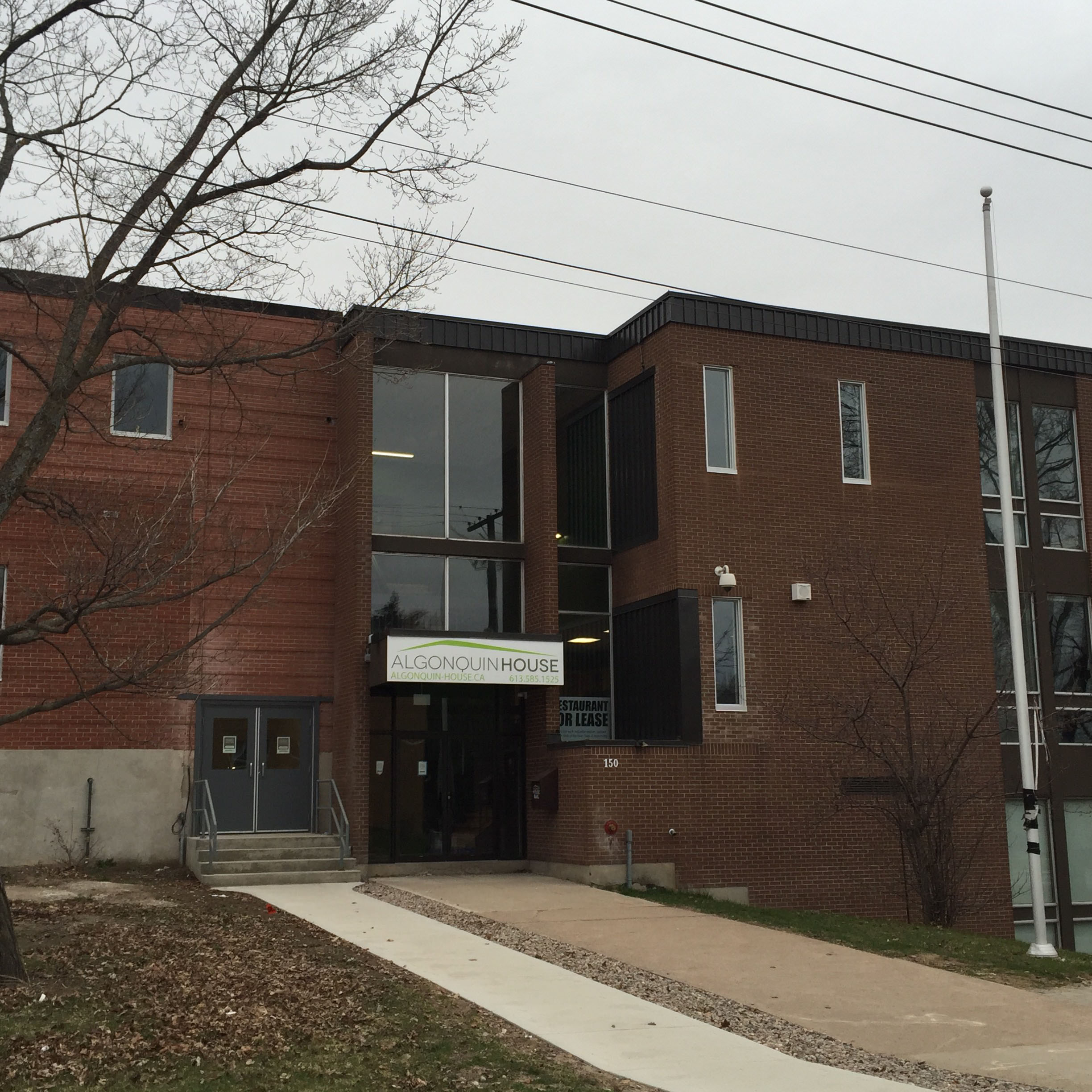
Algonquin HouseAlgonquin House kitchenThe second residence, Algonquin House, opened in the fall of 2015 in the former Algonquin College Pembroke Campus. After the College sold the building, the new owners made extensive renovations to allow the front of the building to be used for doctor offices and a pharmacy, while the larger portion of the building was converted to a student residence for more than 70 occupants.

Construction on the third residence started a few weeks ago. This residence doesn’t have a name yet, but the developer plans to have it ready for the summer of 2017. The four-storey building will accommodate approximately 50 students in three-bedroom apartments.

Residence construction-Streek Building

The Campus has been gradually growing its enrolments and now attracts almost 50 percent of its close to 1,000 full-time students from outside of Renfrew County. The growing out-of-town student population has built a strong business case for private investment in student housing, generating new tax revenue for the city of Pembroke and creating more options for out-of-town students who are looking for accommodations while studying at the Waterfront Campus.
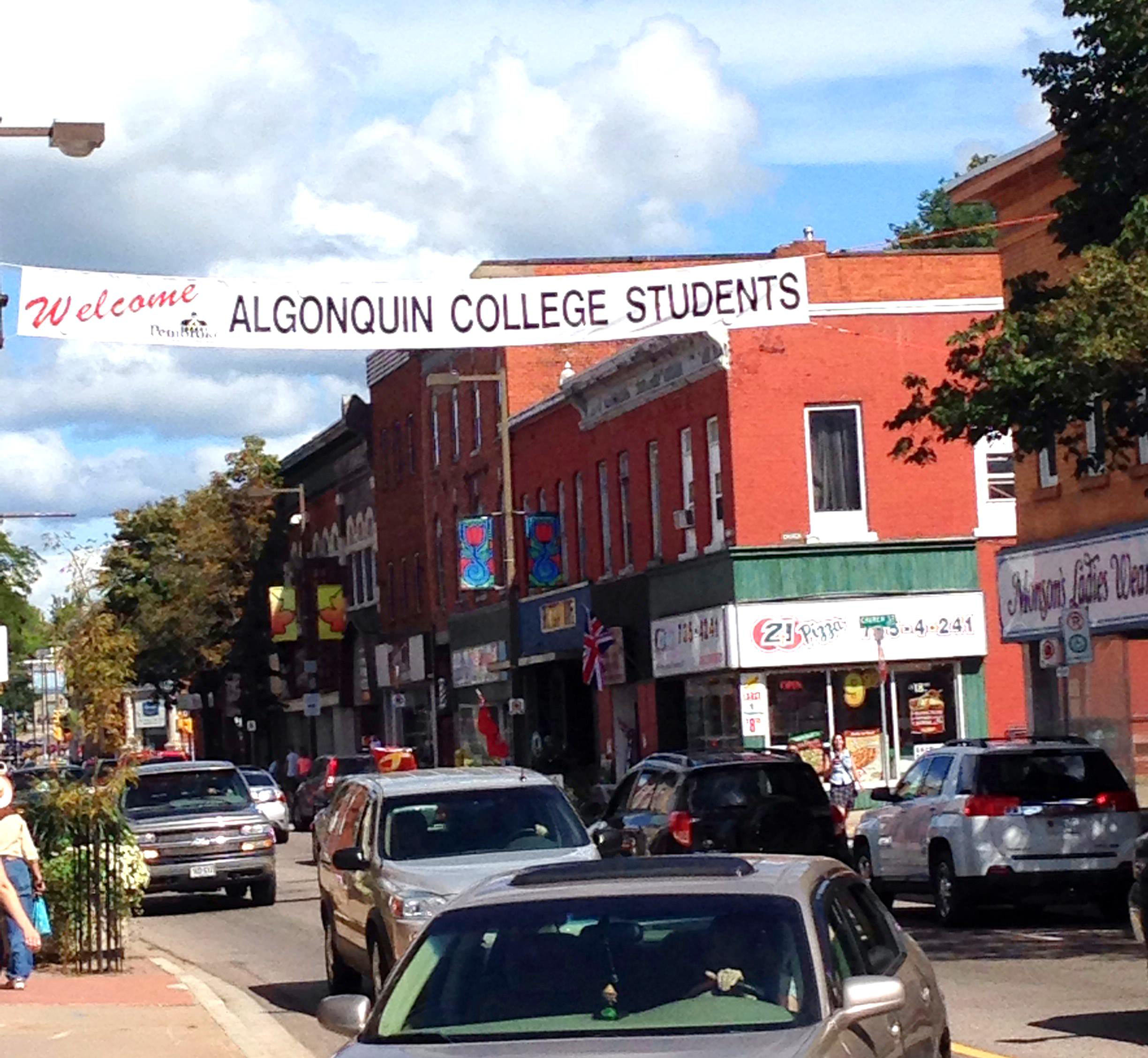
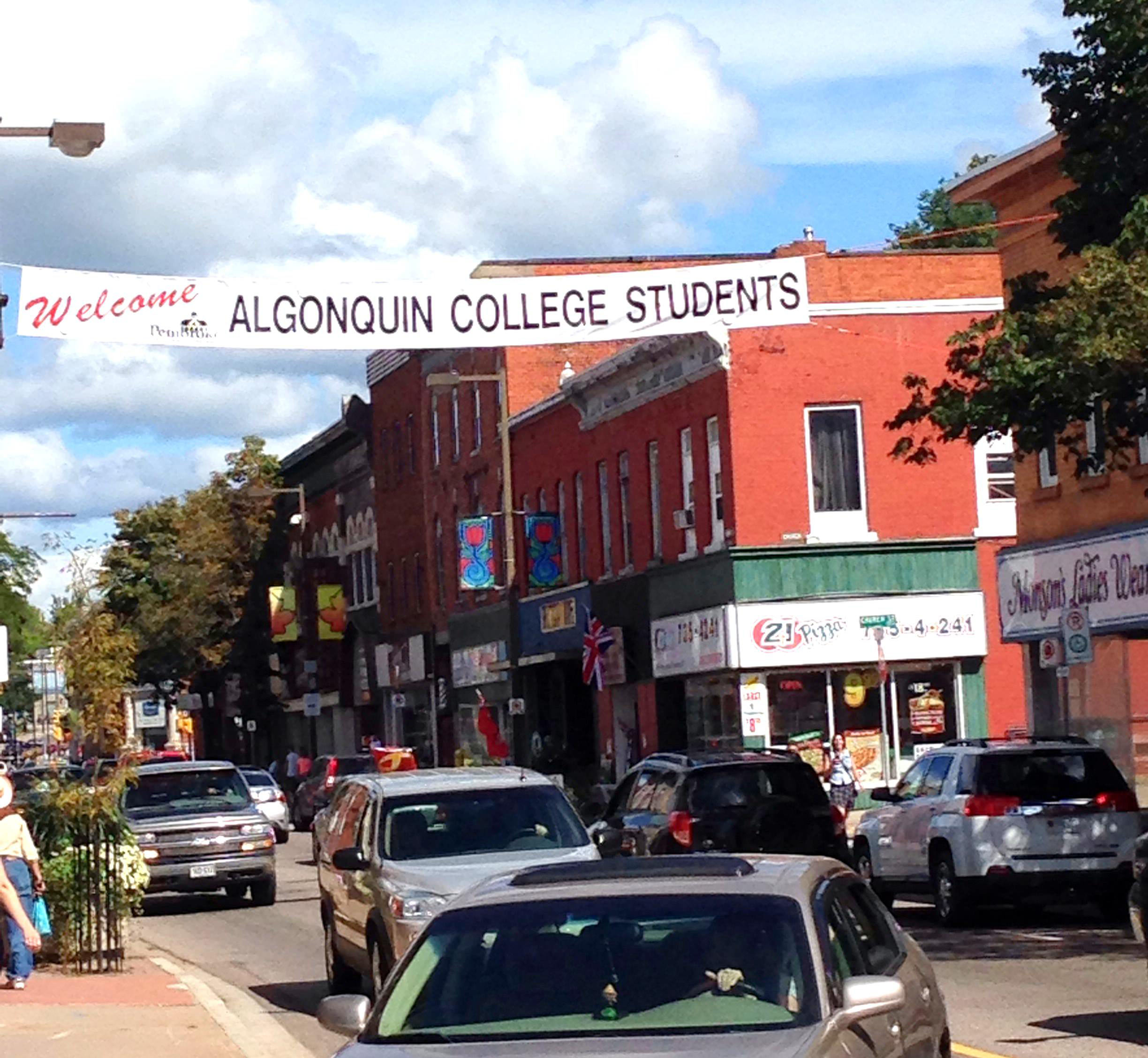
downtown PembrokeAnd it’s not only the student housing market that is benefiting from the Waterfront Campus. The entire downtown has a much more positive vibe. Storefronts that were once vacant are filling up, shop owners are improving their facades, developers are buying up properties and investing in them, and merchants are welcoming Algonquin’s students to their businesses.

The building of the Waterfront Campus is the best thing to happen to Pembroke’s downtown in decades and it may be just the tip of the ice berg. The renaissance is well underway.

Posted by Jamie Bramburger, Manager of Community and Student Affairs

Research finds 84% of college grads secure employment within six months

College education continues to provide an effective pathway to the workforce as results show about 84 per cent of Ontario’s most recent graduates found employment within six months of graduation.

“Colleges build the talent and skills of students to help them pursue rewarding careers,” said Linda Franklin, the president and CEO of Colleges Ontario. “This strengthens the economy and builds Ontario’s international reputation.”

Read more of this media release from Colleges Ontario >>