Substance Use Spectrum
Everyone falls somewhere on the Substance Use Spectrum. Not everyone uses substances. Not everyone that uses substances experiences negative impacts. The Substance Use Spectrum also recognizes that some people will develop Substance Use Disorder. People can move fluidly from one end to the other, across the spectrum throughout their lifetimes.
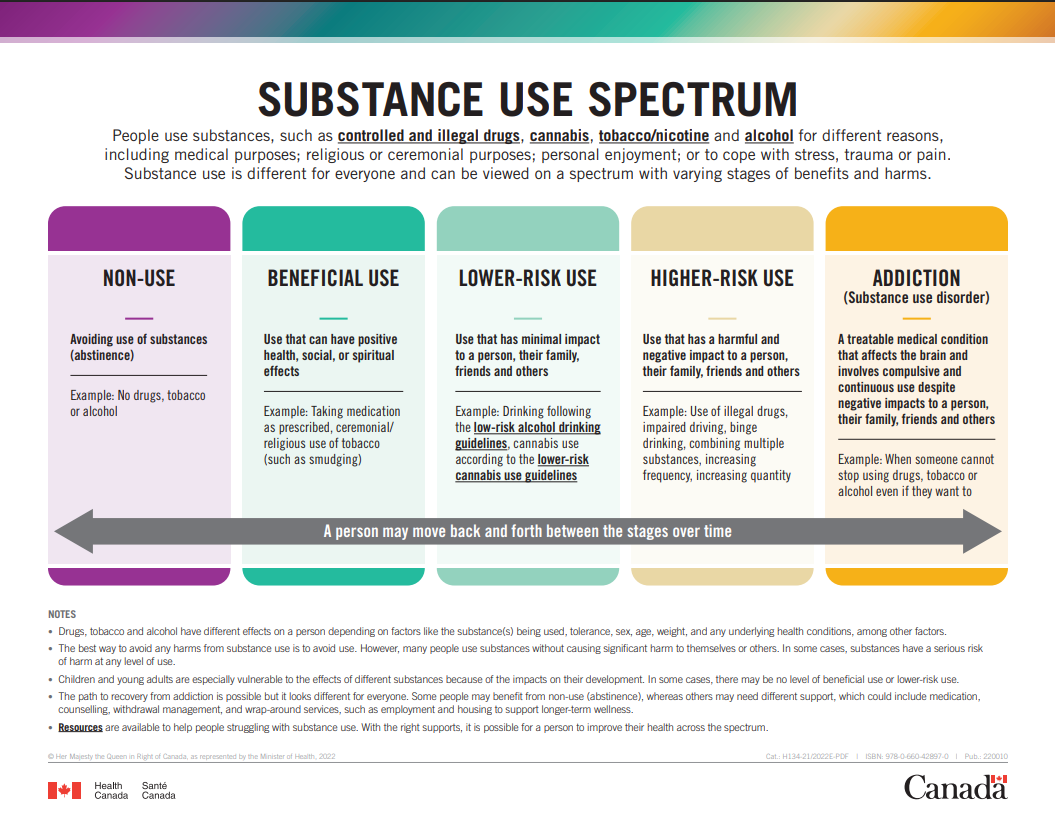
Stages of the substance use spectrum
Beneficial use
Beneficial use is the use that can have positive health, social, or spiritual effects.
For example:
- taking medication as prescribed
- ceremonial/religious use of tobacco (such as smudging)
- relaxation and enjoyment
Higher-risk use
Higher-risk use is use that has a harmful and negative impact to a person, their family, friends and others.
For example:
- binge drinking
- driving after drinking
- use of unregulated drugs
- increasing quantity used
- increasing frequency of use
- combining multiple substances
Lower-risk use
Lower-risk use has minimal impact on a person, their family, friends and others.
For example:
- drinking following the low-risk alcohol drinking guidelines
- using cannabis according to the lower-risk cannabis use guidelines
Non-use
Non-use is making the choice for a variety of reasons to not use alcohol or other substances.
For example:
- Choosing not to use alcohol and/or other substances because of concerns that it might negatively impact physical or mental health
- Choosing not to use alcohol and/or other substances because there is no interest
- Choosing not to use alcohol and/or other substances because use has caused issues, problems or concerns in the past
Addiction (Substance Use Disorder)
Substance Use Disorder is a treatable condition that affects a person physically, mentally, emotionally and/or relationally that involves compulsive and continuous use despite negative impacts to a person, their family, friends and others.
For example, when a person experiences the 4 Cs:
- Craving
- Loss of Control of amount or frequency of use
- Compulsion to use
- Ongoing use despite Consequences.
Why Do People Use Alcohol and Other Drugs?
There are a wide variety of reasons that people choose to use alcohol and/or other drugs. Common reasons why people choose to use alcohol and other drugs include: to feel good, to feel better, to do better, to explore.
- To feel good: Some people like how they feel on certain drugs like alcohol. They can experience an increase in relaxation or feel more confident. They feel good when they use alcohol and other drugs in certain ways, at certain times.
- To feel better: Some people may use substances to reduce symptoms related to anxiety, depression or trauma. While others may use alcohol and other drugs to cope with stress or to avoid emotional pain.
- To do better: Some people may experience improved performance or an increased capacity to manage day to day tasks. They may find that alcohol and other drugs help give them energy which helps them keep going when their energy is low.
- To explore: Some people may use alcohol and other drugs to discover new experiences, perspectives, feelings or insights.
If the use of alcohol and other drugs becomes the only way to feel good, feel better, do better or to explore, there is a risk that a person will become dependent on substances. When people are dependent on substances to feel good, feel better, do better or to explore, it can be much harder to make changes to their use if the use starts causing problems. It can be very helpful to have many different ways to meet these needs and address any underlying issues in ways that won’t become problematic.