Canada is a melting pot of people. With one of the most diverse populations in the world, the country has embraced immigration, but regrettably, most newcomers choose larger centres to settle in rather than finding a new home in a rural community.
It’s understandable why this happens. New immigrants are often sponsored by family members and they want to be around people who share the same beliefs and customs, while they embrace all that their new country has to offer. With fewer immigrants settling in rural areas, there is less of an attraction to go there, but now more than ever rural communities need immigrants. Declining birth rates, aging populations and youth out migration are among the major labour market challenges facing rural areas, and immigration provides an opportunity to address some of these issues by replenishing the population gap that has emerged.
 Regional college campuses located in smaller rural communities such as the Pembroke Waterfront Campus can play a major leadership role. As these campuses attract more students of culturally diverse backgrounds they create more welcoming communities for new Canadians. A great example is the recent establishment of an African Students’ Alliance on campus, a group that promotes and celebrates African culture.
Their work has been inspirational and is a great example of students being leaders. They have opened the eyes of so many students and college employees who had limited knowledge of African culture. Their integration into the broader community through volunteerism and student learning experiences is expanding their reach and influence. It’s powerful and timely as Renfrew County faces the reality of having almost 50 percent of its population over 45 years of age according to the 2016 National Census.
At the Pembroke Campus this year there are about a dozen international students, but there are so many more students who are from different cultural backgrounds. With about 50 percent of the campus student population coming from out of town, there is a great opportunity to attract more students who can enrich the cultural mosaic of the campus and greater community.
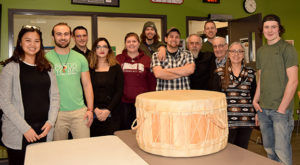 The Campus wants to be leaders in this effort. Case in point is the celebration of Indigenous culture that has been taking place in the month of March. Powerful learning is taking place as the college embraces the recommendations of the Truth and Reconciliation Commission that has challenged educational institutions to do their part by helping to preserve, revitalize and strengthen Aboriginal languages and cultures. Through a partnership with the Circle of Turtle Lodge, there have been several activities on campus that have engaged students and college employees to better understand the past, present and future of Indigenous ways.
The time is now for regional campuses to help rural communities embrace multiculturalism. It’s critical to the long-term prosperity of smaller towns and cities. Algonquin College’s Pembroke Campus is well positioned to be Renfrew County’s diversity champion.
Posted by Jamie Bramburger, Manager of Community and Student Affairs

 Doctor Mike Condra will present on Mental Health in the Workplace. Dr. Condra worked extensively in health care and post-secondary education for more than 30 years and co-developed training workshops in crisis intervention skills, training more than 5,000 people. His workshop will focus on the misconceptions of mental health in the workplace and how this impacts the work environment.
 Every company is looking for an advantage over its competition. Doctor Judy Laws’ workshop on Sparking Innovation to Unlock Your Organization’s Full Potential will introduce participants to new concepts to create a culture of creativity and entrepreneurialism. The College’s entrepreneur-in-resident, Chéla Breckon, will build on this session with a workshop entitled, Leading with Vision, Mission and Purpose, a how-to guide to strategic planning for organizations and businesses.
 The final workshop focuses on marrying events and marketing. Led by entrepreneur, Katie Tollis-Flabbi, Creative Event Marketing Strategies is focused on small businesses who have to balance their budget with the need to promote their products and services.



 This winter, Algonquin College’s Pembroke Waterfront Campus has freshened up its






 I remember the first time I asked my mentor to mentor me. I was quite nervous and afraid she would say no. I didn’t realize at the time that I was being silly. Why would she say no to my request – she was one of the most engaging, encouraging and respectful people I had ever met and these were the traits that inspired me to ask that awkward question, “would you mentor me?”
 I came into formalized mentoring later in life, and only after an abundance of work experiences and mistakes. I have to admit when I think back, there were mentors but they often took on the guise of teachers and coaches, picked not by me but by the activities I participated in. It was only into my 30s that I started to actively look for mentors. I started to make a list of people whom I held in high regard in the community and that I believed I could learn from.
 For all these reasons and more, mentoring and giving back to the community through mentoring is one of my core values, and I believe I am lucky to be able to guide and help students reach their own goals and achieve their dreams.