Artificial Intelligence Software Development (Co-op and Non Co-op Version)
Connect reasoning and machine learning for an innovative career developing artificial intelligence solutions.
- Be quickly immersed in AI theory and receive the hands-on experience to back up that knowledge
- All activities are designed to teach students about methods currently being applied in the field, using up-to-date software and equipment
- Graduates may find employment in various of computer software related domains in the private, corporate, industrial, governmental, or service sectors
Program Availability and Schedule
Availability
Open
Closed
Waitlisted
Start Term
Availability
International
Availability
Competitive?
Fall 2026
No
Winter 2027
No
Fall 2027
No
Schedule
Program Summary
Credential
Program Delivery
Program Code
Area of Interest
School
Campus
Work Integrated Learning
Eligible for Post-Graduation
Work Permit?
CIP Code(s): 11.0102
The Artificial Intelligence Software Development Ontario College Graduate Certificate program is designed to prepare you to meet the increasing market demand for artificial intelligence software development expertise. Through this program, you will enhance your existing software development skills to become an AI software developer, with an in-depth understanding of the major AI technologies and how to leverage AI to solve problems.
The program explores AI using a top-down and a bottom-up approach simultaneously. You begin a deep dive into the detailed mechanisms of machine learning to acquire the skills to troubleshoot, debug and optimize machine learning and deep learning architectures. You investigate various techniques of AI and survey which types of problems are best solved using each AI technique....(read more)
Overview
Connect reasoning and machine learning for an innovative career developing artificial intelligence solutions.
The Artificial Intelligence Software Development Ontario College Graduate Certificate program is designed to prepare you to meet the increasing market demand for artificial intelligence software development expertise. Through this program, you will enhance your existing software development skills to become an AI software developer, with an in-depth understanding of the major AI technologies and how to leverage AI to solve problems.
The program explores AI using a top-down and a bottom-up approach simultaneously. You begin a deep dive into the detailed mechanisms of machine learning to acquire the skills to troubleshoot, debug and optimize machine learning and deep learning architectures. You investigate various techniques of AI and survey which types of problems are best solved using each AI technique.
Through a combination of theory-based learning and industry-based applied research AI projects, graduates possess the theoretical knowledge and hands-on skills to assess, recommend, design, implement and troubleshoot various advanced AI solutions. Graduates enter the workforce with an in-depth understanding of deep learning, reinforcement learning and knowledge representation. Together these three branches form a comprehensive view of the AI landscape, giving the AI developer the knowledge and skills required to implement solutions such as speech recognition and natural language understanding, planning, diagnosis, smart agents, machine vision, intelligent manufacturing processes and intelligent control.
AI Developers need a thorough understanding of the ethical issues surrounding the deployment of AI technology. Graduates of the program have the knowledge to advise their organization on ethical considerations surrounding AI systems and development.
Students also have the option to gain real-world experience through a paid co-operative education (co-op) work term (see Additional Information for more details). Please note that places in the co-op work term are subject to availability and academic eligibility. Please note admission to the co-op program does not guarantee a co-op placement.
Graduates may find employment in a variety of computer-software related domains in the private, corporate, industrial, governmental or service sectors. Employment opportunities may be available in:
- private software firms
- software consulting firms
- software vendors and their value-added resellers
- information technology consulting firms
- communications carriers
- information service providers
- government
- business and public organizations in multiple fields outside IT/IS requiring software practitioners
Courses
Programs at Algonquin College are delivered using a variety of instruction modes. Courses may be offered in the classroom or lab, entirely online, or in a hybrid mode which combines classroom sessions with virtual learning activities. Upon registration, each full-time student is provided an Algonquin email account which is used to communicate important information about program or course events.
Code:
CST8502
Course Name:
Machine Learning
Course Description:
One of the primary artificial intelligence techniques is machine learning, which involves developing datasets to train models forming the ba... + Read More
Hours:
70.0
Code:
CST8503
Course Name:
Knowledge Representation and Reasoning
Course Description:
Knowledge representation and reasoning plays an important role in Symbolic AI, forming the foundation of various results in planning, diagno... + Read More
Hours:
56.0
Code:
CST8504
Course Name:
Applying Artificial Intelligence Techniques
Course Description:
An effective AI practitioner needs familiarity with the various techniques in the AI landscape in order to match appropriate techniques to t... + Read More
Hours:
70.0
Code:
CST8516
Course Name:
Artificial Intelligence Project 1
Course Description:
Teamwork on AI software development projects is a highly sought-after skill in industry. Working in teams, students are paired with an exter... + Read More
Hours:
28.0
Code:
GEP1001
Course Name:
Cooperative Education and Job Readiness
Course Description:
Students are guided through a series of activities that prepare them to conduct a professional job search and succeed in the workplace. Thro... + Read More
Hours:
21.0
Code:
PHI4005
Course Name:
Ethics for Artificial Intelligence
Course Description:
AI, in its various forms, presents a risk to society from a moral and legal standpoint, threatening traditional views of topics such as acco... + Read More
Hours:
56.0
Code:
CST8506
Course Name:
Advanced Machine Learning
Course Description:
Much of today's AI progress results from the broad body of techniques in machine learning. Students develop their core machine learning skil... + Read More
Hours:
70.0
Code:
CST8507
Course Name:
Natural Language Processing
Course Description:
AI systems are dependent on interaction with and input from humans. Natural language processing is the field of AI concerned with processing... + Read More
Hours:
70.0
Code:
CST8508
Course Name:
Machine Vision
Course Description:
Often AI systems depend on visual inputs. Machine vision is the branch of AI that deals with detecting and recognizing concepts in visual im... + Read More
Hours:
70.0
Code:
CST8509
Course Name:
Reinforcement Learning
Course Description:
A large class of real-world problems lend themselves to AI solutions based on reinforcement learning. These include customer relationship ma... + Read More
Hours:
70.0
Code:
CST8517
Course Name:
Artificial Intelligence Project 2
Course Description:
Applying AI skills in a practical setting allows students to see theory in action with real-world outcomes while focusing on executing and d... + Read More
Hours:
28.0
Code:
GEP2001
Course Name:
Co-Op Job Search 1
Course Description:
Students are guided through a self-directed co-op job search using Algonquin's web-based resource centre, HireAC, as well as independent res... + Read More
Hours:
10.0
Code:
WKT8006
Course Name:
Co-Op I
Course Description:
This co-op placement provides students with experiential opportunities within the field. Students attain entry-level positions that involve ... + Read More
Hours:
0.0
Careers & Pathways
Careers
Graduates of this Artificial Intelligence Software Development Ontario College Graduate Certificate program may find employment as a Computational Linguist, Intelligence Algorithms Engineer AI Resident, Artificial Intelligence Research Analyst, Artificial Intelligence Consultant, Artificial Intelligence Software Developer, Deep Learning and Computer Vision Engineer as well as a Data Engineer in Machine Learning.
Pathways
Please use our Pathways tool to search for pathway options.
Learning Outcomes
The graduate has reliably demonstrated the ability to:
- Analyze, design, and implement secure Artificial Intelligence (AI) software systems through the application of systematic approaches and methodologies to meet organizational needs.
- Develop artificial intelligence models to identify patterns, provide insights, recommend actions, or perform tasks autonomously on behalf of stakeholders.
- Prepare and communicate analysis, reports, and recommendations, in a variety of formats, for various audiences, stakeholders and purposes.
- Conduct software development and deployment in an ethical manner that ensures data integrity, privacy, confidentiality, impartiality, transparency, equal access and no data bias.
- Complete all work in compliance with laws, regulations, data governance, professional ethics and industry standards.
- Evaluate and deploy custom-made and commercial AI software components for the purpose of integration into software solutions.
- Identify and apply discipline-specific practices that contribute to the local and global community through social responsibility, economic commitment and environmental stewardship.
Tuition & Fees
Get an idea of how much each semester will cost with our Tuition and Fee Estimator.
Textbook and course material costs are available on the Algonquin College bookstore website.
2026/2027 Academic Year
Tuition and related ancillary fees for this program can be viewed by using the Tuition and Fees Estimator tool at www.algonquincollege.com/fee-estimator
Further information on fees can be found by visiting the Registrar's Office website at www.algonquincollege.com/ro
Fees are subject to change.
Additional program related expenses include:
- Books approximately $500.
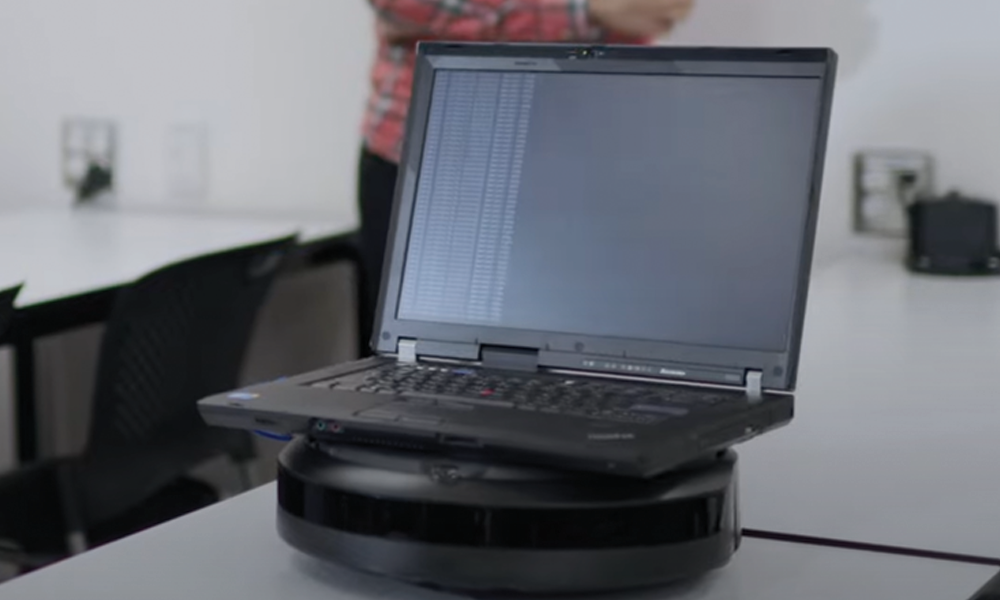
- Robot Kit approximately $1000.
- Google Colab subscription approximately $14/mo for five to six months.
- In addition, this is a BYOD program with a published specification for minimum laptop requirements.
Admissions Requirements
Program Eligibility
- Ontario College Diploma, Ontario College Advanced Diploma, Degree or equivalent in Computer Science or a related field with software development education.
- Applicants must have successfully completed at least one introductory Calculus course from a recognized university or college.
- Applicants with international transcripts must provide proof of the subject specific requirements noted above and may be required to provide proof of language proficiency. Domestic applicants with international transcripts must be evaluated through the International Credential Assessment Service of Canada (ICAS) or World Education Services (WES).
- IELTS-International English Language Testing Service (Academic) Overall band of 6.5 with a minimum of 6.0 in each band; OR TOEFL Internet-based (iBT) tests taken prior to January 21, 2026 overall 88, with a minimum in each component: Reading 22; Listening 22; Speaking 22; Writing 22; OR TOEFL Internet-based (iBT) tests taken after January 21, 2026 overall 4.5, with a minimum in each component: Reading 4.5; Listening 4.5; Speaking 4.5; Writing 4.5; OR Duolingo English Test (DET) Overall 120, minimum of 120 in Literacy and no score below 105.
Application Information
ARTIFICIAL INTELLIGENCE SOFTWARE DEVELOPMENT
Program Code 1535X03FWO
Applications to full-time day programs must be submitted with official transcripts showing completion of the academic admission requirements through:
ontariocolleges.ca
60 Corporate Court
Guelph, Ontario N1G 5J3
1-888-892-2228
Applications are available online at www.ontariocolleges.ca.
Applications received by February 1 will be given equal consideration. Applications received after February 1 will be processed on a first-come, first-served basis as long as places are available.
International applicants please visit this link for application
process information: https://algonquincollege.my.site.com/myac360/s/
For further information on the admissions process, please visit:
Admissions - Registrar's Office https://algonquincollege.com/ro/admissions/
Additional Information
Program Resources
CO-OP INFORMATION
All applicants apply to the co-op version of the program through OntarioColleges.ca or our International Application Portal. After admission, students who do not wish to pursue the co-op option may opt out before the first scheduled co-op work term.
Co-operative education (Co-op) provides students with the opportunity to integrate classroom learning with real-world experience through paid, program-related work terms. Two academic terms before their first co-op work term, students must actively participate in and complete a self-directed co-op preparation course, including required readiness activities and workshops.
Students are responsible for conducting a guided, self-directed job search and securing approved, paid co-op employment related to their program of study. Co-op students compete for positions alongside students from Algonquin College and other Canadian and international colleges and universities. While Algonquin College's Co-op & Career Centre supports students by developing co-op opportunities and providing guidance throughout the process, employment is not guaranteed. Co-op work opportunities may require students to relocate. All costs associated with participation-including travel, accommodation, work permits, visa applications, and other related expenses-are the responsibility of the student.
Co-op work terms are typically 14 weeks in duration and are completed during academic terms when students are not enrolled in classes. For details about the number and timing of co-op work terms in your program, please refer to the Courses tab on your program's webpage.
International students are responsible for ensuring they meet all co-op work permit requirements before participating in a co-op work term. Additional information is available at: www.algonquincollege.com/international/student-handouts
For more information about co-op programs, expectations, and general and program-specific co-op eligibility criteria, visit: www.algonquincollege.com/coop-career-centre
Contact
Todd Kelley
Program Coordinator

Todd Kelley is a Professor at Algonquin College and the coordinator of the Artificial Intelligence Software Development program. He holds a Master’s Degree in Computing and Information Science from Queen’s University and spent several years doing research in Knowledge Representation at the University of Toronto. Before joining Algonquin, Kelley acquired substantial industry experience, working in the Organizational Effectiveness group at Nortel, and later as an embedded devices developer. Since joining Algonquin, he teaches a range of courses in several programs, including Web Enterprise Applications, Knowledge Representation and Reasoning, and Applying AI Techniques. Kelley can often be seen in the halls of Algonquin carrying an iRobot Create 3 educational robot to class.
Anu Thomas
Professor

Dr. Anu Thomas is a Professor at Algonquin College in the ICT-Applications and Programming department since 2016. She obtained her Ph.D. from Carleton University, where she was the recipient of various scholarships including Indira Gandhi Memorial Fellowship for her outstanding performance during her doctoral studies. She has more than 20 years of teaching and industry experience in University and College settings and in various multinational companies. She was recognized by the Learning and Teaching Services at Algonquin College for her teaching excellence. Teaching is her passion, and her mission is to help her students achieve their career dreams and goals. Her research area is Machine Learning, and her specific areas of interest include Fraud Detection, Behavioural Analytics, Link/Network Analysis, and Sentiment Analysis.
Hala Own
Professor

Hala Own earned her Ph.D. in Computer Science from Mansoura University in Egypt after receiving her Master of Science in Computer Science and Bachelor of Science (Honors) in Pure Mathematics and Computer Science from Ain Shams University. She taught and assisted undergraduate students for over than 24 years. She supervised and mentored a Ph.D. student at Leicester, United Kingdom, 2011.
On an international level, Hala is a published author in many peer reviewed journals, with many as the first author. Her research papers (+39 papers) have appeared in high ranked journals including Information Sciences, Expert Systems with Applications, as well as a few others. Hala received a Vice President Research “Unfunded Research” Award, Kuwait University, Kuwait, 2012,2014,2016 & 2018.
Hala is an active member of the research community, not only as a member in several associations, but also as a committee member that organizes and chairs international conferences.