TRI recognized for outstanding leadership and innovation with national Awards of Excellence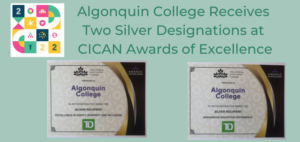
On Tuesday, April 26, Algonquin College was awarded two silver designations at the CICan annual Awards of Excellence.
The Awards showcase the extraordinary contribution of individuals to their college/institute communities and highlight the role of our institutions in social, cultural and economic development. There are three levels of recognition: Gold, Silver and Bronze.
The College received a silver award in two categories; the Indigenous Education Excellence Award and the Excellence in Equity, Diversity and Inclusion Award (You can read the award entry covering letter submissions from Algonquin President and CEO Claude Brulé at the two highlighted links above).
“It is because of dedicated people working hard every day, to improve educational programs and campus life, that colleges and institutes are able to offer such remarkable student-experiences and training opportunities,” said Denise Amyot, CICan President and CEO. “This strong leadership was on full display this year, as COVID-19 forced all of us to adapt and innovate to meet unprecedented challenges. We are thrilled to honour these leaders and innovators who make the entire system stronger, more inclusive, and more responsive to the needs of students as well as employers.”
Congratulations to all for a job well done.
 Vice President of Truth, Reconciliation and Indigenization, shared with them the genius of First Nations nature tales.