Student Experience
What to Expect
The Veterinary Assistant program provides a well-rounded foundation in animal health and care, including clinical nursing, surgical assistance, therapeutic grooming, nutrition, animal behaviour, and client service skills that are essential for careers in the veterinary and animal care industry.
Students learn through a combination of classroom instruction, simulation activities, and hands-on laboratories that are directly linked to their theory courses. Practical learning experiences include Team Medicine Labs, Surgery Labs, Therapeutic Grooming Labs, and animal handling and nursing laboratories, allowing students to apply their knowledge in realistic clinical settings.
A unique strength of the program is access to our Veterinary Learning Centre and Clinic (VLCC), where students gain experience working with live animals in a professional learning environment. Throughout the program, Veterinary Assistant students have opportunities to learn and work alongside Veterinary Technician students, developing practical skills while experiencing the collaborative, team-based approach used in veterinary practice. This exposure helps students build confidence, strengthen their technical abilities, and better understand the roles and responsibilities of the entire veterinary healthcare team.
Our experienced faculty bring current industry knowledge and real-world expertise to the classroom, ensuring students receive relevant, up-to-date training that prepares them for success in a variety of animal care settings.
Work Integrated Learning
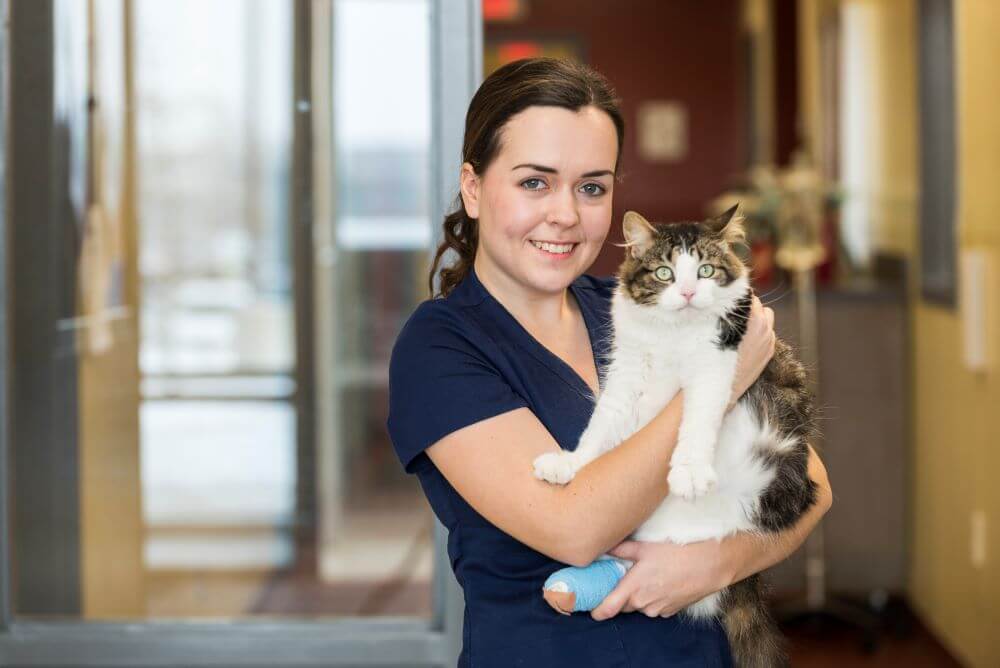
Work-integrated learning is an important component of the Veterinary Assistant program, providing students with opportunities to apply their knowledge and skills in professional animal care environments. In addition to the extensive simulation and live animal laboratory experiences completed on campus through the Veterinary Learning Centre and Clinic (VLCC), students participate in community-based experiential learning at animal shelters and veterinary medical facilities.
These off-campus experiences allow students to work with a variety of animal species, observe industry professionals, and develop practical skills in real-world settings. By complementing the hands-on training received in the VLCC, work-integrated learning helps students build confidence, strengthen their clinical and animal care abilities, and gain valuable insight into the daily operations of veterinary and animal welfare organizations.
This combination of classroom learning, laboratory training, and community-based experience ensures graduates are well prepared to transition into the veterinary and animal care workforce and understand the collaborative nature of veterinary healthcare teams.