Author: bucholj

Emily Krutzelmann, Water Quality Monitoring and Surveillance

Environmental Technician, Algonquin College, Pembroke Campus

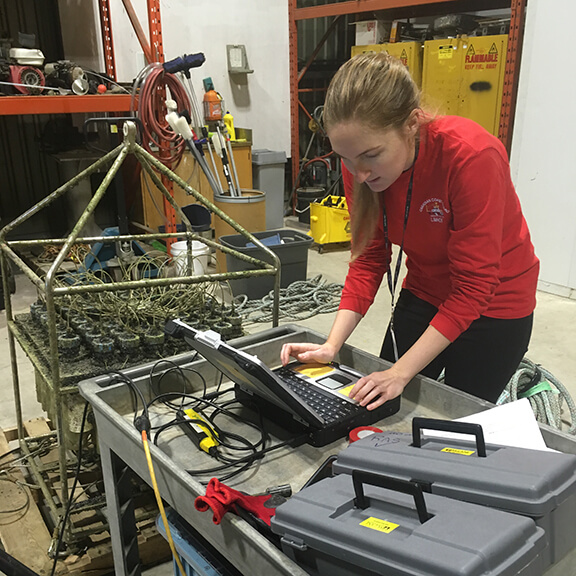
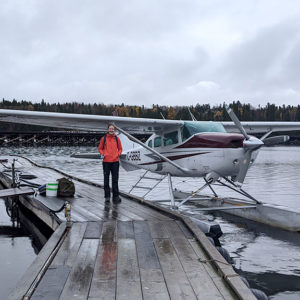
Emily Krutzelmann graduated from our Environmental Technician program in 2016 and has been working for Environment and Climate Change Canada (ECCC) since. “Up until earlier this year, I was working as a field/lab technologist in Burlington at the Canada Centre for Inland Waters, but just recently changed positions and am now a water quality technologist with ECCC’s Hudson Bay Water Quality Monitoring and Surveillance Division in Winnipeg!” shares Krutzelmann.

Environmental Technician, Algonquin College, Pembroke Campus

“I’ve always loved water, so it seems natural that I would end up working with it!” Before joining our AC community, Krutzelmann attended university, “I did a research practicum and undergraduate thesis on how wastewater exposure affects fish behaviour, which kind of kickstarted my interest in the environmental sciences and made me realize I really enjoyed fieldwork. The Environmental Technician program gave me a lot of the fundamental hands-on skills that I was missing from my previous undergraduate education and introduced me to a variety of equipment and procedures that I still use in my work today! This program also allowed me to secure a summer student position with ECCC, which led me to my full-time job after graduation.”

Environmental Technician, Algonquin College, Pembroke Campus

Krutzelmann reflects on her top program-related experiences during her 16 months of studies, “for sure the Applied Research projects that we worked on in our final semester. My group was working on a controlled tile drain monitoring project on agricultural land in Renfrew County and this project exposed me to using a wide variety of different types of environmental monitoring equipment, which was an invaluable experience! Our class also did a case study in the College’s stormwater pond, where we installed water level wells and completed elevation measurements to map out the water table to simulate what would happen with a spill of a deleterious substance. Generally, all of the outdoor field trips and hands-on experience outdoors were invaluable! The skills you’ll gain from the Environmental Technician program are all practical skills that you will use in a career in this field. It’s a great opportunity to try a bit of everything under the ‘environmental technician’ umbrella and decide where you want to focus on.”


A Year Like None Other Comes to a Close

2020 will be remembered as the year of the COVID-19 pandemic, a worldwide health crisis that disrupted our lives, but as we look back on 2020 we can also celebrate some of the great things that happened at Algonquin College’s Pembroke Waterfront Campus. Our year in a review captures a few of the highlights.

January 2020: The New Year began with lots of energy and enthusiasm as students returned from the holiday break. We also said goodbye to dozens of graduates who completed their programs in December, including Abhi Gupta of the Outdoor Adventure Naturalist program. A few months later Abhi would deliver our valedictory address at our convocation ceremony from his home country of India.

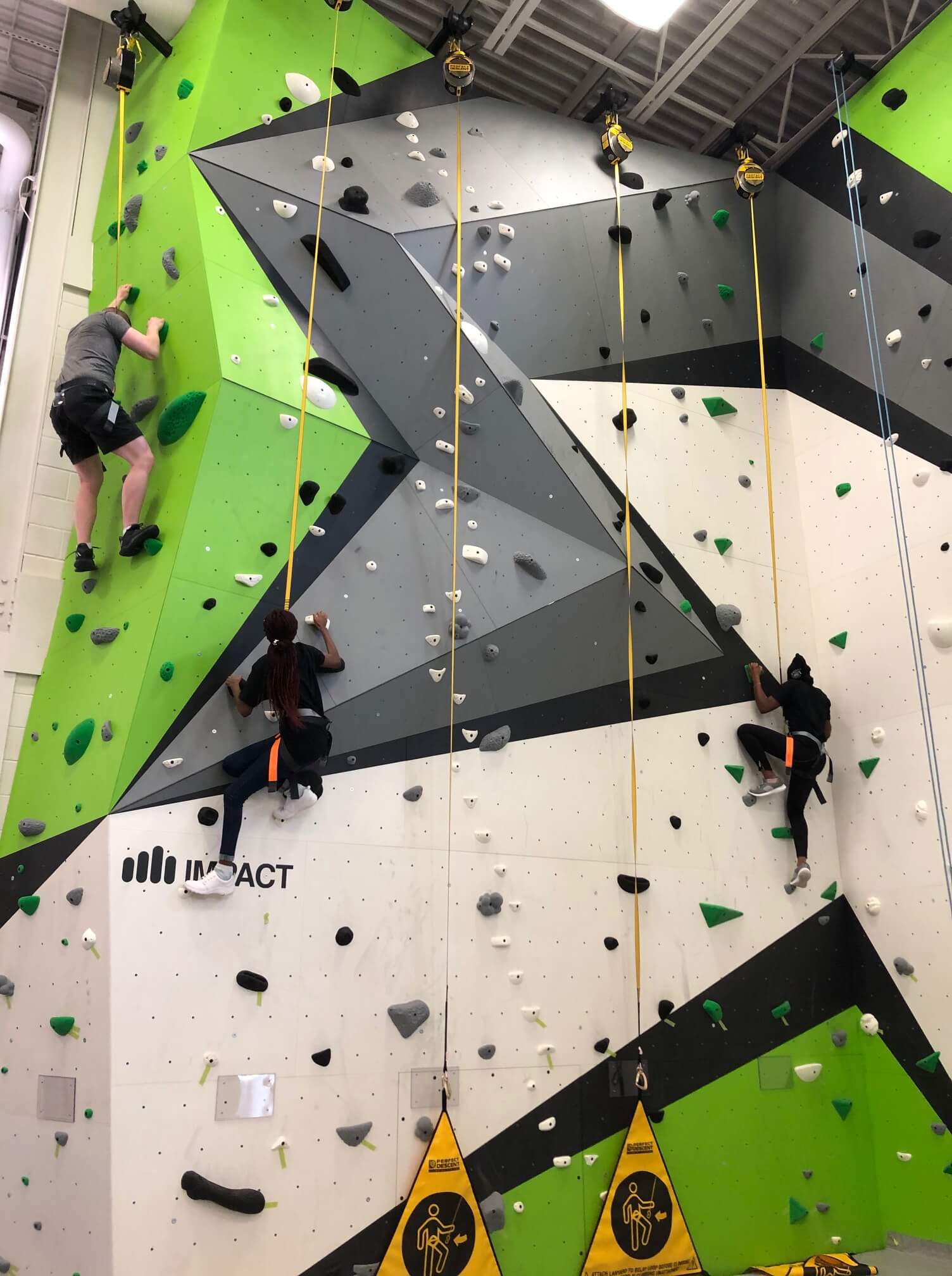
Rock climbing wallFebruary 2020: In February we held what has become one of the social highlights of the winter, our annual carnival featuring student-staff hockey games for women and men, some fun outdoor and indoor winter activities and a shared lunch and dinner with students and employees. During this month, more than 30 campus employees also visited the Algonquins of Pikwakanagan reserve to learn more about Indigenous culture, a powerful learning experience as the College continues its Indigenization journey. We also celebrated the opening of a new rock climbing wall in the campus gymnasium.

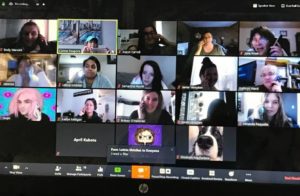
March 2020: This was the month that everything changed. We had been planning for our March Break Open House with more than 350 people registered to attend when on March 13 the College suspended classes and told its employees and students to work and study from home. In a remarkable accomplishment, our faculty were able to pivot to deliver all course content in a remote delivery format using Zoom technology. The student services team also began offering all of its supports virtually, allowing students to complete their winter term.

April 2020: In April we held our first virtual Speaker Series with Toronto Maple Leafs coach Sheldon Keefe answering questions on leadership, coaching and all things hockey. The event was sponsored by the Algonquin College Students’ Association who worked diligently to add many virtual social events to keep students engaged as they studied remotely.

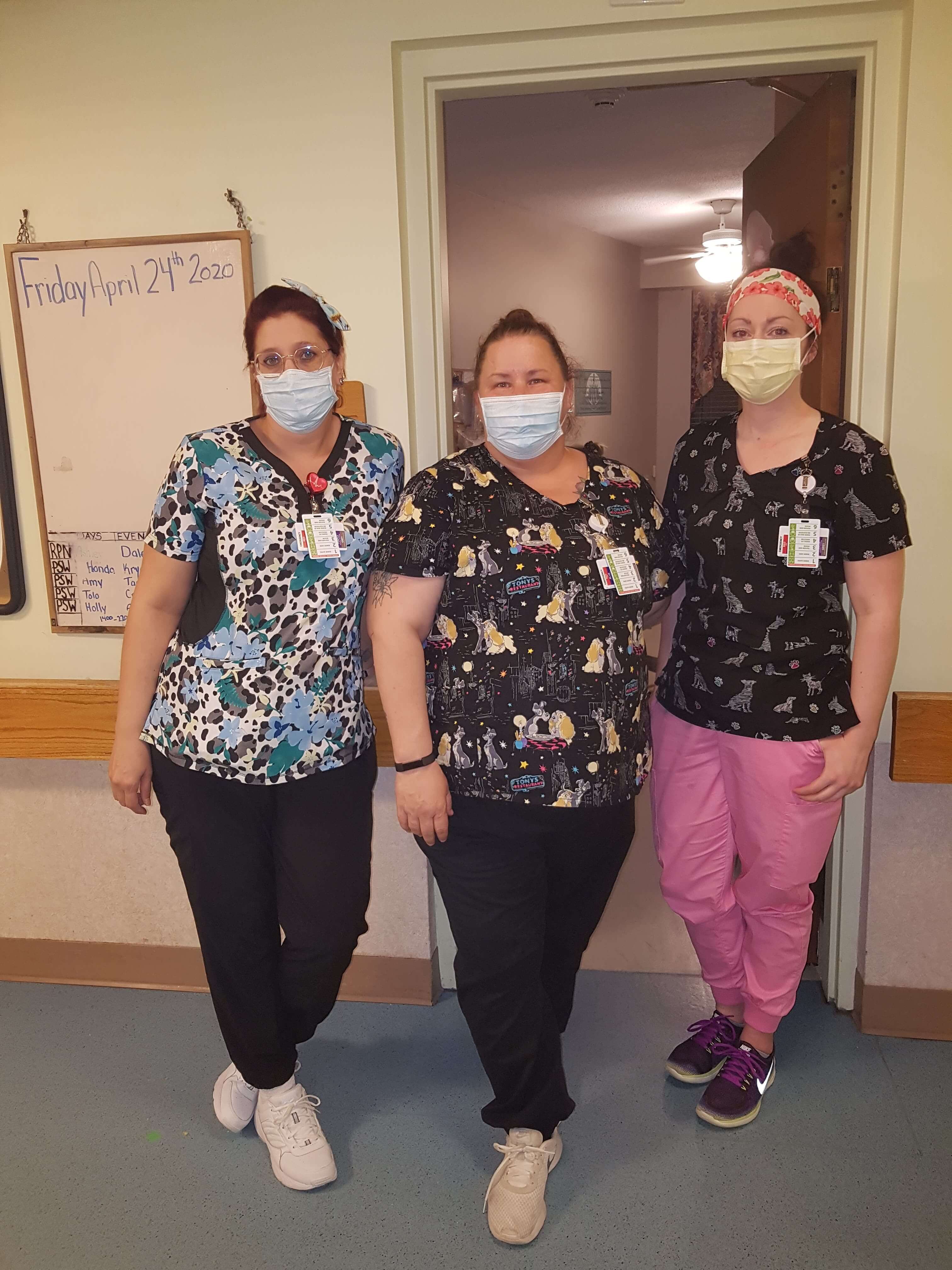
Support Care studentMay 2020: In May we kicked off our Spring/Summer Term by continuing to offer programming and services virtually. By this point, a lot of great work had happened to support students including the introduction of a new virtual student learning kit. We also thanked the many healthcare students at our campus who volunteered and found employment on the frontlines of the pandemic. They were true heroes who were risking their own health to support vulnerable patients in health care settings, particularly long term care centres that were hard hit by the virus.

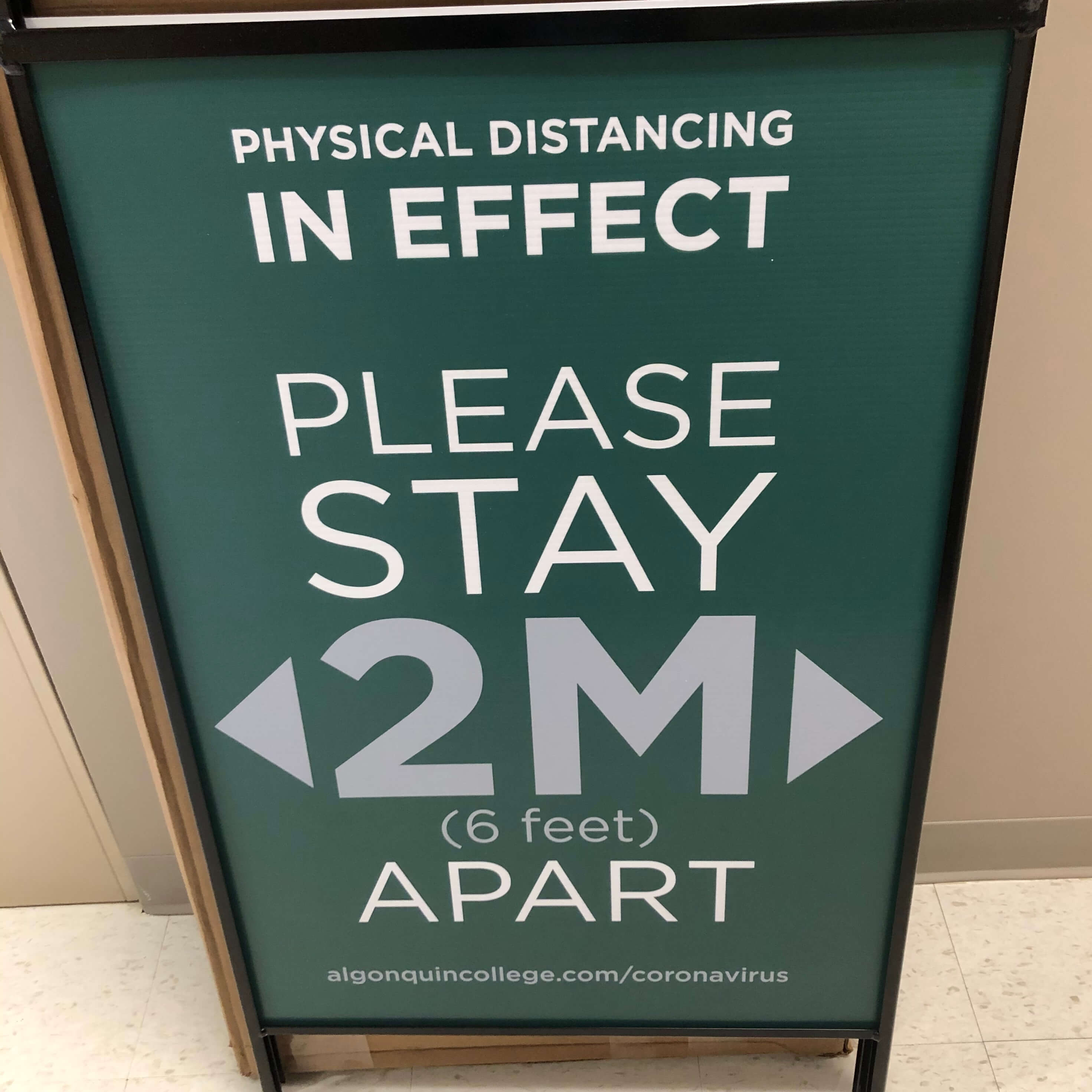
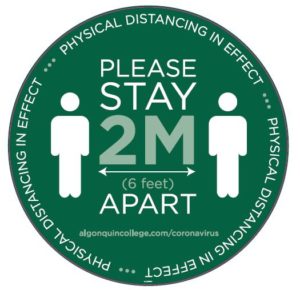
physical distancing signJune 2020: The College announced its intentions to deliver the majority of its programs remotely in the Fall 2020 Term as a public safety measure to protect students and employees from the COVID-19 virus. The decision allowed students to better plan their academic journey. It also meant that many out-of-town students were not required to re-locate to Pembroke as they were studying from home, while others who were in programs that had weekly in-person activities did come to Pembroke.

July 2020: Some of our students returned to campus in July to complete the practical skills they required to graduate from their program. With special permission from the province, these pilot programs had built in many safety mitigation policies to protect students and faculty from contracting the coronavirus. Our Forestry students were equipped with a large tent where they could be taught outdoors before making their way into the woods to put their newly learned skills to the test through practical applications. The lessons learned from our forestry faculty allowed other teachers to get creative in how they delivered in-person classes in the Fall Term.

August 2020: The College introduced a new COVID-19 safety course for students and employees who were required to be on campus. A COVID-19 tracking app was also introduced and the College imposed a mandatory face mask policy for anyone who was on campus. The Algonquin College Students’ Association also began celebrating its 50th anniversary.

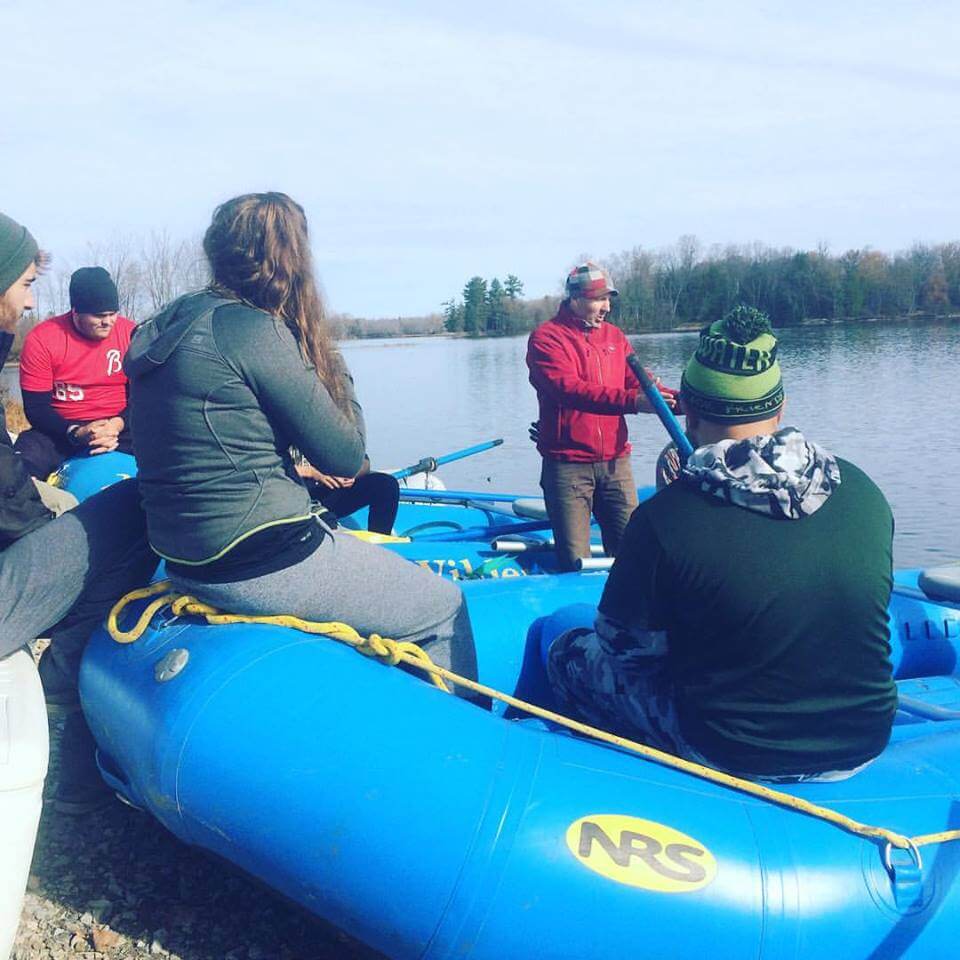
Outdoor Adventure Naturalist, Algonquin College, Pembroke CampusSeptember 2020: We started a new school year with more than 900 full-time students registered, plus dozens of apprenticeship and Academic Upgrading students. While the majority of our courses were delivered remotely, some face-to-face instruction was provided particularly in our outdoor training programs such as Outdoor Adventure and Environmental Technician. The College also celebrated having its first Kampus Kokum, Annie Parker, who provides insight, support and personal consultation for our Indigenous learners. We were also pleased to acknowledge our Campus Board of Governors representative, Jay McLaren, who with his wife Linda, an alumnus, was awarded the Upper Ottawa Valley Chamber of Commerce Lifetime Achievement award. September also marked the 20th anniversary of the launch of our popular Outdoor Adventure program, and so we looked back on the program’s history with a series of stories about our faculty and alumni.

Outdoor Adventure, Algonquin College, Pembroke Campus

October 2020: For the first time in the more than 50-year history of Algonquin College, the Pembroke Campus held a virtual convocation ceremony. The ceremony featured video addresses from the College President, the Campus Dean and the campus valedictorian. In October we also held our first Fall Business Leadership Virtual Conference which was attended by almost 90 business leaders from across the region.

November 2020: Student leaders at the Pembroke Campus initiated a Justice, Equity, Diversity and Inclusion forum to advance the college’s social justice work by tackling the issue of racism. Former Ontario Attorney General, Yasir Naqvi, was the keynote speaker at the virtual forum and empowered students by telling them, it was a time to be bold.” Students in our Outdoor Adventure Naturalist also helped complete the three-year Natural Edge Program project in partnership with Watershed Canada and Muskrat Watershed Council by helping to plant the last 15,000 native trees and shrubs on five agricultural sites naturalizing 4,400-metres of shoreline. We also marked Remembrance Day with a virtual ceremony of Remembrance that included some of our employees and students who had military connections.

December 2020: The final month of the year brought unfortunate news that three campus employees and one student had tested positive for the COVID-19 virus. This occurred as COVID cases spiked across the province and the country, but there was also some good news during this month as a new approved vaccine started being distributed in Canada.

Personal Support Worker Graduates, Algonquin College, Pembroke Campus

There is no question that 2020 was a year like none other in the history of Algonquin College’s Pembroke Campus, but through it all, we learned of beautiful acts of kindness by our students, alumni and employees. Many of our graduates were working on the frontline of the pandemic, putting their lives at risk to help the most vulnerable people in our society.

When the calendar turns to January we will celebrate the launch of our new Environmental Management and Assessment post-graduate certificate program and another offering of the Personal Support Worker program in collaboration with Bonnechere Manor in Renfrew. We will also launch the first level of the Electrician Apprentice program, following up a very successful Electrician – Construction and Maintenance – Pre-Apprentice offering.

We look forward to 2021 with hopes and dreams that our students, alumni and employees will achieve all of their personal and career goals.

Posted by Jamie Bramburger, Manager of Community and Student Affairs
Holiday Letter Writing Campaign

Holiday Letter writing Campaign

The holidays can be a challenging time for many. This year, this is especially true. We encourage you to take a couple of minutes and be part of our Holiday Letter Writing Campaign. Choose one or both of the options below:

United Way Letters to Seniors in Renfrew County

Write to the Troops

The men and women of the Canadian Armed Forces (CAF) have demonstrated time and again that they will rise to any challenge. Let your Canadian Armed Forces members know you appreciate their service by sending a holiday message using this monitored message board.

Algonquin College, Pembroke Campus


Algonquin College Students Tackle Racism, Diversity and Inclusion Issues

“This is a time to be bold.” Those words from Yasir Naqvi set the tone for an engaging dialogue among students at Algonquin College’s Pembroke Waterfront Campus at the first student-led Justice, Equity, Diversity and Inclusion forum.

Yasir NaqviNaqvi is a former Attorney General for the province of Ontario and is currently the Chief Executive Officer for the Institute of Canadian Citizenship. He is also a Director with United Way East Ontario where he has played a leading role in stimulating a community response to systemic racism. Through his advocacy work, he has stressed the importance of listening to those who have been subjected to racism, adding “We don’t need more studies.”

In an opening presentation to kick off the forum, Naqvi told the students and employees of the College that Canadians want change. “We should not squander this opportunity to change the status quo. If we fail to move the yardstick to make change we are failing our future generations,” said Naqvi.

Naqvi spoke eloquently for about a half-hour before taking questions from the group. He encouraged the students to “be relentless and to champion the change.” He spoke about the importance of getting involved in advocacy opportunities such as peaceful protests and elections, at one point saying, “Make it an election issue and if you’re still not satisfied, run for office.”

After commending the students for getting involved with addressing systemic racism, Naqvi stepped out of the forum leaving the students to use virtual breakout rooms to begin the process of developing their own goals and strategies. For an hour they talked about the issues and brainstormed on what they could do to make a difference.

The conversations weren’t easy. Social justice issues like racism can be difficult to talk about and can be emotionally draining, but Naqvi’s point of being “willing to take risk and to be bold” carried the day as the students shared their perspectives and learned together.

Inclusion and Diversity, Algonquin College, Pembroke Campus

Shelly Sutherland is the Campus Student Success Specialist. She worked closely with a group of students who call themselves JEDI to plan the event. JEDI are student leaders who act as mentors for first-year students. They creatively used their nickname to brand the forum, ensuring that each letter stood for what they were trying to accomplish, a respectful conversation that focused on Justice, Equity, Diversity and Inclusion.

“We need to talk, we need to listen and we need to act,” says Sutherland. She adds, “I am proud and inspired by our students, their constant stepping up to amplify voices of the unheard and in many cases amplify their own voices. Whether easy or difficult, they are willing to continue the work with action!”

JEDI

This is just the beginning. The students have committed to continuing this work as they do their part to bring diversity issues to the surface where they can be addressed through thoughtful discussion and calls to action.

“This forum validated the willingness of Algonquin College to break down the barriers and address the social inequities that exist in our community,” says Nursing student Deena Hassan. “The forum was the first step, and we’re only moving forward after this. As an Egyptian-African, and studying in a town that is predominantly white, I can feel at ease knowing that Algonquin College is taking the steps to ensure diversity and inclusion at the campus,” adds Hassan, who is working with her classmate Grace Grant and the Students’ Association to establish a Black, Indigenous, People of Colour (BIPOC) Student Society.

The students will not be working in isolation. The Mayor of Pembroke has established a roundtable committee to address racism and the Local Immigration Partnership group is also consulting with various community members as more people join the effort to address an issue that is not new but is now getting the attention it deserves.

The 2015 release of Justice Murray Sinclair’s Truth and Reconciliation report was a watershed moment in Canadian history. The report and its 94 calls to action bluntly described the horrific treatment of the country’s Indigenous people and compelled Canadians to acknowledge the harm that was done and to create a new relationship with Indigenous people that honours their culture and their contributions to our nation.

But it was the death of 46-year-old George Floyd, an African American man who died at the hands of a white police officer in Minnesota in May of 2020 that brought people into the streets in both American and Canadian cities. Floyd’s death came at the height of the first wave of the COVID-19 pandemic and despite restrictions on public gatherings, his death sparked “Black Lives Matter” protests around the world.

Floyd had died while handcuffed and pinned to the ground, his death caught on video. The circumstances of his death not only outraged the black community but all communities. This time, “Black Lives Matter,” became a call to action for everyone.

“The pandemic has really exposed the fault lines in our society. It has magnified the systemic issues that we have been living through for some time,” Naqvi told the students, adding that racism happens everywhere.

“Don’t give up. This will take some time, but be bold,” he said.

The students are prepared to do just that. Their work is just beginning, but it’s already off to a great start.

Posted by Jamie Bramburger, Manager of Community and Student Affairs.

A New Virtual Approach to Learning at Algonquin College’s Pembroke Campus

COVID-19 Safety Measures, Algonquin College, Pembroke Campus

There has never been a start to a school year like the one we are experiencing this fall at Algonquin College’s Pembroke Waterfront Campus. The campus is eerily quiet as few students are in the building, most are receiving their training in a virtual learning environment where faculty have adapted the way they teach course content in this pandemic adjusted world we are living in.

Enrolments are in fact strong, approaching 1,000 students in the 19 full-time programs that are being offered at the campus. Many programs were waitlisted as they filled up during the summer months, a strong indicator that students did not put their lives on hold and followed through with their commitment to obtain post-secondary credentials.

Online class

Like the students, most college employees are working from home. Over the past few months, both faculty and student support staff have done a remarkable job creating virtual support systems to help students succeed. The creativity, ingenuity and perseverance of the college staff have been inspiring, and through this pandemic, much has been learned about how technology can enable enhanced learning for students.

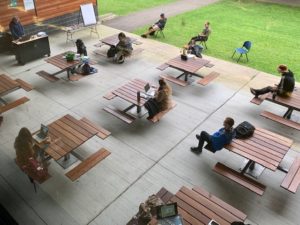
Of course, there are some things that can not be taught online, and so safety mitigation plans have been put in place to allow students in specialized classes to come on campus or participate in field trips. Examples include carpentry shop classes or outdoor skills training for Arborist students who need to learn the art of tree climbing.

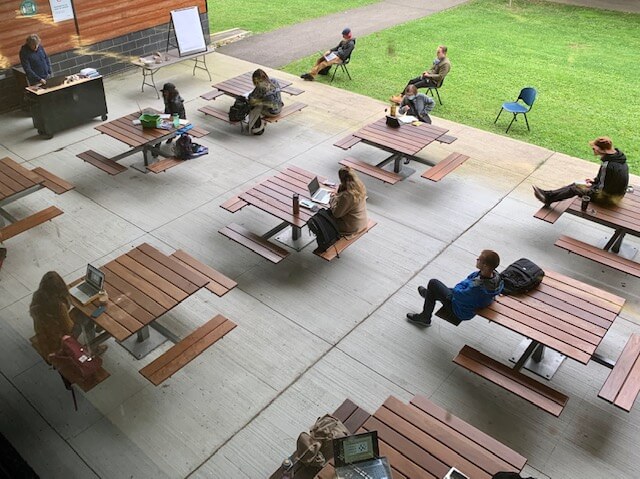
Outdoor Adventure Naturalist, Algonquin College, Pembroke CampusThe College has imposed strict safety guidelines such as the requirement that masks be worn on campus, that all students and employees complete an online health and safety COVID-19 course and that faculty take student attendance. Additional measures such as enhanced cleaning, the removal of furniture to ensure physical distancing and the closure of some common spaces with a shift to more virtual services have also been foundational in the college’s approach to keeping its students and staff safe.

A walk through the campus this fall is a very different experience. Gone is the buzz of excitement that comes with the start of a school year where orientation activities bring students together. That’s been replaced by virtual learning and social spaces using technology like Zoom, but through this unprecedented situation, students, faculty and staff are adjusting, understanding we may be in this situation for a while.

Former New York Yankees catcher Yogi Berra often left people confused with his creative sayings, but this one seems to hit the mark. “No one goes there nowadays, it’s too crowded.” People are trying to stay within their social bubbles, trying to stay safe, but also trying to live as normal a life as possible. Making personal connections has never been more difficult.

Across the nation, post-secondary schools have had to adjust to this new reality. Higher education will remember 2020 as a year of disruption, however, history may show that the pandemic was also a transformational time for the sector. Never before have colleges pivoted so quickly and intentionally, keeping the focus on student success and academic instruction.

Berra would say, “If you see a fork in the road, take it.” Colleges have certainly done this, and while many students and employees long for the day when classes return to traditional classrooms, the pandemic has made it necessary to shift the way education is delivered. Students still have a timetable and still receive lessons from their faculty while spending time together in scheduled classes, but the bricks and mortar has been replaced by a computer screen. 2020 is certainly a new world.

Posted by Jamie Bramburger, Manager of Community and Student Affairs
Fall Bursary Application: Aug. 24 – Oct. 5

Algonquin College fall bursariesAttention all new and returning Waterfront Campus students!

The Fall Bursaries are now open for application on your Algonquin College Student Information System (ACSIS) from Aug. 24 to October 5, 2020. You are encouraged to apply!

For more information please email bursaries@algonquincollege.com.

Students can apply for all in-year bursaries administered by Algonquin College by submitting one application!

The application cycle is open once per term (Fall, Winter, Spring). Only registered students for the current term can apply online through the ACSIS, Bursary Portal.

  1. Go to acsis.algonquincollege.com
  2. Sign in with your student number and password, or create a new login
  3. Under the Financial Aid heading click on Bursary Portal.

Applying for a bursary does not guarantee acceptance, as the number of applicants can often surpass the bursary funds available. When this occurs, applicants are chosen based on the highest amount of financial need. Bursary applications received after the deadline will not be accepted.

Students awarded a bursary are required to have their Social Insurance Number (SIN) registered on the college system for income tax purposes. If you do not have your SIN registered with the college when you submit your application, an email notification will be sent to you with instructions.