Computer Engineering Technology - Computing Science (Co-op and Non Co-op Version)
Gain the analytical thinking and problem-solving skills for a career in programming and software development.
- Students learn programming, networks, data structures, web programming, and different languages (Java, numerical, web, C++, .net, and real-time)
- This broad advanced diploma is a great option for career flexibility in high-tech
- Students gain hands-on experience with three co-op terms
Program Availability and Schedule
Availability
Open
Closed
Waitlisted
Start Term
Availability
International
Availability
Competitive?
Fall 2026
No
Winter 2027
No
Spring 2027
No
Fall 2027
No
Schedule
For the co-op version of this program: If students are unable to secure co-op employment or fall short of co-op eligibility at the end of Level 3, the program delivery schedule will be adjusted for them as outlined in the Alternate Co-op Delivery Schedule(s).
Program Summary
Credential
Program Delivery
Program Code
Area of Interest
School
Campus
Work Integrated Learning
Eligible for Post-Graduation
Work Permit?
CIP Code(s): 15.1201
The three-year Computer Engineering Technology - Computing Science Ontario College Advanced Diploma program prepares you for an information technology (IT) career in the private or public sectors. You gain the knowledge and skills to use a broad range of IT-based analytical thinking and problem-solving skills in support of the day-to-day operation of an enterprise's software systems or in the development of new systems.
Learn a variety of programming languages (Java, C#, C++, C, and others) and operating systems (Windows, Unix/Linux, and QNX). In addition, you study the development tools and debugging techniques used to design, code and test integrated and/or embedded applications and software systems....(read more)
Overview
Gain the analytical thinking and problem-solving skills for a career in programming and software development.
The three-year Computer Engineering Technology - Computing Science Ontario College Advanced Diploma program prepares you for an information technology (IT) career in the private or public sectors. You gain the knowledge and skills to use a broad range of IT-based analytical thinking and problem-solving skills in support of the day-to-day operation of an enterprise's software systems or in the development of new systems.
Learn a variety of programming languages (Java, C#, C++, C, and others) and operating systems (Windows, Unix/Linux, and QNX). In addition, you study the development tools and debugging techniques used to design, code and test integrated and/or embedded applications and software systems.
In your final year, you work in teams on sponsored real-world projects to develop a comprehensive application as part of the software engineering portion of the program. You also have the opportunity to select an elective course from an approved list, in areas that include game programming, business programming (Cobol), and business intelligence and data analytics.
The majority of the program consists of courses in systems programming, software development, testing and maintenance. The balance of the curriculum consists of courses in technical communications skills (both oral and written), mathematics and general education electives.
Students also have the option to gain real-world experience through a paid co-operative education (co-op) work term (see Additional Information for more details). Please note that places in the co-op work term are subject to availability and academic eligibility. Please note admission to the co-op program does not guarantee a co-op placement.
Graduates may find employment as systems, integration, and applications programmers and/or testers, and as customer service representatives providing training and product support to clients of high technology corporations.
Graduates may also pursue careers in such diverse areas as:
- game and multimedia development
- GUI (graphical user interface) development
- IT communications, IT security, real-time and database systems
- web-based applications
- technical roles in all levels of government (Federal, Provincial and Municipal)
Courses
Programs at Algonquin College are delivered using a variety of instruction modes. Courses may be offered in the classroom or lab, entirely online, or in a hybrid mode which combines classroom sessions with virtual learning activities. Upon registration, each full-time student is provided an Algonquin email account which is used to communicate important information about program or course events.
Code:
CST2003
Course Name:
Foundation of Ai-Assisted Development
Course Description:
As Artificial Intelligence (AI) transforms the modern software enterprise, AI must be integrated responsibly into software development. Stud... + Read More
Hours:
56.0
Code:
CST8116
Course Name:
Introduction to Computer Programming
Course Description:
Possessing the fundamentals of logic, problem-solving and programming language structure provides a solid foundation for further study in th... + Read More
Hours:
70.0
Code:
CST8118
Course Name:
Computer Essentials
Course Description:
Maintaining a computer, using operating system and productivity software, and expressing related environmental and sustainability concerns, ... + Read More
Hours:
56.0
Code:
CST8215
Course Name:
Introduction to Database
Course Description:
Databases are used to store data and are a core component of many information technology systems. Students learn the fundamentals of relatio... + Read More
Hours:
70.0
Code:
ENL1004
Course Name:
Professional Communication Essentials
Course Description:
Communication remains a fundamental skill regardless of discipline or field of study. Using an applied approach, students focus on writing, ... + Read More
Hours:
42.0
Code:
MAT8001C
Course Name:
Technical Mathematics for Computer Science
Course Description:
The study of algebraic and transcendental functions is an essential prerequisite to Calculus. Students manipulate algebraic expressions, sol... + Read More
Hours:
56.0
Code:
CST8102
Course Name:
Operating System Fundamentals (GNU/Linux)
Course Description:
Operating systems form the backbone of information technology systems coordinating the interaction between hardware and software. Students e... + Read More
Hours:
70.0
Code:
CST8108
Course Name:
Network Programming Basics
Course Description:
Software programming in today's environment requires detailed knowledge of the underlying network topology and its implementation. Gaining a... + Read More
Hours:
70.0
Code:
CST8132
Course Name:
Object-Oriented Programming
Course Description:
Object-Oriented programming has become one of the leading paradigms within programming. Students extend their knowledge of Object-Oriented P... + Read More
Hours:
70.0
Code:
ENL2019T
Course Name:
Communicating Technical Information
Course Description:
The ability to communicate effectively in a technically-oriented interdisciplinary workplace is a foundational skill in an innovation-driven... + Read More
Hours:
42.0
Code:
MAT8201
Course Name:
Calculus 1
Course Description:
Calculus is used to determine many important physical quantities. Students differentiate algebraic and transcendental functions and sketch v... + Read More
Hours:
42.0
Code:
GED0006X
Course Name:
General Education Elective
Course Description:
Students choose one course, from a group of general education electives, which meets one of the following five theme requirements: Arts in S... + Read More
Hours:
48.0
Code:
CST8130
Course Name:
Data Structures
Course Description:
Data structures and associated processing algorithms are used to manage massive amounts of data. Students explore concepts using Object-Orie... + Read More
Hours:
70.0
Code:
CST8216
Course Name:
Processor Architecture
Course Description:
Software is often written to efficiently control hardware, such as processors. Students examine elementary electronic components, basic nume... + Read More
Hours:
70.0
Code:
CST8234
Course Name:
C Language
Course Description:
C is a widely adopted general-purpose programming language recognized for its efficiency, portability, and low-level access to computer hard... + Read More
Hours:
70.0
Code:
CST8326
Course Name:
Web Programming
Course Description:
The World Wide Web (WWW) has become an integrated part of everyday life. In this course students apply technologies and skills needed to des... + Read More
Hours:
56.0
Code:
GEP1001
Course Name:
Cooperative Education and Job Readiness
Course Description:
Students are guided through a series of activities that prepare them to conduct a professional job search and succeed in the workplace. Thro... + Read More
Hours:
21.0
Code:
CST8152
Course Name:
Compilers
Course Description:
In order to translate human readable format into machine language, compilers are used. Students examine basic principles, techniques, and to... + Read More
Hours:
70.0
Code:
CST8219
Course Name:
C++ Programming
Course Description:
Used as a language of choice for high performance applications, C++ remains a central programming language in today's technology. C++ langua... + Read More
Hours:
70.0
Code:
CST8221
Course Name:
Java Application Programming
Course Description:
Java remains a widely used programming language often in combination with additional technologies. Students learn advanced Java technology b... + Read More
Hours:
70.0
Code:
CST8233
Course Name:
Numerical Computing
Course Description:
Numerical computing is essential for solving complex mathematical problems that cannot be addressed analytically. Students examine the theor... + Read More
Hours:
70.0
Code:
GEP2001
Course Name:
Co-Op Job Search 1
Course Description:
Students are guided through a self-directed co-op job search using Algonquin's web-based resource centre, HireAC, as well as independent res... + Read More
Hours:
10.0
Code:
GED0006X
Course Name:
General Education Elective
Course Description:
Students choose one course, from a group of general education electives, which meets one of the following five theme requirements: Arts in S... + Read More
Hours:
48.0
Code:
WKT8001
Course Name:
Work Term I
Course Description:
Students complete a cooperative work term, and submit a written report which documents the location of employment and the duties performed.... + Read More
Hours:
0.0
Code:
WKT8002
Course Name:
Work Term II
Course Description:
Students complete a cooperative work term, and submit a written report which documents the location of employment and the duties performed.P... + Read More
Hours:
0.0
Code:
WKT8003
Course Name:
Work Term III
Course Description:
Students complete a cooperative work term, and submit a written report which documents the location of employment and the duties performed.P... + Read More
Hours:
0.0
Code:
CST8218
Course Name:
Web Enterprise Applications
Course Description:
Web applications are widely used throughout all industries in today's business world. Students expand on HTML, Java and database knowledge t... + Read More
Hours:
70.0
Code:
CST8227
Course Name:
Interfacing
Course Description:
Understanding the connection between the physical and software side of technology is necessary in computer engineering. Focus is on specific... + Read More
Hours:
70.0
Code:
CST8355
Course Name:
Software Design and Testing
Course Description:
Teamwork is widely used within the field of software development, using industry-proven strategies. Learn the basics of Agile software devel... + Read More
Hours:
28.0
Code:
ENL4001
Course Name:
Technology Report Preparation
Course Description:
Technical reporting is a necessary skill within software development. Students define and describe a problem of significant technical comple... + Read More
Hours:
14.0
Code:
ENG4001
Course Name:
Project 1
Course Description:
Familiarity with practical projects provides students with learning opportunities to gain insight and experience, thereby making connections... + Read More
Hours:
28.0
Code:
ENG4002
Course Name:
Engineering Project for Entrepreneurs
Course Description:
Experiencing the process of creating and validating a new product or service idea provides students with the opportunity to decide whether t... + Read More
Hours:
28.0
Code:
CST8237
Course Name:
Game Programming
Course Description:
There are a wide range of careers related to the area of game programming. Combine skills learned in previous courses to develop advanced mu... + Read More
Hours:
56.0
Code:
CST8283
Course Name:
Business Programming
Course Description:
Information systems built using the COBOL programming language support important institutions such as government services and the banking se... + Read More
Hours:
56.0
Code:
CST8327
Course Name:
Artificial Intelligence in Software Development
Course Description:
Practical use of generative AI tools in Software Development can enhance productivity, improve code quality, and accelerate system developme... + Read More
Hours:
56.0
Code:
CST8390
Course Name:
Business Intelligence and Data Analytics
Course Description:
Business Intelligence (BI) can be broadly defined as a set of applications, infrastructure, and best practices that integrate and transform ... + Read More
Hours:
56.0
Code:
CST8244
Course Name:
Real-Time Programming
Course Description:
Building on prior knowledge of Linux/Unix, learn the difference between Real-Time/Embedded system programming and batch processing. Design r... + Read More
Hours:
70.0
Code:
CST8359
Course Name:
.NET Enterprise Application Development
Course Description:
Microsoft .NET development platform is widely used to build applications across diverse environments. Students use C#/ASP.NET/WebServices/MS... + Read More
Hours:
70.0
Code:
ENG4003
Course Name:
Project 2
Course Description:
The ability to identify and satisfy stakeholder expectations is essential for successful project development and completion. Student groups ... + Read More
Hours:
28.0
Code:
ENL4003
Course Name:
Technology Report
Course Description:
Professionals within the tech industry must be able create and present technical reports. Students work collaboratively to complete a detail... + Read More
Hours:
14.0
Code:
GED0006X
Course Name:
General Education Elective
Course Description:
Students choose one course, from a group of general education electives, which meets one of the following five theme requirements: Arts in S... + Read More
Hours:
42.0
Careers & Pathways
Careers
Graduates may find employment as systems, integration, and applications programmers and/or testers, and as customer service representatives providing training and product support to clients of high technology corporations. Graduates may also pursue careers in such diverse areas as game and multimedia development; GUI (graphical user interface) development; IT communications, IT security, real-time and database systems; web-based applications; and technical roles in all levels of government (federal, provincial, and municipal).
Pathways
Please use our Pathways tool to search for pathway options.
Learning Outcomes
The graduate has reliably demonstrated the ability to:
- Identify, analyze, design, develop, implement, verify and document the requirements for a computing environment.
- Diagnose, troubleshoot, document and monitor technical problems using appropriate methodologies and tools.
- Analyze, design, implement and maintain secure computing environments.
- Analyze, develop and maintain robust computing system solutions through validation testing and industry best practices.
- Communicate and collaborate with team members and stakeholders to ensure effective working relationship.
- Select and apply strategies for personal and professional development to enhance work performance.
- Apply project management principles and tools when responding to requirements and monitoring projects within a computing environment.
- Adhere to ethical, social media, legal, regulatory and economic requirements and/or principles in the development and management of the computing solutions and systems.
- Investigate emerging trends to respond to technical challenges.
- Integrate multiple software and hardware components using appropriate systems, methodologies, and connection protocols.
- Analyze, plan, design, develop, test, and implement computing devices and networked systems (software or hardware) in accordance with appropriate functional requirements and standards.
- Apply principles of digital and analog circuits to design, implement, and troubleshoot computing devices, including embedded components and systems.
- Design, build, test, implement, and maintain embedded (including IoT) devices and applications.
- Develop, test and maintain software applications for systems integration.
- Apply general software principles of data structures, design patterns and structured data parsing in accordance with industry standards.
- Identify and apply discipline-specific practices that contribute to the local and global community through social responsibility, economic commitment and environmental stewardship.
Tuition & Fees
Get an idea of how much each semester will cost with our Tuition and Fee Estimator.
Textbook and course material costs are available on the Algonquin College bookstore website.
2026/2027 Academic Year
Tuition and related ancillary fees for this program can be viewed by using the Tuition and Fees Estimator tool at www.algonquincollege.com/fee-estimator
Further information on fees can be found by visiting the Registrar's Office website at www.algonquincollege.com/ro
Fees are subject to change.
Additional program related expenses include:
- Supplies can be purchased from the campus store. For more information visit www.algonquincollege.com/coursematerials
Admissions Requirements
All applicants must satisfy both College Eligibility and Program Eligibility requirements.
College Eligibility
- Ontario Secondary School Diploma (OSSD) or equivalent;
- Mature Student status (19 years of age or older and without a high school diploma at the start of the program). Eligibility may be determined by academic achievement testing, for which a fee will be charged.
Program Eligibility
- English, Grade 12 (ENG4C or equivalent).
- Mathematics, (Grade 12 MCT4C) or (Grade 11 MCR3U) or equivalent; or (Grade 12 MAP4C with a grade of 80% or higher) or (Grade 11 MCF3M with a grade of 70% or higher).
- Applicants with international transcripts must provide proof of the subject specific requirements noted above and may be required to provide proof of language proficiency. Domestic applicants with international transcripts must be evaluated through the International Credential Assessment Service of Canada (ICAS) or World Education Services (WES).
- IELTS-International English Language Testing Service (Academic) Overall band of 6.0 with a minimum of 5.5 in each band; OR TOEFL Internet-based (iBT) tests taken prior to January 21, 2026 overall 80, with a minimum in each component: Reading 20; Listening 20; Speaking 20; Writing 20; OR TOEFL Internet-based (iBT) tests taken after January 21, 2026 overall 4, with a minimum in each component: Reading 4; Listening 4; Speaking 4; Writing 4; OR Duolingo English Test (DET) Overall 110, minimum of 110 in Literacy and no score below 95.
Note: Applicants should have basic computer skills such as keyboard proficiency, Internet browsing and searching, and proficiency with an office software suite (word processing, spreadsheets, etc.) prior to the start of the program. The Mobile Learning Center Coach (C102) offers training in these skills if needed. While programming experience is not a requirement to enter the program, aptitude for programming is necessary and would include strong language, problem solving and logic skills. This is often demonstrated by skill and enjoyment in solving word problems in math.
Applicants who have been out of school for a period of time are encouraged to take a refresher course in mathematics, prior to the start of classes. Refresher/upgrading courses are available through Academic Upgrading courses, the Centre for Continuing and Online Learning and through local school boards.
Application Information
COMPUTER ENGINEERING TECHNOLOGY - COMPUTING SCIENCE
Program Code 0006X03FWO
Applications to full-time day programs must be submitted with official transcripts showing completion of the academic admission requirements through:
ontariocolleges.ca
60 Corporate Court
Guelph, Ontario N1G 5J3
1-888-892-2228
Students currently enrolled in an Ontario secondary school should notify their Guidance Office prior to their online application at www.ontariocolleges.ca.
Applications for Fall Term and Winter Term admission received by February 1 will be given equal consideration. Applications received after February 1 will be processed on a first-come, first-served basis as long as places are available.
International applicants please visit this link for application
process information: https://algonquincollege.my.site.com/myac360/s/
For further information on the admissions process, please visit:
Admissions - Registrar's Office https://algonquincollege.com/ro/admissions/
Additional Information
Program Resources
CO-OP INFORMATION
All applicants apply to the co-op version of the program through OntarioColleges.ca or our International Application Portal. After admission, students who do not wish to pursue the co-op option may opt out before the first scheduled co-op work term.
Co-operative education (Co-op) provides students with the opportunity to integrate classroom learning with real-world experience through paid, program-related work terms. Two academic terms before their first co-op work term, students must actively participate in and complete a self-directed co-op preparation course, including required readiness activities and workshops.
Students are responsible for conducting a guided, self-directed job search and securing approved, paid co-op employment related to their program of study. Co-op students compete for positions alongside students from Algonquin College and other Canadian and international colleges and universities. While Algonquin College's Co-op & Career Centre supports students by developing co-op opportunities and providing guidance throughout the process, employment is not guaranteed. Co-op work opportunities may require students to relocate. All costs associated with participation-including travel, accommodation, work permits, visa applications, and other related expenses-are the responsibility of the student.
Co-op work terms are typically 14 weeks in duration and are completed during academic terms when students are not enrolled in classes. For details about the number and timing of co-op work terms in your program, please refer to the Courses tab on your program's webpage.
International students are responsible for ensuring they meet all co-op work permit requirements before participating in a co-op work term. Additional information is available at: www.algonquincollege.com/international/student-handouts
For more information about co-op programs, expectations, and general and program-specific co-op eligibility criteria, visit: www.algonquincollege.com/coop-career-centre
Curriculum is reviewed annually to reflect evolving industry standards in the information technology field.
Contact
Howard Rosenblum
Program Coordinator

Professor Howard Rosenblum has been teaching a variety of programming courses at the college since 2013 and has served as the Coordinator of the CET-CS program since 2018. Before joining the college, he gained extensive experience working in the medical, military, and telecommunications industries, in addition to completing numerous short-term contracts across other sectors. He has contributed to all stages of the software development lifecycle, including roles in business analysis, software development, testing, and architecture.
Howard holds a Bachelor of Science in Mathematics and Computer Science from McGill University, as well as a Master of Applied Science in Technology Innovation Management from Carleton University, where his thesis focused on “Customer Values of Communication-Enabled Application Mashup Types.”
Surbhi Bahri
Professor

Professor Surbhi Bahri has been a Professor of ICT-Applications and Programming since 2019. She is currently pursuing a Ph.D. specializing in Deep Learning for Autonomous Vehicle Applications. Surbhi holds an engineering undergraduate degree along with two master’s degrees—one research-based and one non-research-based. Her master’s dissertation focused on Image Processing.
With five years of experience as a Solutions Architect in the aerospace industry, Professor Bahri designed aircraft sensors using LabVIEW. Beyond her aerospace work, she has contributed to several research-based contracts with several tech giants, where she designed systems using various programming languages. With over a decade of experience teaching undergraduate and graduate students across different academic institutions, Professor Bahri’s research interests are primarily focused on AI-enabled autonomous systems and human-robot interaction.
Kevin Huang
Professor

Dr. Yuan (Kevin) Huang earned his Ph.D. in Computer Science from Nanjing University, where his research focused on neural networks and data mining.
With over 20 years of industry experience, he previously led the development of AI-driven financial applications and cloud-based solutions at a FinTech company. He also spent 10 years as a Senior Software Developer at Nortel Networks, specializing in optical network performance and system optimization.
Dr. Huang is a published author in renowned peer-reviewed conferences and journals, including IEEE SMC and Computer Research and Development, with contributions in machine learning, algorithmic design and analysis, evolutionary computation, and web intelligence.
Passionate about education, he brings real-world industry insights into the classroom, equipping students with the skills needed for careers in software development, enterprise applications, and embedded systems.
Wenjuan Jiang
Professor
Room T314
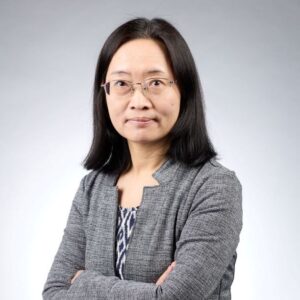
Wenjuan Jiang is a professor in the ICT-Application and Programming department at Algonquin College since 2014. She earned her Ph.D. in Automatic Control and Industrial Information from École Centrale de Lille in France, where she was awarded the “très honorable” distinction. Following her doctoral studies, she worked as a postdoctoral researcher at the GIPSA-lab in Grenoble, France, for one year. With more than 25 years of teaching experience at both university and college levels, she has also collaborated with technical companies. Her research expertise focuses on the networking and stability of remote-control systems. Her passion for blending academic knowledge with practical industry experience has allowed her to teach and mentor students both in the classroom and beyond.