Announcements
If you have any concerns or questions about any disruption or shutdown notices, please contact the Facilities Management Service Desk at 613-727-4723 ext. 7710 Monday to Friday, between 7:30 a.m. and 4:00 p.m. or via email at 7710@algonquincollege.com
Notice of Construction Activity – ITS Offices Relocation (Room B289)
Facilities Management will be commencing work with the assigned contractor to support the ITS new offices project in room B289, starting Monday March 30, 2026.
As part of this construction activity, there may be some disturbance in and around the area. We will work closely with the contractor to minimize disruption as much as possible. A portion of the work will include demolition within an existing space. At this time, significant noise is not anticipated; however, some temporary inconvenience may occur.
We sincerely appreciate your patience and understanding as we complete this important work. Thank you for your cooperation as we continue to enhance and maintain our campus facilities.
Winter is here! How to stay safe on campus this season
Safety is our top priority. The Facilities Department works diligently with our Snow and Ice Management contractor to help ensure the safety and accessibility of campus roads, walkways, and entrances for all members of the College community.
If you notice icy patches, snow drifts, or any conditions that may impede accessibility or pose a safety risk, please contact the Service Desk at extension 7710. We are here to help.
Gravel Parking Lots – Why are they so different than other parking lots in the winter?
The Ottawa campus is home to three gravel parking lots: Lot 1’s extension, Lot 16, and Lot 17. The College uses grit in these spaces for traction instead of salt, as gravel areas respond negatively to salt use for snow and ice treatment. Salt is avoided in gravel parking lots because it would create unsafe conditions. As we are not able to melt ice with salt, expect to see hard-packed snow and ice in these areas. Even though these spaces will be treated and inspected regularly, please use extra caution when traversing them, as icy conditions are expected throughout the winter.
Black Ice – How to identify it and how can I stay safe?
Black ice is a transparent layer of ice that is barely visible on hard surfaces, making it extremely difficult to see and manage.
Here are a few tips to help you recognize and respond to black ice:
- Keep an eye out for surfaces that appear wet or shiny, and take care as you begin to traverse them.
- Start by testing the edge with your foot and feel for friction. If the surface seems slippery, it is likely black ice. It is best to find an alternate route or take extreme care while traversing it (see the walking and footwear tips below).
- Try walking on the snow adjacent to the sidewalk if black ice is present; this often provides more traction and is safer.
- Pay attention to temperature fluctuations. Cold temperatures can freeze melted snow into black ice.
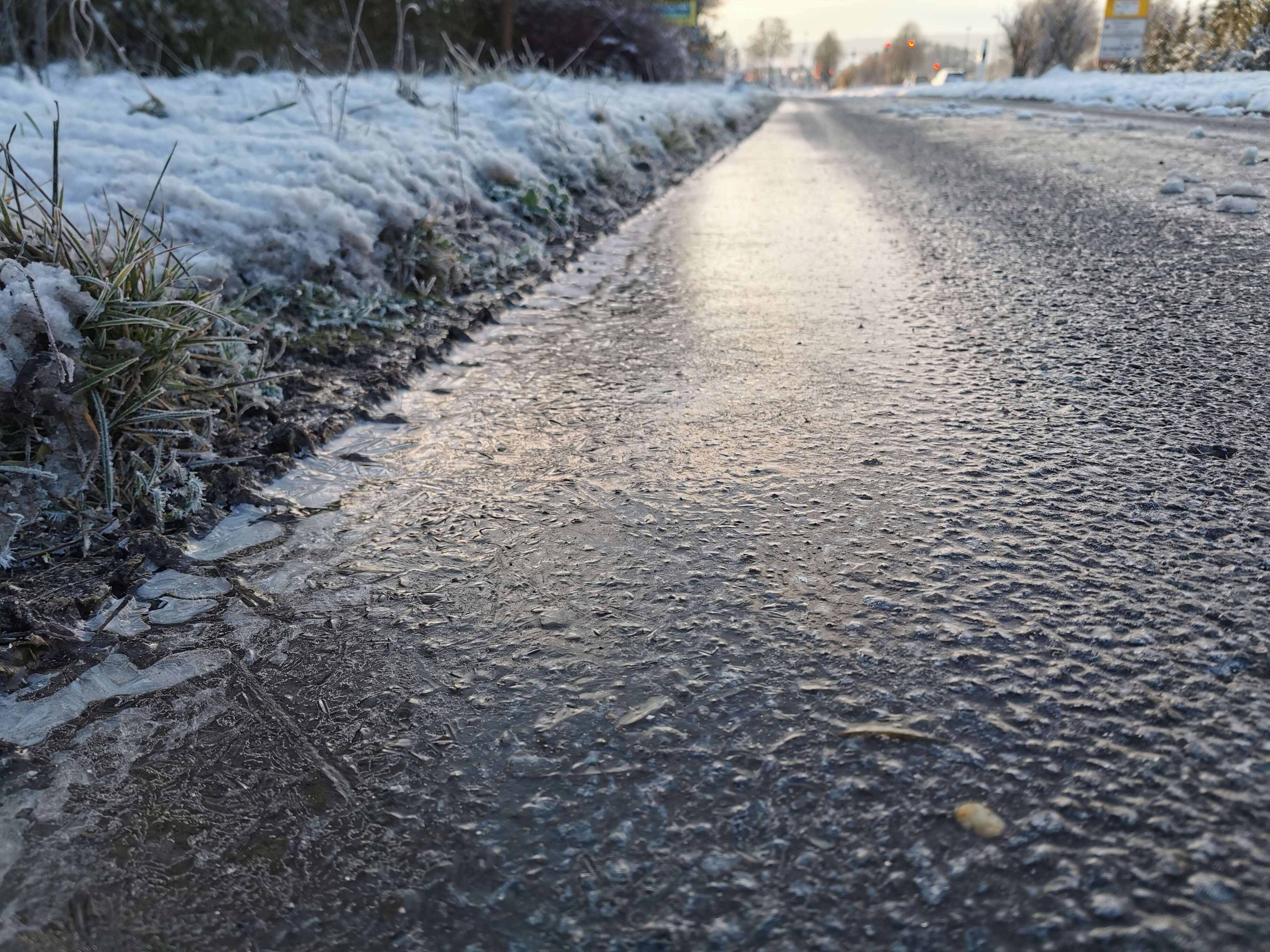
Follow these tips to navigate winter weather safely, especially when facing icy surfaces:
Awareness is Key
While walking through parking lots or on sidewalks, keep your phone in your pocket so you can remain aware of the path in front of you as you make your way into buildings. Temperatures can change numerous times throughout the day, so stay alert for icy conditions. Be extra cautious and follow the tips below during the winter.
Footwear Matters
Invest in insulated, waterproof boots with a robust tread. Choose footwear that provides excellent traction to help prevent slipping on icy walkways. Avoid smooth-soled shoes, as they increase the risk of accidents.
Walking Techniques
When venturing out on icy surfaces, adopt a cautious walking style to maintain stability:
- Take smaller steps: Short, deliberate steps help maintain balance on slippery surfaces.
- Slow down: Reduce your walking pace to avoid sudden slips and falls.
- Bend your knees: Slightly bending your knees lowers your center of gravity, adding stability.
- Take wider steps: Distribute your weight evenly by taking wider steps to reduce the risk of slipping.
Embrace the “Penguin Walk”
Channel your inner penguin by pointing your feet slightly outward and shuffling along. This walking technique, although amusing, enhances stability on icy terrain.
Community Safety Begins with You
This winter, let’s work together to create a safe and secure College environment. By following these simple guidelines, you can navigate winter with confidence.
Stay warm, stay safe, and enjoy the beauty of winter responsibly.
This winter safety advisory is brought to you by Facilities Management, dedicated to providing a safe, comfortable, and sustainable learning environment for the College community.