Subject Guides

Six Steps for Successful Research

Does hearing the phrase “research paper” suddenly send you into stress mode? You’re not alone! Many learners feel overwhelmed when assigned such in-depth and detailed assignments. If this is your first time writing a research paper and you’re not sure where to start, we can help make the process less intimidating. If you do have previous experience doing research, it never hurts to acquire new strategies that can help take your skills to the next level.

We believe the easiest way to tackle a large assignment is to break it down into smaller steps. Instead of attacking your research paper head on, we’ve created a plan to help guide you through each stage of the writing process:

Define Your Topic

Picking a good topic is key and can make or break the research process. So, what makes a good topic? We suggest choosing a subject that interests you and will hold your attention. Explore what information is available on that topic to ensure that you can find what you need. If a topic is too specific, you may need to expand your search; if the topic is too vague, you may need to narrow it down. Turn your topic into a question and see if you can argue or prove it. The following resources can help you with this step:

Plan your Search

Once you have spent some time gathering background information on your topic, you should have a decent grasp of some search terms that would be relevant to your subject.

  • Check out the library’s Subject Guides to find resources that would make a good starting point for your research.
  • Use a thesaurus to find synonyms that could help expand your search results, and make sure to record your sources as you go.
  • For further help planning your search terms visit Step 2 of the Research Guide.
  • Register for an upcoming Starting a Paper – Improving Your Search Strategies Workshop to learn how to produce appropriate search terms and find resources using the web and library resources.

Search for Resources

Once you have committed to your topic and know which search terms to use, you can start finding credible and relevant resources. This step will be more time consuming than the first two – just remember to take it all in stride and try not to get overwhelmed. Identify what resources are required for your assignment (type of publication, date range, how many sources you need etc.) and then search across all resources with the help of the library’s Page 1+ search tool. You can also search directly within the A-Z Database list.

For help using Page 1+, check out our related FAQ’s or book a one-on-one research appointment with Library staff. The following resources can also help:

  • Explore Step 3 of our Research Guide to find tutorials, tips for search strategies and in-depth information on evaluating web resources.
  • The Learning Portal’s Fake News Hub will help you to recognize common indicators of fake news, understand the consequences of careless sharing, and learn to become a fact-checker.
  • Check out the Learning Portal’s How to Research module to learn more about the different types of resources and how to search through a library or on the web.
  • Register for an upcoming Evaluating Resources Workshop to find out how to evaluate the quality of resources using the ‘C.R.A.A.P’ test—a guideline for critically analyzing sources—so you can avoid fake news and ensure quality research.

Create an Outline

Once you have found relevant resources, you can use these sources to begin building your argument. To start creating an outline, you want to read all the sources you have collected and take notes as you go; make sure to keep track of your sources in an organized way.

When you are ready to draft your thesis statement, remember that it needs to reflect the main argument of your paper and should only be 1-2 sentences long. It is best to outline the structure of your paper before you start writing it; this will help you to determine your main points and organize your research.

  • Step 4 of our Research Guide will help you develop your thesis statement and create an effective outline of your paper.
  • The Coaching Lab offers free online and on-campus (Ottawa) Coaching in the subject of writing. Coaches can help you with grammar, brainstorming and outlining, preliminary research, thesis development, formatting a paper, and more.

Write your Paper

This is the last step in the research paper writing process! At this point you should have a thesis statement, an outline, and a collection of sources and notes; everything you need to put together your research paper.

  • Step 5 of our Research Guide will point you towards resources that can help structure your paragraphs, incorporate your sources, and guide you through the editing process.
  • Register for any of the upcoming Research & Writing workshops to find out how to start a paper, how to find academic articles and other resources, and more.

Cite your Sources

You will be required to cite your sources. Citing is an extremely important part of the research paper writing process as it is the best way to avoid plagiarism. It provides credit to the original source, helps prove the legitimacy of your research, and gives professors the ability to find the information used in your work. Fortunately for you, there are several resources that can help you with citation:

  • Check out the Citing and Documenting Sources Guide to find citation style guides and tools.
  • Visit the Learning Portal’s How to Cite module for help understanding the different citation styles and for an explanation on how to cite various sources.
  • Register for an upcoming Cite Right! APA Bootcamp workshop to gain hands-on experience creating references for different types of sources.
  • Also check out the new AI: Generative Intelligence guide to learn more about citing AI tools in your work. Before you cite, confirm with your instructor that the use of AI tools, such as ChatGPT, are allowed for your assignment.

September 30th is the National Day for Truth and Reconciliation

Each year, September 30 marks the National Day for Truth and Reconciliation. The day honors the children who never returned home and Survivors of residential schools, as well as their families and communities.

Algonquin College campuses (Ottawa, Pembroke and Perth) are located on the traditional unceded, unsurrendered territory of the Anishinaabe Algonquin People. The Algonquin People have inhabited and cared for these lands long before today. We take this time to show our gratitude and respect to them, and to the land for all that it provides us: trees to give shade, water, and food to sustain us, and paths to connect us. As a post-secondary institution, we embrace the responsibility to help ensure that the next generations of land stewards are respectful and grateful for the bounty of this land on which we all live, work, play, and study.

We commit to continue to explore and make meaningful contributions to the Calls to Action that result from the Truth and Reconciliation Commission of Canada (TRC).

Algonquin College Campus Events

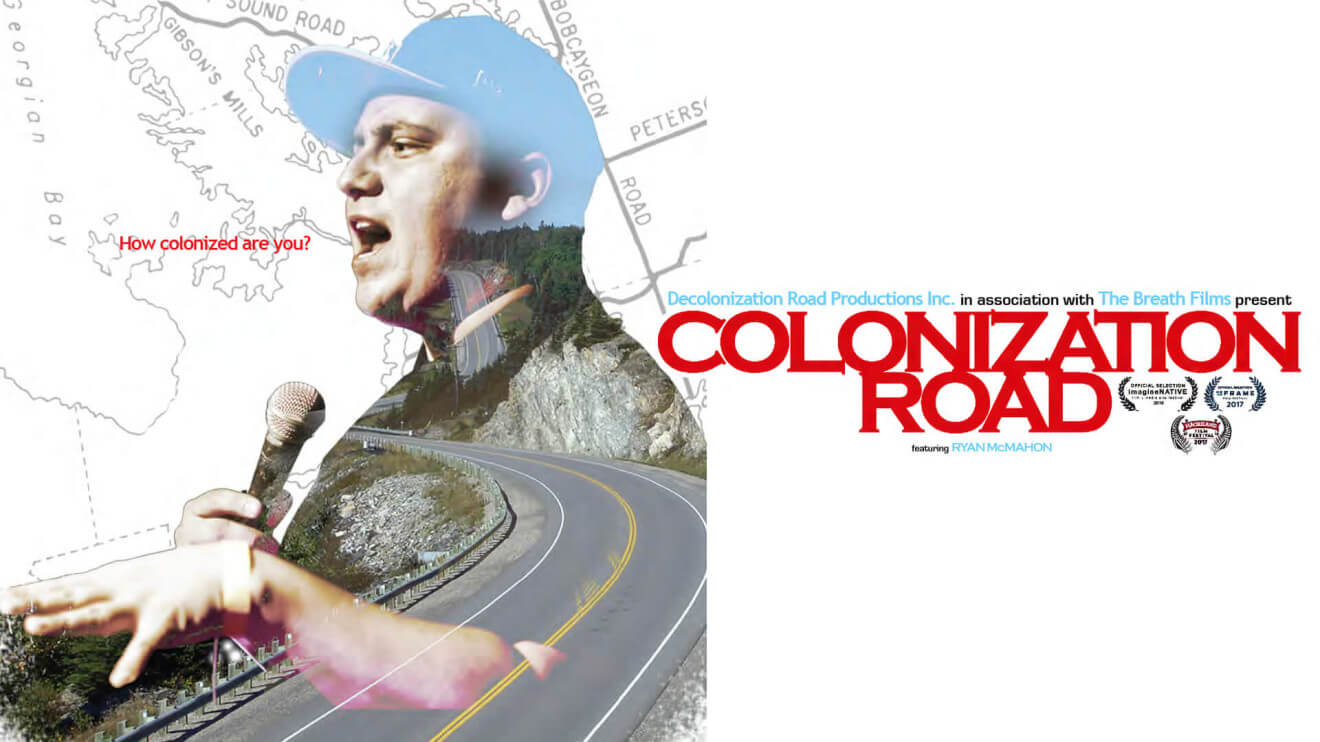
  • The Ottawa campus Library will be screening several short films about residential schools. This will take place on Friday, September 29th in the Kejeyàdizidjigwogamig, or the Knowledge Keepers Place (Room C350) from 1:00pm – 2:00pm. We also have a new film available in our streaming collection, Colonization Road, can be watched online at any time. We also encourage the college community to explore the books, videos, and other library resources featured on the Aboriginal Studies Guide
Colonization Road
  • Please join President Brulé in Nawapon on Sept. 29 at the Ottawa Campus to listen and learn Indigenous story-telling with community Knowledge Keeper and Indigenous Rights Advisor, Michael Desautels. All Algonquin College employees are welcome to attend. This event takes place at 9:15 AM to 9:50 AM in the Nawapon (C100), Ottawa Campus and livestream via Youtube.
    Please register to attend in-person here.
  • The AC Hub will be decorating orange paper T-shirts and hanging them on windows. Partake in a selection of Indigenous teas, coffee, and foods, and engage with a variety of learning materials and resources as we strive to create a more inclusive and informed future and campus community. You are encouraged to wear an orange T-shirt.
    This event takes place on the 2nd Floor of the Student Commons (E) Building on Friday, September 29 from 10:00am-12:00pm. Click here to learn more.

Indigenous Spaces

Algonquin College takes pride in its commitment to making Indigenous Knowledge and traditions an integral part of the institution’s culture. Over the years this has included establishing a variety of Indigenous Spaces on Campus. Learn more about these spaces:

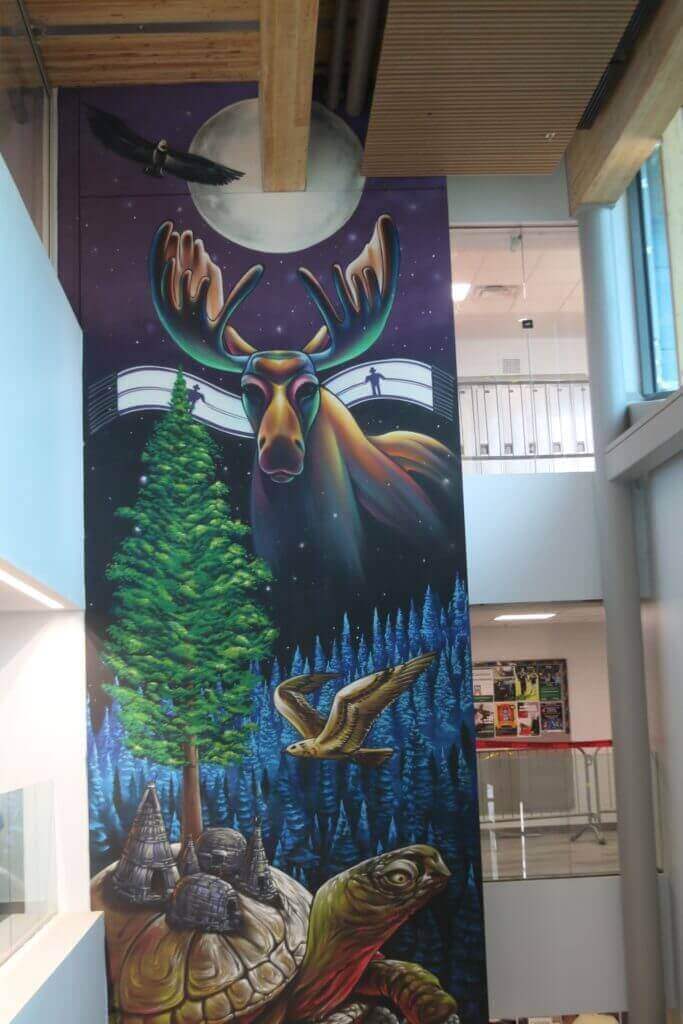
DARE District’s three-storey mural

Empower with The Learning Portal’s Maamwi Hub

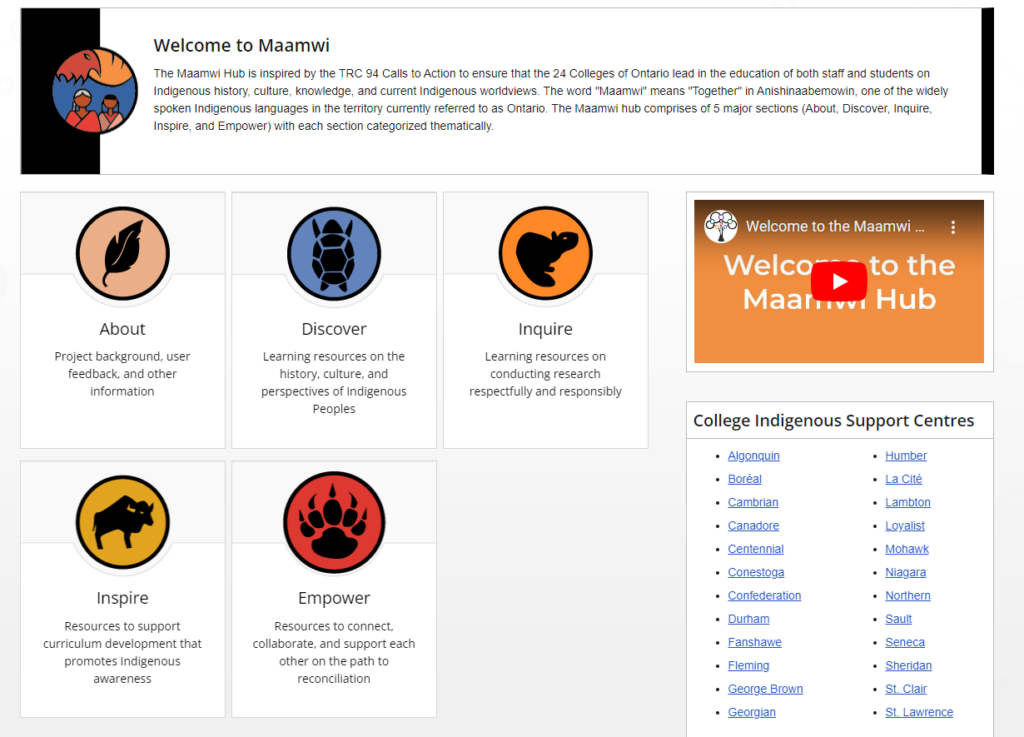
The creation of the Learning Portal’s Maamwi Hub was inspired by the TRC 94 Calls to Action to ensure that the 24 Colleges of Ontario lead in the education of both staff and students on Indigenous history, culture, knowledge, and current Indigenous worldviews.

The word “Maamwi” means “Together” in Anishinaabemowin, one of the widely spoken Indigenous languages in the territory currently referred to as Ontario.

Developed in partnership with the Indigenous Peoples Education Circle and College Libraries Ontario, and part of the ongoing reconciliation journey, the Maamwi Hub serves as a collaborative pathway to learn and reflect on the past and present impacts of colonial history on Indigenous Peoples. Discover an expansive collection of credible and relevant educational materials, explore ways of connecting and collaborating with Indigenous communities, and become an active participant on the path towards reconciliation.

The Maamwi Hub is made up of 5 major sections: About, Discover, Inquire, Inspire, and Empower. This week, we wanted to focus on the Empower section as it provides users with resources to connect and collaborate, share ideas, learn from one another, and support each other on the path to reconciliation.

  • Expand your understanding: Resources to support with engaging with Truth and Reconciliation, using respectful terminology, and expanding your understanding of stereotypes & racism.
  • Participate: Resources providing an overview of days of significance, events, and Indigenous organizations.
  • Explore & Connect: Provides an overview of Indigenous communities, places, and spaces within Ontario.
  • Learning Resources: A selection of resources which may help broaden awareness and understanding of Indigenous topics within Canada.Maamwi Hub

“Rather than having a single goal related to Truth and Reconciliation or Indigeneity, we must be committed to adapting our processes and practices to honor and reflect Indigenous ways of knowing.” Click here to learn more about what this means for Algonquin College.