Algonquin College professor collaborates on new scholarship in victimology, crime and gender
Posted on Monday, November 23rd, 2026
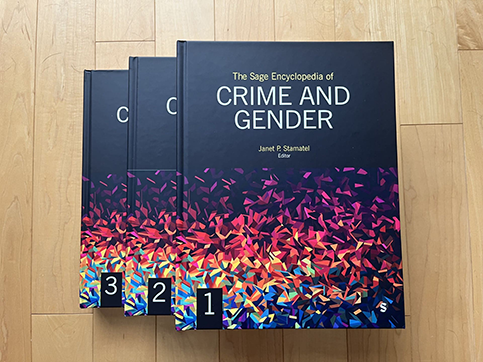
OTTAWA (Nov. 23, 2026) — A collaboration that began at Algonquin College has extended beyond the classroom and into published academic scholarship, with Principal Investigator – Victimology Health and Social Innovation Centre, Diana McGlinchey, and former students contributing to the SAGE Encyclopedia of Crime and Gender.
McGlinchey, who holds a Master of Science degree, authored and co-authored four entries exploring topics in victimology, including vicarious victimization, domestic violence, intimate partner violence and the consequences experienced by families of offenders.
Several of the entries were completed in collaboration with former Algonquin College students, demonstrating how relationships formed through teaching and mentorship can develop into opportunities for graduates to contribute to scholarship in their field.
“Working with former students on these entries was especially meaningful,” said McGlinchey. “It provided an opportunity to continue the conversations and learning that begin in the classroom and to contribute together to a broader understanding of issues affecting victims, families and communities.”
Algonquin College’s one-year graduate certificate in Victimology prepares graduates to support people affected by crime and victimization through trauma-informed, victim-centred practice. With a strong connection to community-based experience and research, the program develops the knowledge and practical skills needed to contribute to victim services and community initiatives.
Research experience creates lasting career impact
For Algonquin College graduate Fabricio Lacerda, contributing to the encyclopedia was more than an academic opportunity. His work as a research assistant with the College’s Victimology Research Centre helped him build professional experience, deepen his understanding of intimate partner and domestic violence in a Canadian context, and ultimately carry that knowledge into his career.
“Working as a research assistant at Algonquin College’s Victimology Research Centre transformed my experience as an international student in Canada,” said Lacerda. “It gave me opportunities to grow professionally, build connections and feel that my knowledge and contributions were valued.”
Lacerda was invited by McGlinchey to co-author the encyclopedia entries on “Intimate Partner Violence” and “Domestic Violence,” an experience he says connected his previous knowledge with the realities facing the communities he now supports.
Today, as a Crisis Counsellor with the Ottawa Police Service’s Victim Support Unit, that connection between research and practice continues.
“I carry that learning into my work, and I am grateful for how this experience helped develop my career and the support I offer others,” Lacerda said.
The Sage Encyclopedia of Crime and Gender is an extensive survey of how gender shapes law, crime and justice across the areas of the legal system, criminal offending and victimization, criminal justice processes and outcomes, and crime prevention strategies. It provides a multi-dimensional view of relationships between gender and crime by balancing theory and empirical research, contemporary and historical perspectives, domestic and global contexts, and interdisciplinary insights.
You can explore the published entries in the SAGE Encyclopedia of Crime and Gender:
- Vicarious Victimization
- Domestic Violence
- Intimate Partner Violence
- Families of Offenders: Consequences For
Algonquin College’s Victimology program gives students opportunities to build specialized knowledge, gain practical experience and contribute to research and publications through the Victimology Research Centre. Learn more: Explore Victimology at Algonquin College.
- Posted in
- News