Student Experience
What to Expect
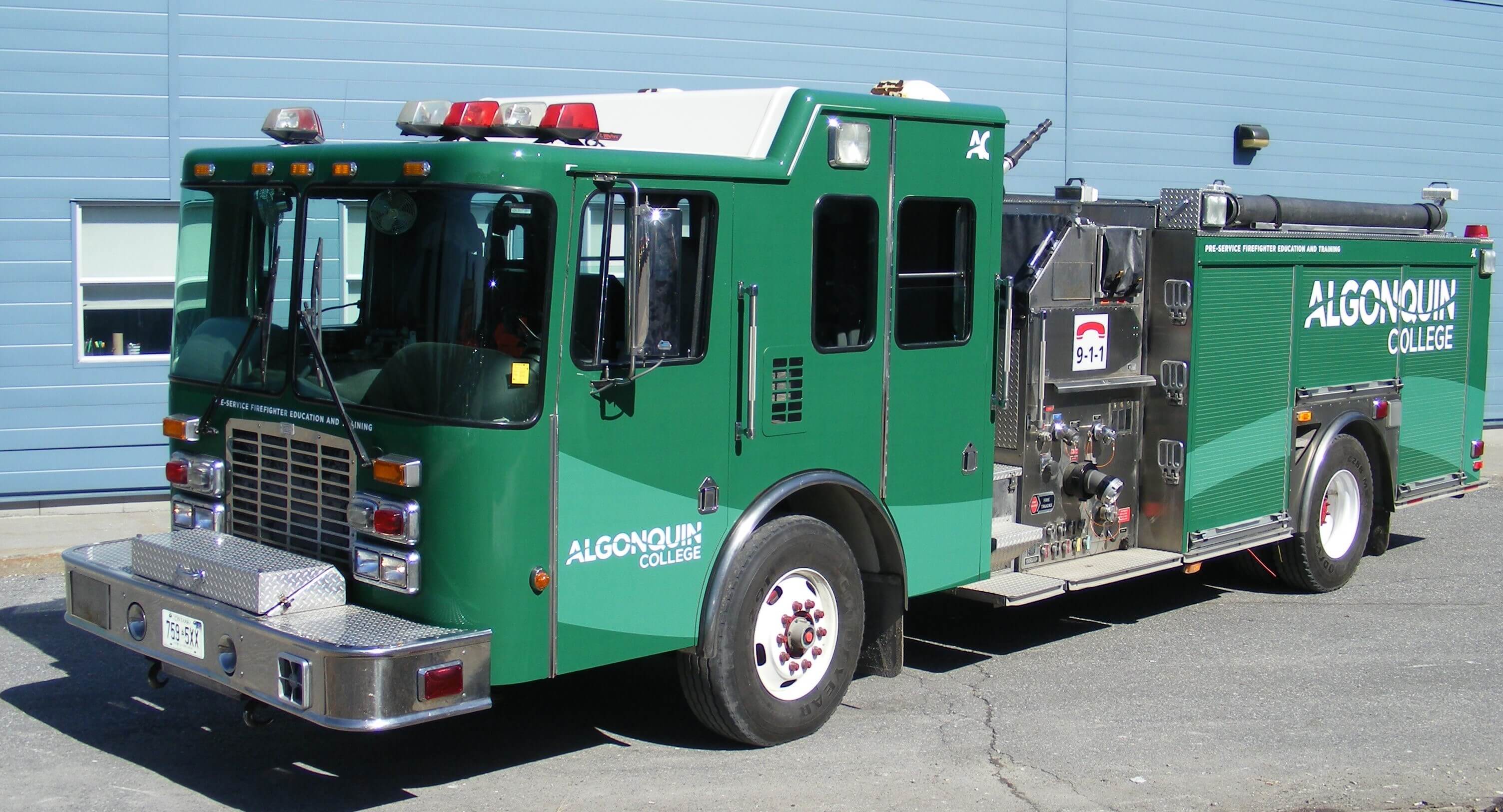
As a student in the program, you will be taught various firefighting, rescue, hazmat and medical response techniques in both theoretical and practical lab classes. Additionally, you will participate in associated classes such as psychology and fitness training that will include specific firefighting related drills. There are also many opportunities to volunteer outside of class hours in various charitable events.
You will be expected to complete homework and various assignments, participate fully in all classes, be respectful of all students and instructors, and maintain various equipment and safety gear, as required. You will be assigned to a platoon, and this platoon will work together throughout the duration of the course.
Your instructors bring a wide range of experiences from several different fire services, both career and volunteer. Your instructors will challenge you to be the best that you can, and opportunities to practice skills will be afforded outside of regularly scheduled classes.
First semester runs from September to December, second semester runs from January to April, and third semester runs from May to late June. Successful completion of each semester is required to move on to the next. Third semester will include off-campus training culminating with live fire training at the Ottawa Fire Services Training Centre. Provincial certification testing is completed by the Office of the Fire Marshal during the month of June.
Successful completion of all course requirements will be awarded with a college certificate. Successful completion of the Fire Marshal testing will be awarded with Firefighter 1, Firefighter 2 and Hazardous Materials Awareness and Operations Level Certifications.
Success Stories and Testimonials
“I chose the 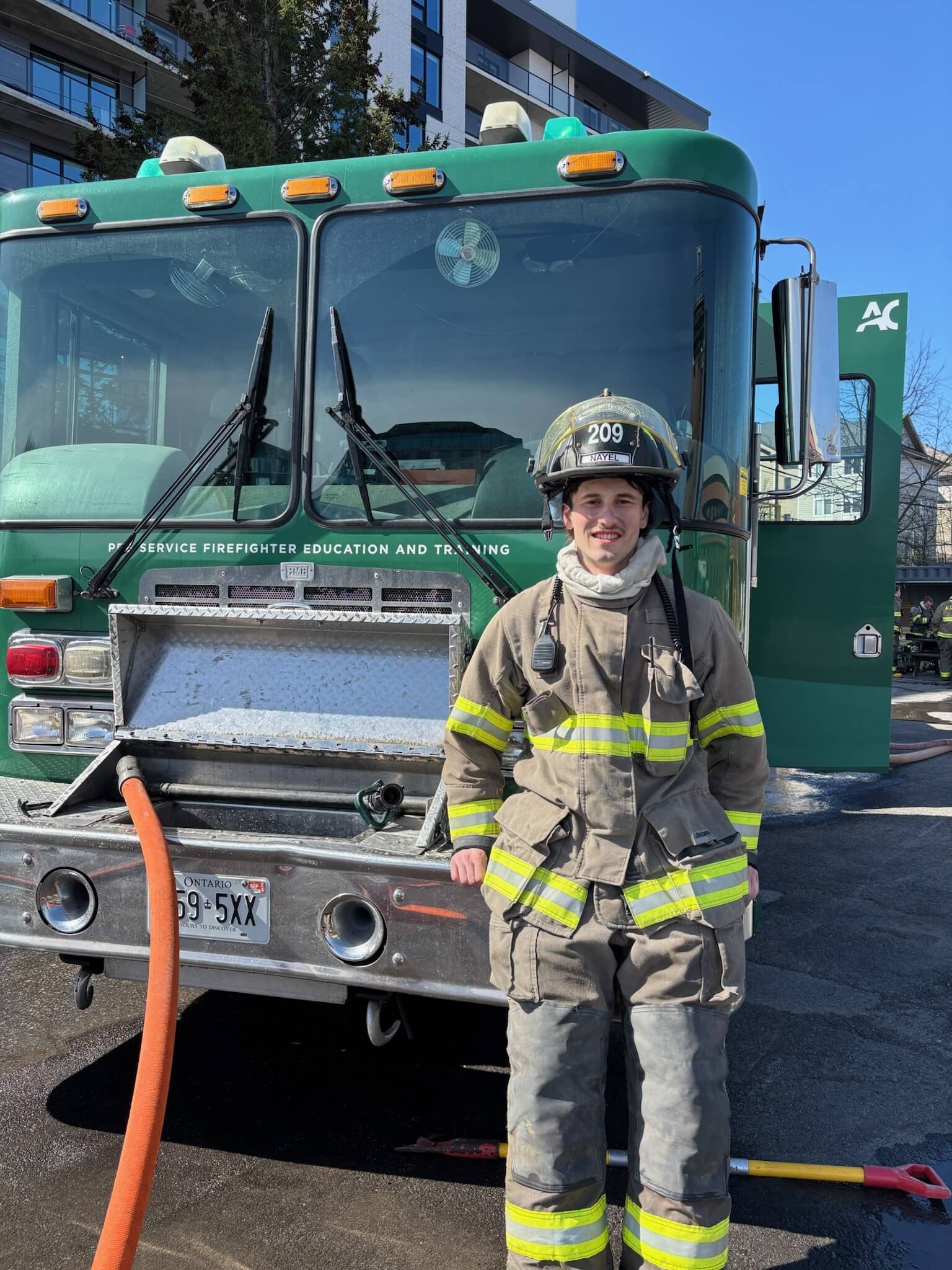 Pre-Service Firefighter program because I wanted to make a difference in other peoples lives, be there for them on their worst days and be apart of a service bigger than myself. The program gives you all the fundamentals, valuable skills and certifications to become a great firefighter.
I was most impressed by all the off campus experiences we got to have in our third semester. We were able to go to places such as the airport fire station, Ottawa Fire Training Center, etc. In addition to this we performed live fire training at Ottawa’s Training Center which was an amazing experience and gives you a real life insight to what it’s like on the firegrounds. We performed many simulated fireground training exercises, performed a variety of tasks, gained a large amount of experience of what it’s like to be a firefighter. Furthermore the instructors always showed a great amount of care towards us as students, they want to be there, and share many different experiences from a variety of different careers to give you the best learning outcomes.
I genuinely loved being at school, as it honestly did not even feel like school. I also had the best time in class and was constantly eager to learn more. You form a great bound with the friends you make in this program and share the same ultimate goal with one another, to become a firefighter. The hands on/skills days were by far the best days. You were able to put what you learned in the classroom to the field, and be able to make the connection to see how everything comes together. Practicing fire ground tactics gives a great insight into the career. To someone who is considering this program I would say do it 1000%. If this is this is the career you want, go for it but make sure you give it your all everyday and work at it. You get what you put in to this program. You have to work hard, be respectful, be a leader and take all the advice you can get.
If I could describe my experience at Algonquin College in one word it would be: Unreal“
-Emmett Nayel, Graduate, 2025
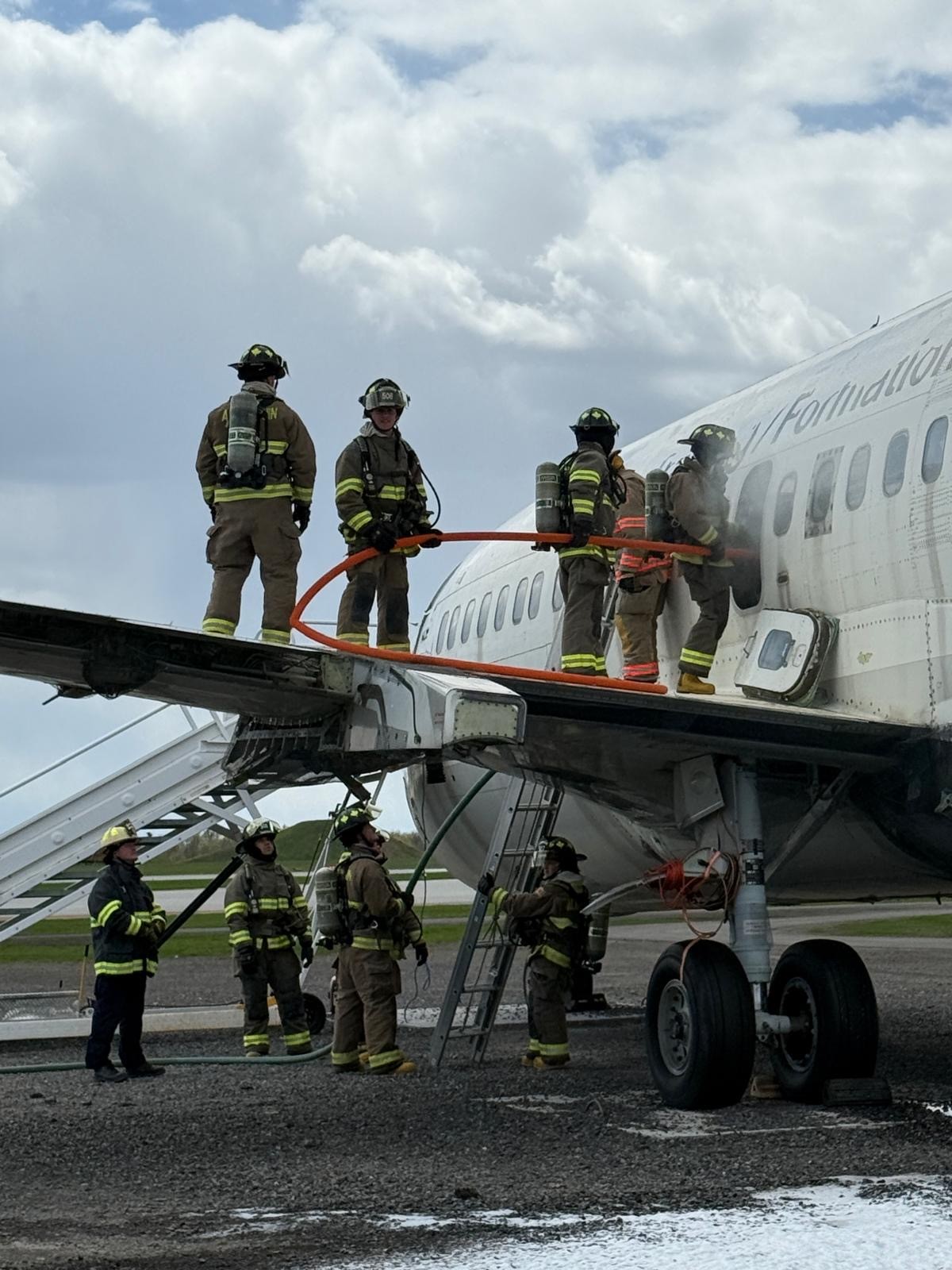 “Overall, the program was a phenomenal experience that provided me with a strong foundation for pursuing a career in the fire service. The combination of classroom instruction, practical training, fitness development, and medical training helped prepare students for both OFM certification testing and the realities of the profession.
One of the program’s greatest strengths was its medical training. The instruction was thorough, professional, and highly relevant to emergency response. I felt extremely well prepared in this area, and it was one of the most valuable components of the program.
The fitness component was also excellent. The fitness classes were informative, challenging, and directly applicable to the physical demands of firefighting. I gained valuable knowledge regarding physical conditioning, injury prevention, and maintaining the fitness standards required throughout a firefighting career. A particularly positive aspect was the emphasis placed on both physical and mental health and their importance in supporting long-term performance and well-being.
The hands-on training throughout the year was another major highlight. Live fire evolutions and scenario-based practical skill stations helped reinforce classroom concepts and build confidence. RIT and vehicle extrication training were particularly valuable and provided realistic experience that will translate directly into the fire service. One of the most impactful learning experiences was the simulation day, which provided a highly realistic environment that closely reflected operational conditions.
One of the key strengths of the program was the experience and knowledge brought by the captains and instructors. Each instructor brought unique operational experience, technical expertise, and perspectives to the training environment. Exposure to different teaching styles and approaches to the same skills helped develop a broader and more adaptable understanding of fire service operations. It reinforced that there are often multiple effective ways to accomplish the same task, and that adaptability is an important part of professional development.
Overall, I would confidently recommend the Algonquin College Pre-Service Firefighter Program to anyone considering a career in the fire service. I am grateful for the dedication, professionalism, and commitment demonstrated by the captains, instructors, and support staff throughout the year. Their efforts created a structured and challenging learning environment that built confidence and provided the skills and knowledge necessary to move forward in the profession.”
-Asad Khan, Graduate, 2025
Work Integrated Learning
The program includes 400 hours of experiential learning, including the opportunity to put your skills into action and take part in both a fire simulation and a live-fire training practice. After completion of the program and meeting necessary prerequisites students may qualify for testing administered by the Ontario Office of the Fire Marshal, leading to NFPA 1001 Firefighter I or Firefighter II certification.