Algonquin team takes youth-built research game to national stage
Posted on Thursday, April 23rd, 2026
At this week’s national Colleges and Institutes Canada Conference, students and researchers from Algonquin College shared how a co‑created board game was opening new conversations and pathways for youth across Ottawa.
A small team of researchers and students shared something unusual on a national stage. At the conference, they presented a board game.
It might have sounded unexpected, but for this group, the game was serious work.
“Parallel Ottawa” was created through the college’s Human Centred Design Lab as part of a larger research project focused on youth who were not in employment, education or training. This group often faced complex barriers that could be difficult to capture through traditional research methods.
The project received $400,000 from the Embark Student Foundation to create models for service transformation and re-engage vulnerable youth in education.
Instead of relying on surveys or interviews alone, the team tried something different. They co‑created a board game with youth from across Ottawa, hiring 12 young people as Algonquin College employees to help design it from the ground up.
“It’s a mix of The Game of Life and Dungeons and Dragons,” explained Aviana Ruel, a Child and Youth Care student who joined the project through her placement. “As participants played, we were able to understand how they navigated education and life in the city.”
The game was designed to feel open and exploratory. Players moved through scenarios, made decisions and talked through challenges. Behind the scenes, those conversations became valuable research data.
For Danny Nhu, a recent graduate of the Interdisciplinary Human‑Centred Design program and then a research associate on the project, the approach had been intentional. Early research showed that trust was essential when working with youth who might feel disconnected from systems meant to support them.
“A game created a safe space,” he said. “It made it easier to open up and have honest conversations.”
That insight shaped the entire project. After consulting with subject matter experts and community organizations, the team partnered with the Rideau‑Rockcliffe Community Resource Centre and brought youth directly into the design process. The result was a tool that not only gathered insights, but also built connection.
By that point, the team had run eight “game days” in community settings, collecting data while also hearing consistent feedback. Facilitators said the game helped them better understand the youth they worked with. Some had already asked to use it in their own programs. That response sparked a bigger idea. What started as a research method could become a service.
“We wanted this to be more than a tool,” said Maria Montano, a research associate who began working with the lab as a student. “We saw potential for organizations across Canada to use it in their communities.”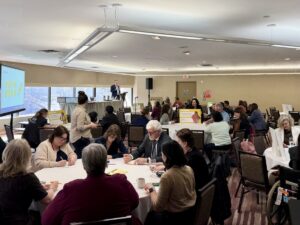
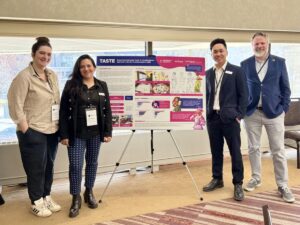
That possibility was part of what made presenting at CICan so important. The team led an Innovation Sandbox workshop, inviting educators and community partners to engage with their findings and hosted a Living Lab showcase where attendees could experience the game firsthand.
It was both a chance to share and to learn.
“We had been working on this for more than a year,” Montano said. “Now we got to bring it to a national audience, hear their perspectives and see where it could go next.”
The group heading to the conference reflected the collaborative spirit behind the project. Alongside Nhu, Montano and Ruel were Mayanna Holness from the Illustration and Concept Art program and Keeren Milomga from the Graphic Design program, as well as faculty lead Jed Looker and Kevin Holmes from the Applied Research office. Each brought a different lens, from research to design to lived experience.
Together, they showed what applied research could look like when it was built with community, not just for it.
And that week, they invited the rest of the country to play along.
- Posted in
- Words
- Tags: